

 contact@canrd.com
 +86 18928276992
Details
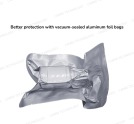
The material needs to be vacuum sealed for storage
The material is prone to water absorption, and humidity control is required throughout the entire production process
The electrolyte used during testing is NCM electrolyte (KLD-1230C)
Baking conditions for electrodes: Bake at 85 ℃ for 4 hours
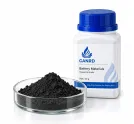
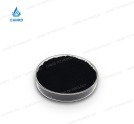
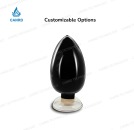
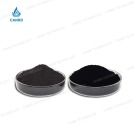
Nickel cobalt manganese NCM811 (single crystal) is suitable for high voltage applications ranging from 4.25 to 4.35V, with advantages such as high capacity, high initial efficiency, high energy density, stable structure, high temperature and cycling performance.
Physical and chemical properties:
| Serial Number | Test items | Units | Specifications | Measured results | Inspection method or instrument | ||
| 1 | Chemical composition | Li | (wt%) | 7.0±2.0 | 7.14 | ICP | |
| 2 | Co+Ni+Mn | (wt%) | 60.0±3.0 | 60.07 | |||
| 3 | Fe | (wt%) | ≤0.01 | 0.0007 | |||
| 4 | Cu | (wt%) | ≤0.01 | 0.0002 | |||
| 5 | Na | (wt%) | ≤0.01 | 0.0025 | |||
| 6 | Ca | (wt%) | ≤0.01 | 0.0024 | |||
| 7 | Mg | (wt%) | ≤0.01 | 0.0036 | |||
| 8 | Free lithium | (wt%) | ≤0.5 | 0.0698 | Acid burette | ||
| 11 | Physical Properties | Particle size distribution | D10 | (μm) | ≥1.5 | 1.762 | Laser particle size analyzer |
| 12 | D50 | (μm) | 2.5~6.0 | 3.589 | |||
| 13 | D90 | (μm) | ≤10.0 | 7.032 | |||
| 14 | BET | (m2/g) | ≥0.5 | 0.77 | Automatic specific surface and porosity analyzer | ||
| 15 | TD | (g/cm3) | ≤4.2 | 1.84 | Tweak density gauge | ||
| 16 | pH | / | 11.0~12.0 | 11.36 | pH meter | ||
| 17 | Moisture | (ppm) | ≤800 | 321.6 | Moisture Analyzer | ||
| 18 | Electrochemical Performance | First discharge capacity | (mAh/g) | ≥190.0 | 201.3 | CR2032 0.1/0.1C(4.3-3.0V) |
|
| 19 | First Time Efficiency | (%) | ≥85.0 | 86.1 | |||
Half Cell Test:
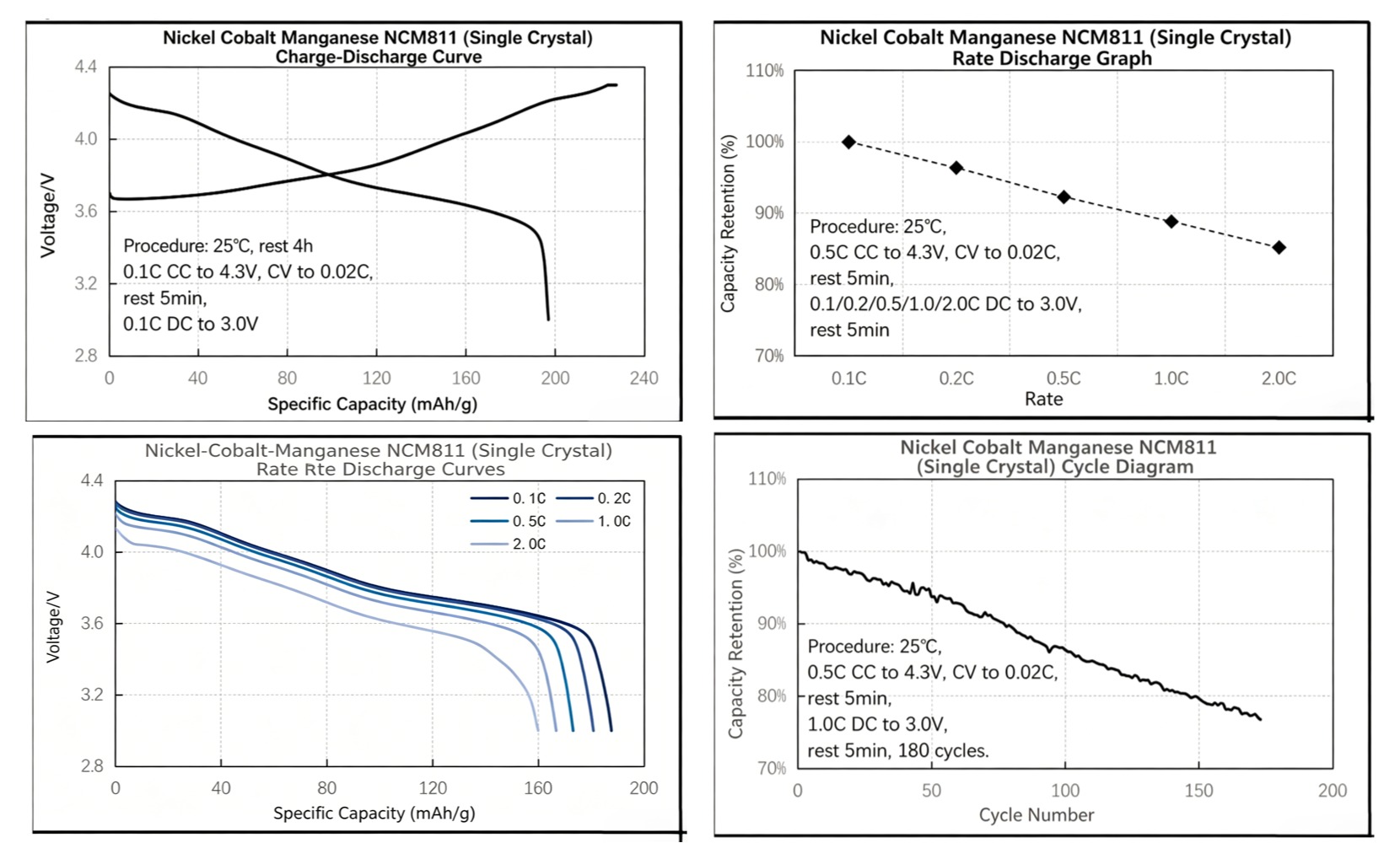
CC rate charging; CV constant voltage charging; DC rate discharge
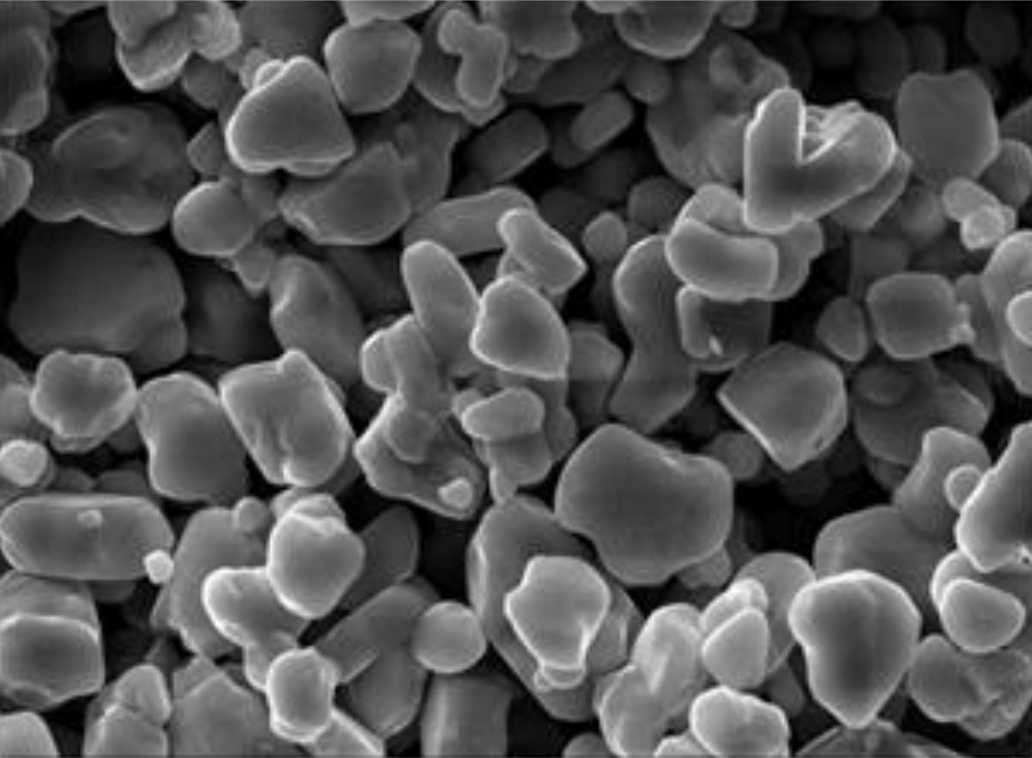
SEM:
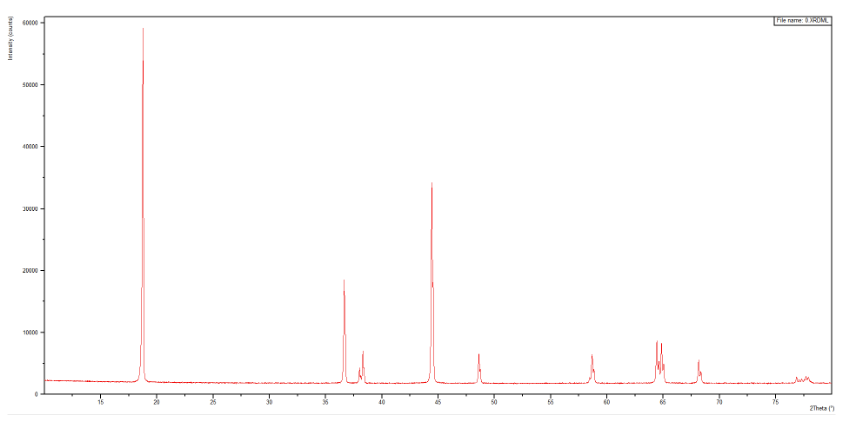
XRD:
The positive electrode material for lithium cobalt oxide batteries is lithium cobalt oxide (LiCoO2), while for ternary materials, it is lithium nickel cobalt manganese oxide (Li(NiCoMn)O2). The precursor product of ternary composite positive electrode materials is made from nickel salts, cobalt salts, and manganese salts, with the ratio of nickel, cobalt, and manganese adjustable according to practical needs. Batteries using ternary materials for the positive electrode are generally safer compared to lithium cobalt oxide batteries. Both lithium cobalt oxide and ternary materials are excellent positive electrode materials for lithium batteries, but their chemical characteristics differ. As a result, their application fields also vary based on these different chemical properties.
The positive electrode material for lithium cobalt oxide batteries is lithium cobalt oxide (LiCoO2), while for ternary materials, it is lithium nickel cobalt manganese oxide (Li(NiCoMn)O2). The precursor product of ternary composite positive electrode materials is made from nickel salts, cobalt salts, and manganese salts, with the ratio of nickel, cobalt, and manganese adjustable according to practical needs. Batteries using ternary materials for the positive electrode are generally safer compared to lithium cobalt oxide batteries. Both lithium cobalt oxide and ternary materials are excellent positive electrode materials for lithium batteries, but their chemical characteristics differ. As a result, their application fields also vary based on these different chemical properties.
Related Articles
Tsinghua University’s Kang Feiyu Team Reports in Nature Communications
Weak dipole-dipole polymer-ion solvent electrolyte enables high-performance Li metal pouch cells.
The positive electrode material for lithium cobalt oxide batteries is lithium cobalt oxide (LiCoO2), while for ternary materials, it is lithium nickel cobalt manganese oxide (Li(NiCoMn)O2). The precursor product of ternary composite positive electrode materials is made from nickel salts, cobalt salts, and manganese salts, with the ratio of nickel, cobalt, and manganese adjustable according to practical needs. Batteries using ternary materials for the positive electrode are generally safer compared to lithium cobalt oxide batteries. Both lithium cobalt oxide and ternary materials are excellent positive electrode materials for lithium batteries, but their chemical characteristics differ. As a result, their application fields also vary based on these different chemical properties.
Frequently Asked Questions
Search or browse common questions to find answers quickly

Need R&D Support?
Browse key product categories and connect battery materials with Canrd's R&D services for testing, fabrication, and project support.
Experimental Materials
CategoryCathode, anode, electrolyte, separator, and other materials for battery research.
Shop cathode, anode & electrolyte materials →Lab Equipment
CategoryBattery lab equipment for pilot lines, fixtures, and testing workflows.
Browse battery lab equipment →Electrodes & Cells
CategoryCustom electrodes, dry cells, and battery cell components for R&D validation.
View custom battery electrodes & cells →Sodium Electrolyte
CategorySodium-ion electrolyte options for sodium battery research and validation.
Shop sodium battery electrolytes →R&D Services
ServiceFull-chain battery R&D services from material evaluation to cell fabrication and failure analysis.
Explore Canrd R&D services →Material Evaluation
ServiceCharacterization, electrochemical testing, and compatibility evaluation for battery materials.
Evaluate your battery materials →Electrode Fabrication
ServiceCustom electrode sheets and rolls based on your target chemistry and process needs.
Request electrode fabrication →Cell Fabrication
ServiceDry cells, assembled cells, and custom-format cell builds for R&D validation.
Build custom research cells →Contact
PageAsk Canrd to match products, materials, and services for your project.
Get product and R&D support →
