

 contact@canrd.com
 +86 18928276992
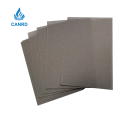
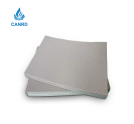
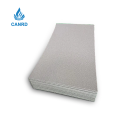
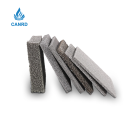
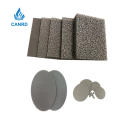
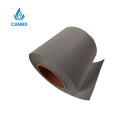
Details
1. Coating surface density does not include current collector material.
2. Theoretical areal capacity (mAh/cm2) = Coating surface density (mg/cm2) * Active material ratio * Specific capacity (mAh/g) ÷ 1000.
3. Theoretical mass of active material (mg) = Coating surface density (mg/cm2) * Active material ratio * Area of the electrode (cm2).
4. Actual weight-based calculation of active material (mg) = (Weight of electrode (mg) - Current collector surface density (mg/cm2) * Area of the electrode (cm2)) * Active material ratio.
5. Actual weight of active material should be used when calculating specific capacity, as the coating surface density has tolerances.
1. Ultra-lightweight: It has the highest specific surface area and a specific gravity of 0.2-0.3, which is 1/4 of water, 1/3 of wood, 1/10 of aluminum, and 1/30 of iron. It is extremely lightweight.
2. Sound absorption: The porous structure exhibits wide-frequency sound absorption characteristics.
3. Electromagnetic wave shielding: It provides approximately 90dB shielding against electronic waves with its relatively thin thickness.
4. Processability: It can be cut, bent, and easily adhered.
5. Fire resistance: It maintains shape stability and is difficult to ignite, exhibiting high temperature resistance.
6. Recyclability: Metallic waste materials can be 100% recycled.
7. Thermal conductivity: The porous material has strong thermal conductivity.
8. Breathability: With a homogeneous three-dimensional network structure, it acts as a filter and exhibits excellent stability in the flow of gases and fluids.
9. Sound insulation: With additional treatment, it can achieve high noise interception and exhibits good sound insulation.
10. Exquisite appearance, practical interior: Through various processing methods, it is suitable for indoor decoration.
11. High temperature resistance of over 1100 degrees, resistance to various acid and alkali corrosion, good permeability, uniform pore structure, and fast heat transfer.

Nickel foam thickness tolerance: 0-0.05mm.
Need R&D Support?
Browse key product categories and connect battery materials with Canrd's R&D services for testing, fabrication, and project support.
Experimental Materials
CategoryCathode, anode, electrolyte, separator, and other materials for battery research.
Shop cathode, anode & electrolyte materials →Lab Equipment
CategoryBattery lab equipment for pilot lines, fixtures, and testing workflows.
Browse battery lab equipment →Electrodes & Cells
CategoryCustom electrodes, dry cells, and battery cell components for R&D validation.
View custom battery electrodes & cells →Sodium Electrolyte
CategorySodium-ion electrolyte options for sodium battery research and validation.
Shop sodium battery electrolytes →R&D Services
ServiceFull-chain battery R&D services from material evaluation to cell fabrication and failure analysis.
Explore Canrd R&D services →Material Evaluation
ServiceCharacterization, electrochemical testing, and compatibility evaluation for battery materials.
Evaluate your battery materials →Electrode Fabrication
ServiceCustom electrode sheets and rolls based on your target chemistry and process needs.
Request electrode fabrication →Cell Fabrication
ServiceDry cells, assembled cells, and custom-format cell builds for R&D validation.
Build custom research cells →Contact
PageAsk Canrd to match products, materials, and services for your project.
Get product and R&D support →