

 contact@canrd.com
 +86 18928276992
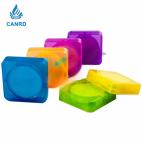


Jinteng microporous filter membrane (water system)
Details
Φ13mm Microporous Filter Membrane Materials and Applications
Imported Polyethersulfone (PES)
Characteristics: German imported membrane, originated from German membrane company in 1965, hydrophilic membrane, with high chemical and thermal stability, strong acid and alkali resistance (pH range 1-14), high mechanical strength. It has large flux, high flow rate, currently the fastest filtration membrane speed is polyethersulfone, the membrane with the lowest protein binding capacity, low protein adsorption, can improve protein recovery rate, is the best choice for ion chromatography, with wide pharmaceutical compatibility, the lowest dissolution rate, can be sterilized by high temperature and pressure (30min\\121℃), ethylene oxide, and other methods.
Application: Filtration of biological and serum in the pharmaceutical industry, terminal filtration of antibiotics, etc.
Terminal filtration of beverages, wines, etc. in the food industry, ultra-pure water terminal filtration
47mm&50mm Microfiltration Membrane, Microfiltration Membrane with Diameter Larger than 50mm
Mixed Cellulose Ester (MCE)
Characteristics: The membrane material has a smooth surface, lightweight texture, high porosity, good retention effect, good hydrophilicity, large water flux, uniform microstructure with extremely low adsorption rate. It is not resistant to organic solvents and strong acid and alkali solutions. It can withstand a pH value of 2-9 and is only suitable for the filtration of aqueous pharmaceuticals or other aqueous solvents. It has a high cost-performance ratio.
Application: Sterilization and particle removal in laboratories and small-scale production processes
Sterilization filtration of culture media and culture solutions
Determination of microbial communities in water bodies
Introduction to Microporous Filter Membrane Products:
In membrane separation technology applications, microporous filter membrane is the most widely used type of membrane, with simple and fast operation. It has the characteristics of high gas permeability, high particle retention rate, good temperature resistance, resistance to strong acid, strong alkali, organic solvents and oxidants, aging resistance, non-stick, non-flammable, non-toxic, and good biocompatibility. Its materials can be divided into two categories: organic and inorganic. Considering the separation characteristics of microporous filter membrane, its main application is to retain particles, bacteria, and other pollutants from gas phase and liquid phase, in order to achieve purification, separation, and concentration. For microfiltration, the retention characteristics of the membrane are characterized by the pore size of the membrane, usually ranging from 0.1 to 1 μm, so microfiltration membranes can separate large-diameter bacteria, suspended solids, and so on. It can be used for clarification of general liquid materials, security filtration, and air sterilization. It is widely used in scientific research, medicine and health, biochemistry, food, energy, microelectronics industry, nanotechnology, environmental protection, and other sectors.
Application of Jinteng Microporous Filter Membrane:
This product is mainly used for the filtration of mobile phase and samples in chromatographic analysis. It has a good effect in protecting chromatographic columns, infusion pump tube systems, and sample injection valves from contamination. It is widely used in weight analysis, trace analysis, colloid separation, and sterile testing. During use, choose the appropriate filter membrane according to the filtered sample.
Jinteng Microporous Filter Membrane Materials:
Nylon 66, Polyethersulfone (PES), Mixed Cellulose Ester (MCE), Polypropylene (PP), Polytetrafluoroethylene (PTFE), Polyvinylidene Fluoride (PVDF)
Need R&D Support?
Browse key product categories and connect battery materials with Canrd's R&D services for testing, fabrication, and project support.
Experimental Materials
CategoryCathode, anode, electrolyte, separator, and other materials for battery research.
Shop cathode, anode & electrolyte materials →Lab Equipment
CategoryBattery lab equipment for pilot lines, fixtures, and testing workflows.
Browse battery lab equipment →Electrodes & Cells
CategoryCustom electrodes, dry cells, and battery cell components for R&D validation.
View custom battery electrodes & cells →Sodium Electrolyte
CategorySodium-ion electrolyte options for sodium battery research and validation.
Shop sodium battery electrolytes →R&D Services
ServiceFull-chain battery R&D services from material evaluation to cell fabrication and failure analysis.
Explore Canrd R&D services →Material Evaluation
ServiceCharacterization, electrochemical testing, and compatibility evaluation for battery materials.
Evaluate your battery materials →Electrode Fabrication
ServiceCustom electrode sheets and rolls based on your target chemistry and process needs.
Request electrode fabrication →Cell Fabrication
ServiceDry cells, assembled cells, and custom-format cell builds for R&D validation.
Build custom research cells →Contact
PageAsk Canrd to match products, materials, and services for your project.
Get product and R&D support →