

 contact@canrd.com
 +86 18928276992

Details
Chemical Formula:Li7-xLa3Zr2-xTaxO12(x=0.4~0.7)
| Product Code | MA-EN-SS-0144 | |
| Test Items | Test results | Method |
| Appearance | White powder, uniform and free of foreign matter | Visual inspection |
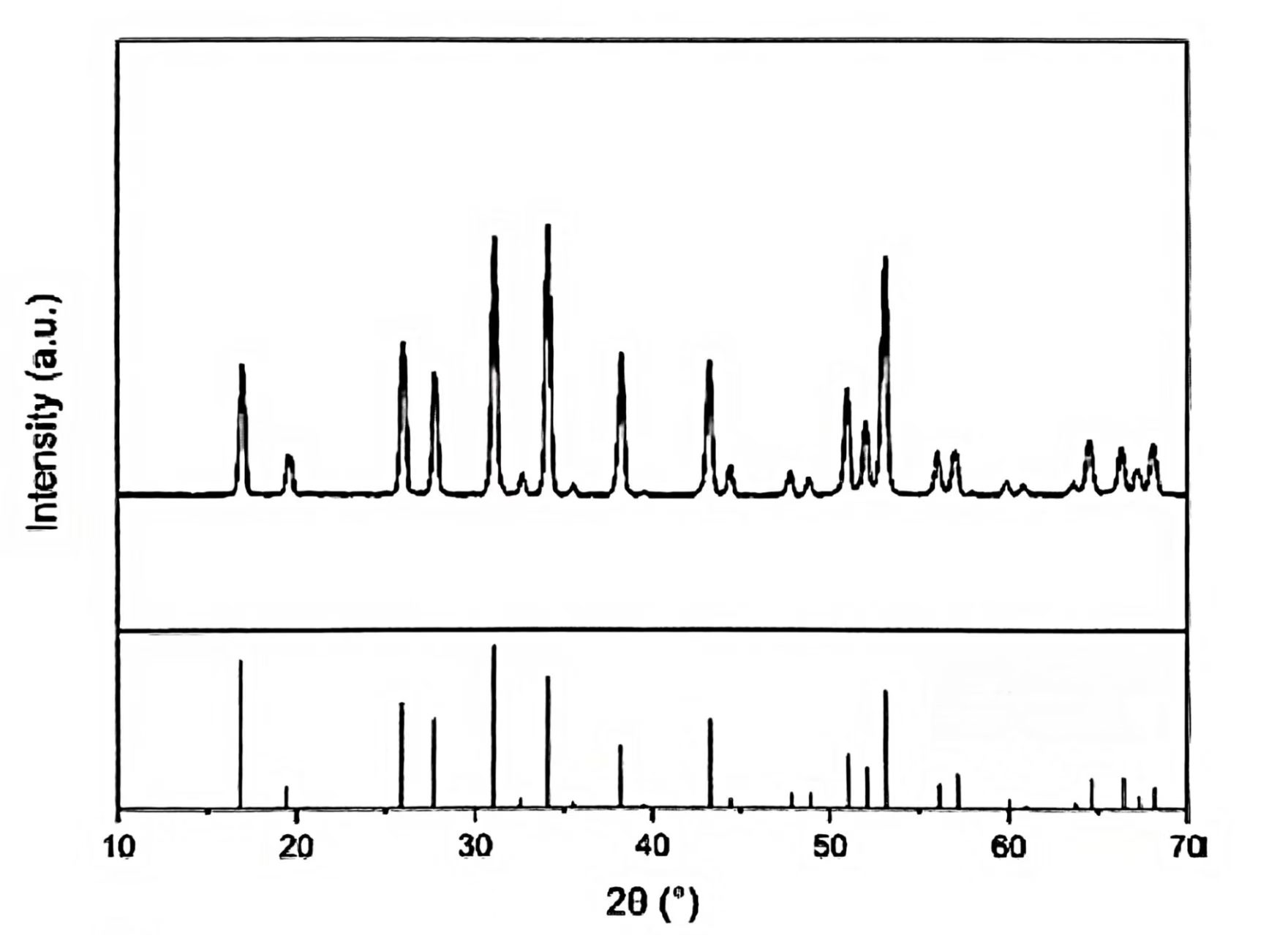
| Structure | Cubic phase, conforms to PDF#80-0457 | X-ray diffractometer |
| Particle Size - D50 (μm) | 0.56 | Particle size analyzer |
| Moisture (wt%) | 0.2 | Moisture tester |
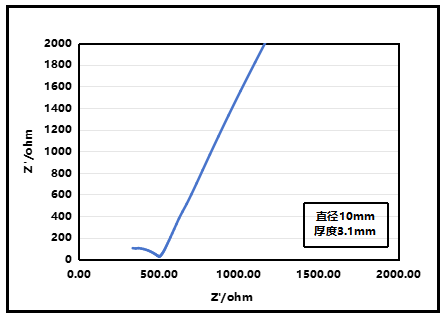
| Ionic Conductivity (mS/cm) | 0.78 | Sintered ceramic pellet, tested by electrochemical workstation at 25℃ |
| Test Conditions 1.XRD Test: Sample preparation in a low-humidity environment, tested over a 2θ range of 10–90°. 2.Ionic Conductivity Test: Take an appropriate amount of powder, pour it into a 10mm-diameter pellet die, press at 350MPa to form a pellet, then sinter at 1200℃ for 4h to obtain a ceramic pellet. Grind and polish the pellet with 400–800–2000 grit sandpaper, then sputter gold on both sides. Note: After gold sputtering, the side surfaces must be ground clean. Test EIS with an electrochemical workstation: frequency 7MHz–1Hz, amplitude 10mV. (The sintering schedule is for reference only; the optimal sintering parameters can be adjusted according to the specific sintering process, which has a significant impact on the ionic conductivity of the test sample.) 3.Electronic Conductivity Test: Test i-t on the sintered ceramic pellet: constant voltage 0.5V, test duration 1800s. 4.Particle Size Test: Laser diffraction, disperse the powder with ultrasound for 3min. |
||
XRD Pattern
Electrochemical Impedance Plot
Need R&D Support?
Browse key product categories and connect battery materials with Canrd's R&D services for testing, fabrication, and project support.
Experimental Materials
CategoryCathode, anode, electrolyte, separator, and other materials for battery research.
Shop cathode, anode & electrolyte materials →Lab Equipment
CategoryBattery lab equipment for pilot lines, fixtures, and testing workflows.
Browse battery lab equipment →Electrodes & Cells
CategoryCustom electrodes, dry cells, and battery cell components for R&D validation.
View custom battery electrodes & cells →Sodium Electrolyte
CategorySodium-ion electrolyte options for sodium battery research and validation.
Shop sodium battery electrolytes →R&D Services
ServiceFull-chain battery R&D services from material evaluation to cell fabrication and failure analysis.
Explore Canrd R&D services →Material Evaluation
ServiceCharacterization, electrochemical testing, and compatibility evaluation for battery materials.
Evaluate your battery materials →Electrode Fabrication
ServiceCustom electrode sheets and rolls based on your target chemistry and process needs.
Request electrode fabrication →Cell Fabrication
ServiceDry cells, assembled cells, and custom-format cell builds for R&D validation.
Build custom research cells →Contact
PageAsk Canrd to match products, materials, and services for your project.
Get product and R&D support →