

 contact@canrd.com
 +86 18928276992
 Lithium-Ion Battery Electrolyte Guide: EC vs DMC vs EMC, LiPF6 & Additives
Introduction
Lithium-ion battery electrolyte is more than an ion-conducting liquid—it directly affects interfacial stability, rate capability, cycle life, and temperature performance. Its behavior depends on the combined design of carbonate solvents, lithium salts, and functional additives, as well as strict control of moisture, HF, conductivity, density, and storage conditions.
This guide explains how common electrolyte components such as EC, DMC, EMC, DEC, PC, LiPF6, VC, FEC, and PS are selected, tested, and optimized, with practical guidance for formulation, quality control, and troubleshooting.
1. What Is Lithium-Ion Battery Electrolyte & Its Core Roles
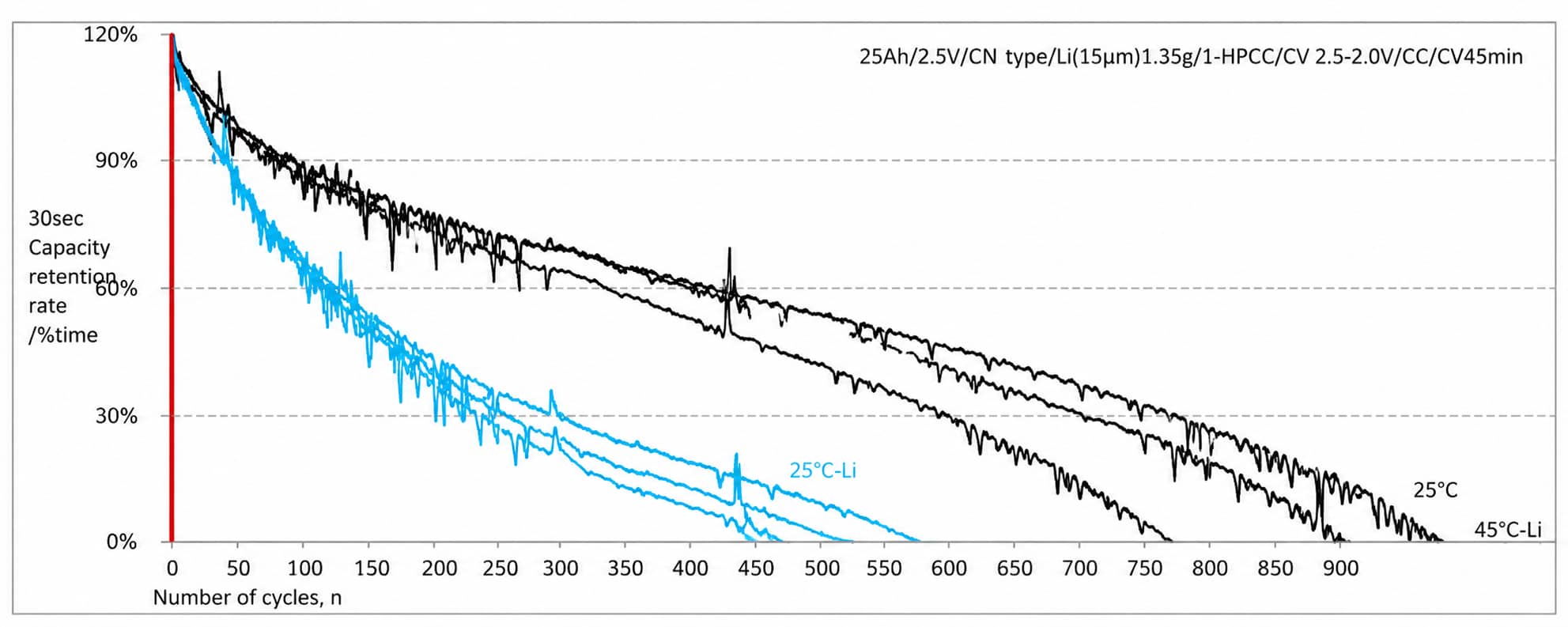
- Act as Li⁺ shuttle medium between cathode and anode during charge-discharge cycles
- Maintain stable electrochemistry across wide voltage windows
- Deliver consistent chemical stability under high/low temperature conditions
- Provide high lithium ion transmission efficiency for fast-rate charging
- Support uniform, stable SEI (anode) and CEI (cathode) interfacial film formation
2. What Is Lithium-Ion Battery Electrolyte Made Of
2.1 Five Common Carbonate Solvents (EC/DMC/EMC/DEC/PC)
- EC (Ethylene Carbonate)
Historically a core component in conventional carbonate electrolytes due to strong lithium salt dissolution capacity and native SEI film-forming performance. It appears in nearly all standard commercial formulations as a foundational solvent, marked as an essential component in Canrd internal data.
- DMC (Dimethyl Carbonate)
Weak-polar, ultra-low viscosity linear solvent that boosts ionic conductivity. Preferred for high-rate fast-charging cells and formulations requiring superior electrode wettability.
- EMC (Ethyl Methyl Carbonate)
Slightly unstable and decomposes into trace DMC DEC under cycling conditions. Internal records note it is mostly compounded with EC for aluminum-shell battery formulas.
- DEC (Diethyl Carbonate)
High boiling point linear solvent blended with EC/PC for dedicated high-temperature electrolyte grades; its high boiling point slows solvent volatilization under elevated operating temperatures.
- PC (Propylene Carbonate)
High-boiling polar solvent used for high-temperature storage electrolyte. It requires strict compatibility evaluation for graphite systems, as Canrd internal data confirms poor interfacial matching with natural graphite anodes.
2.2 LiPF6: The Dominant Commercial Lithium Salt & Hydrolysis Risks
- Core strengths: Excellent room-temperature ionic conductivity, matched oxidation stability for mainstream NCM/LCO cathodes
- Critical limitations: Weak thermal stability and severe hydrolysis reactions when exposed to trace moisture
Full LiPF6 Hydrolysis Chain Reaction
- LiPF6 spontaneous dissociation: LiPF6 → LiF PF5
- Primary HF formation: H₂O + PF₅ → POF₃ + 2HF
- Secondary hydrolysis amplifies HF output: H₂O + POF₃ → PO₂F + 2HF; 2H₂O + PO₂F → H₃PO₄ + HF
- HF corrodes electrode interphases: ROCO2Li + HF → ROCO2H + LiF; Li2CO3 + 2HF → H2CO3 + 2LiF
2.3 VC, FEC, PS Additive Performance Comparison (Internal Test Data)
- VC (Vinylene Carbonate)
Contains unsaturated C=C double bonds that decompose preferentially before base solvents under reduction potentials, forming cross-linked macromolecular SEI networks. Standard industrial dosage ≤2 wt% per internal process guidance. Core verified benefits: cut first-cycle irreversible capacity loss, stabilize high-temperature SEI layers, extend long-term cycle retention.
- FEC (Fluoroethylene Carbonate)
EC derivative with electron-absorbing fluorine substituents, enabling reductive decomposition at higher potentials than EC/VC. Fluorinated interphase films improve electrolyte cycle efficiency and intrinsic cell safety observed in Canrd cell tests.
- PS (1,3-Propanesultone)
Specialized high-temperature cathode protection additive that forms dense CEI passivation layers on NCM/LMO surfaces, reducing direct electrolyte-cathode side reactions as proven by internal high-temperature aging data.
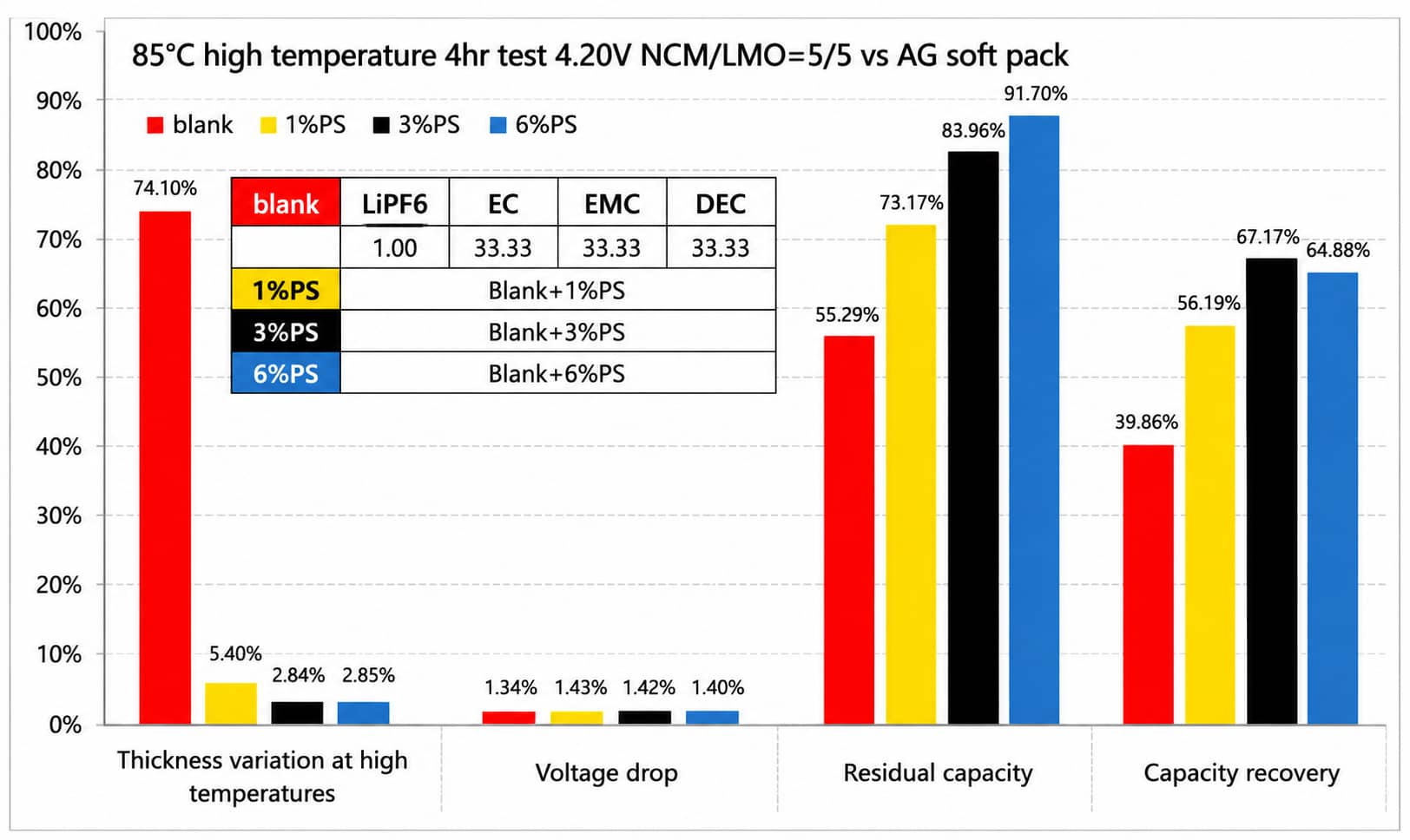
- Blank electrolyte: 74.10% high-temp thickness change, only 55.29% residual capacity post aging
- 6% PS loading: thickness change drops to 1.40%, residual capacity rises to 91.70% Key tradeoff observed in internal data: PS delivers dramatic high-temperature storage improvements but does not support long room-temperature cycling when used alone.
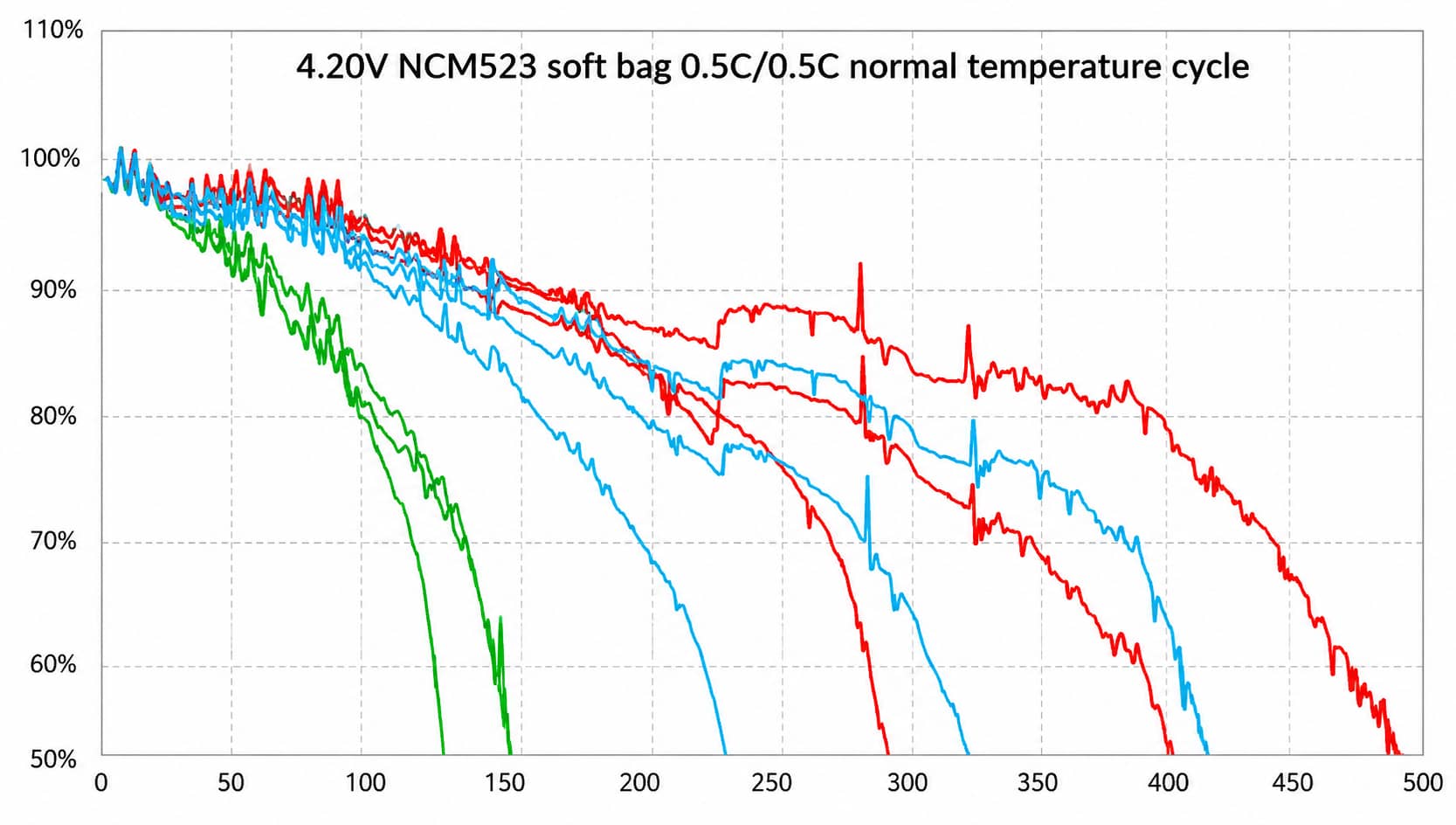
Clear trend from Canrd 0.5C/0.5C NCM523 cycling data: VC delivers the highest capacity retention over 500 cycles, FEC offers moderate stability, while PS alone shows steep capacity fade without VC/FEC co-addition. Internal analysis notes VC and FEC bring positive cycling benefits, while single PS addition fails to boost cycle life.
High-voltage cell reference from Canrd internal 4.35V LCO test: Formulations for high-voltage LCO systems require tailored additive blends validated under elevated temperature and cut-off voltage conditions to slow capacity attenuation.
3. How to Read Lithium-Ion Battery Electrolyte Formulas
- Academic research commonly uses volume ratio notation (e.g., EC:DEC =1:2 v/v) for experimental law observation
- Mass percentage notation dominates industrial production, eliminating temperature-dependent volume deviation risks
- 1M LiPF6 is industry shorthand for ~12.4–12.5 wt% lithium salt concentration in standard carbonate blends
4. Five Common Electrolyte Quality Control Indicators & Test Methods
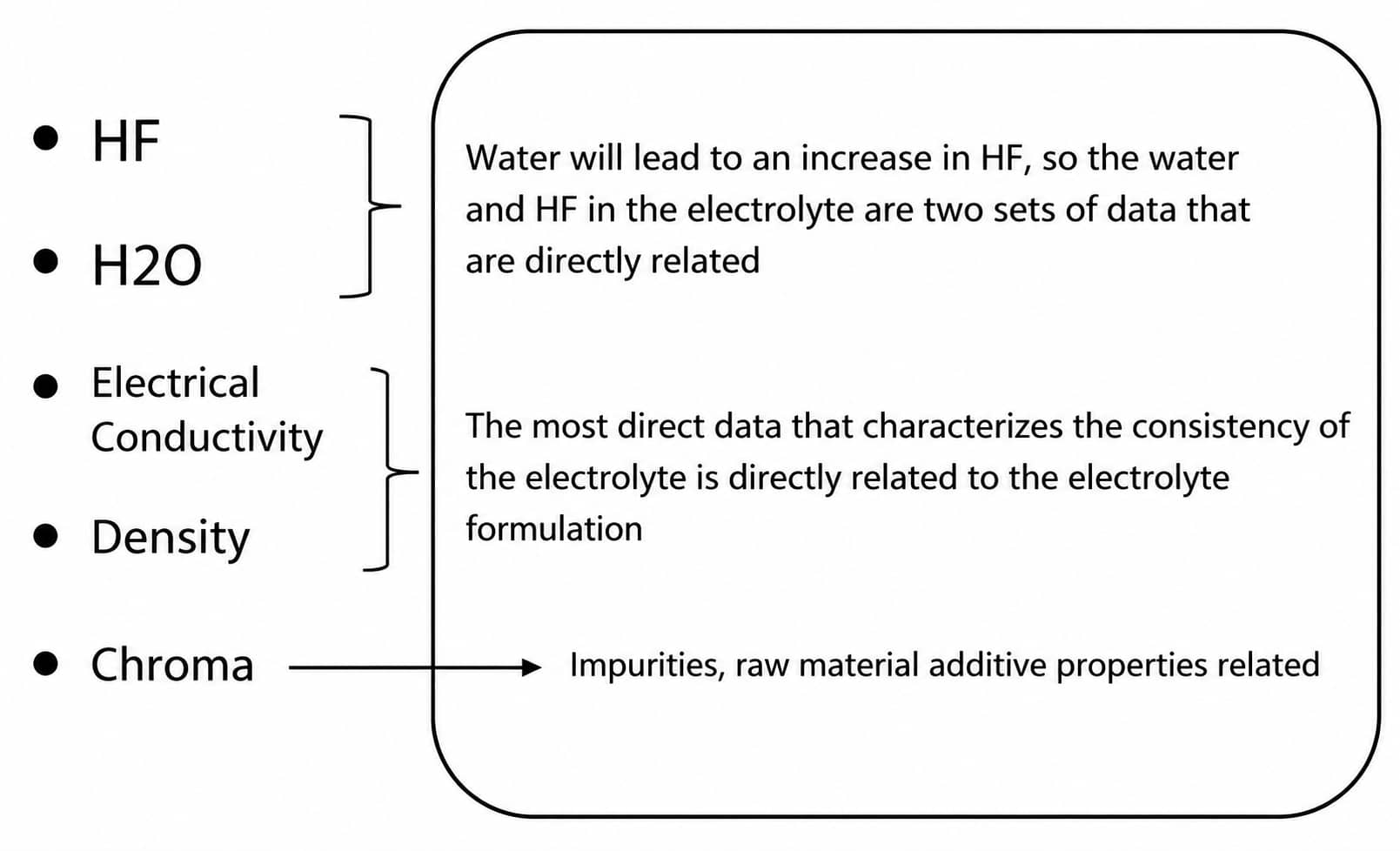
4.1 Moisture & HF: Root Cause, Testing Equipment & Process References
- Solvent pre-blend moisture target before LiPF6 addition: preferably below 10 ppm
- Maximum temperature during lithium salt dissolution: preferably ≤40°C; custom formulas allow adjusted limits
Required Testing Hardware Specified in Canrd Internal QC Standards
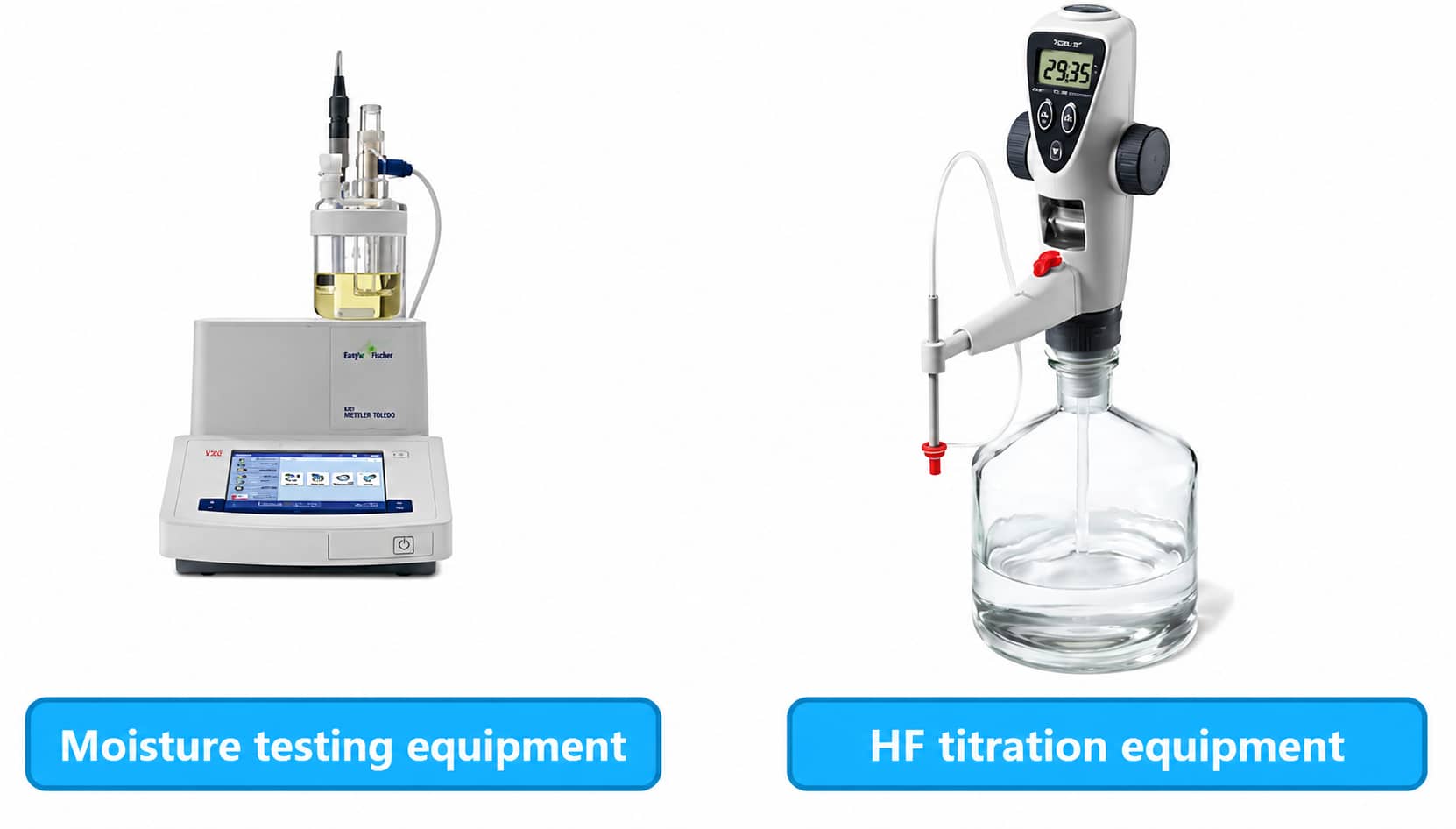
- Karl Fischer Moisture Analyzer: Quantify trace water content in liquid electrolyte samples
- Brand Titrette Electronic Titration Burette: Acid-base titration to measure free HF ppm concentration
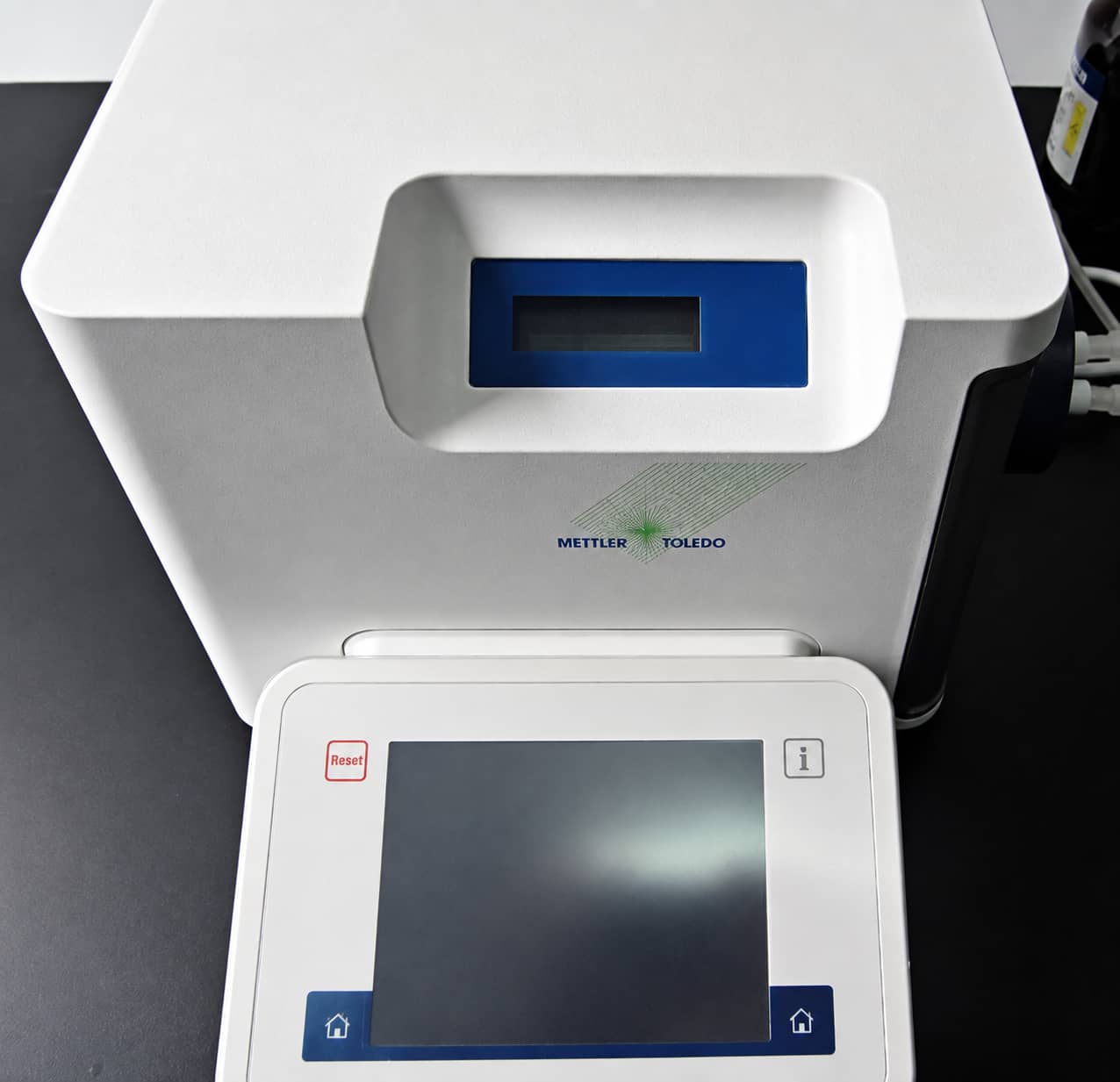
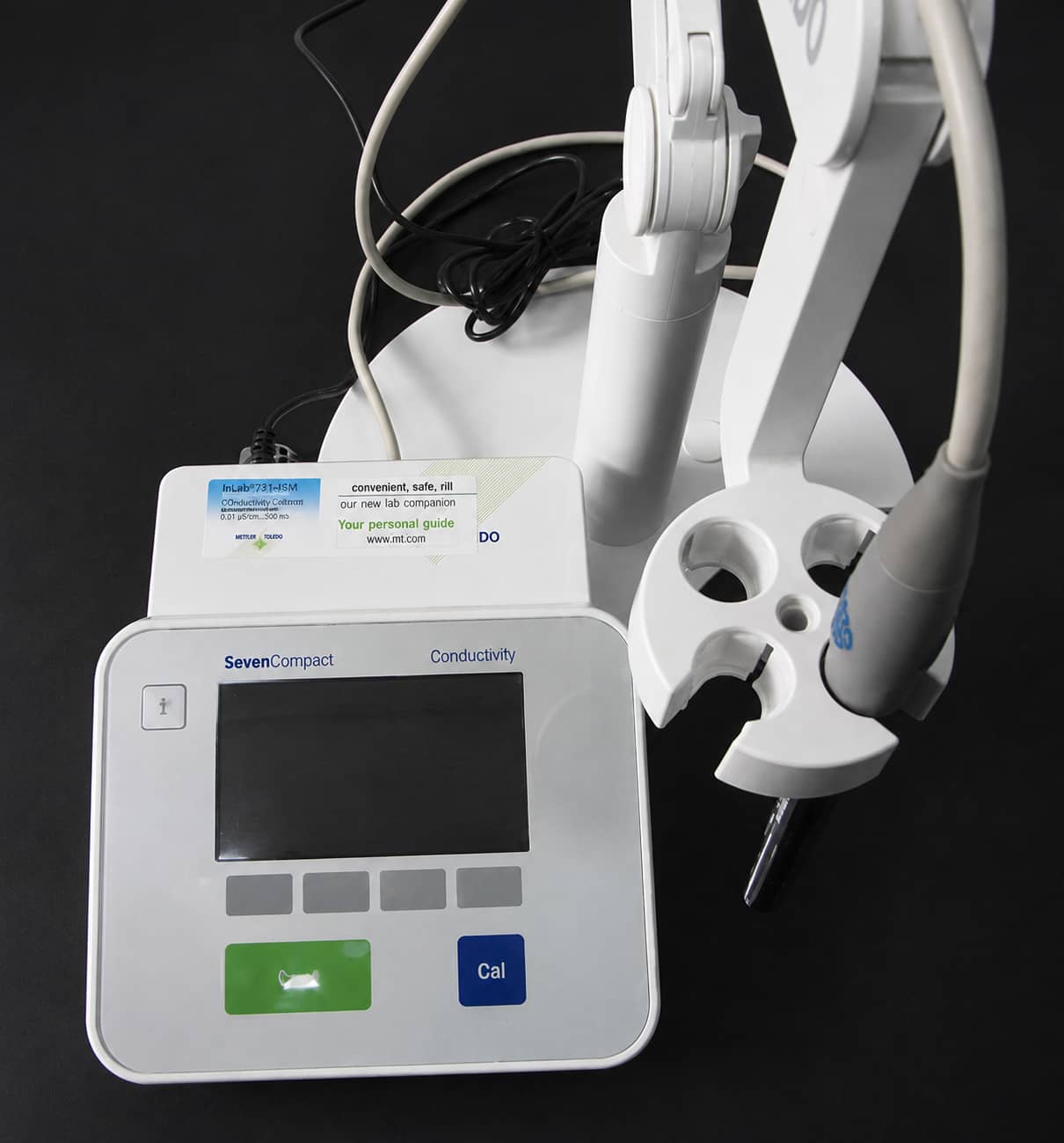
4.2 Conductivity & Density: Formulation Consistency Metrics
- Density trend: Within the EC/EMC/DEC ternary system tested, density rises as LiPF6 solubility increases
- Conductivity mechanism: Jointly controlled by lithium salt concentration and electrolyte viscosity. Conductivity first rises with salt loading, then declines after hitting a concentration saturation peak.
4.3 Chroma: Causes of Discoloration & Risk Clarification
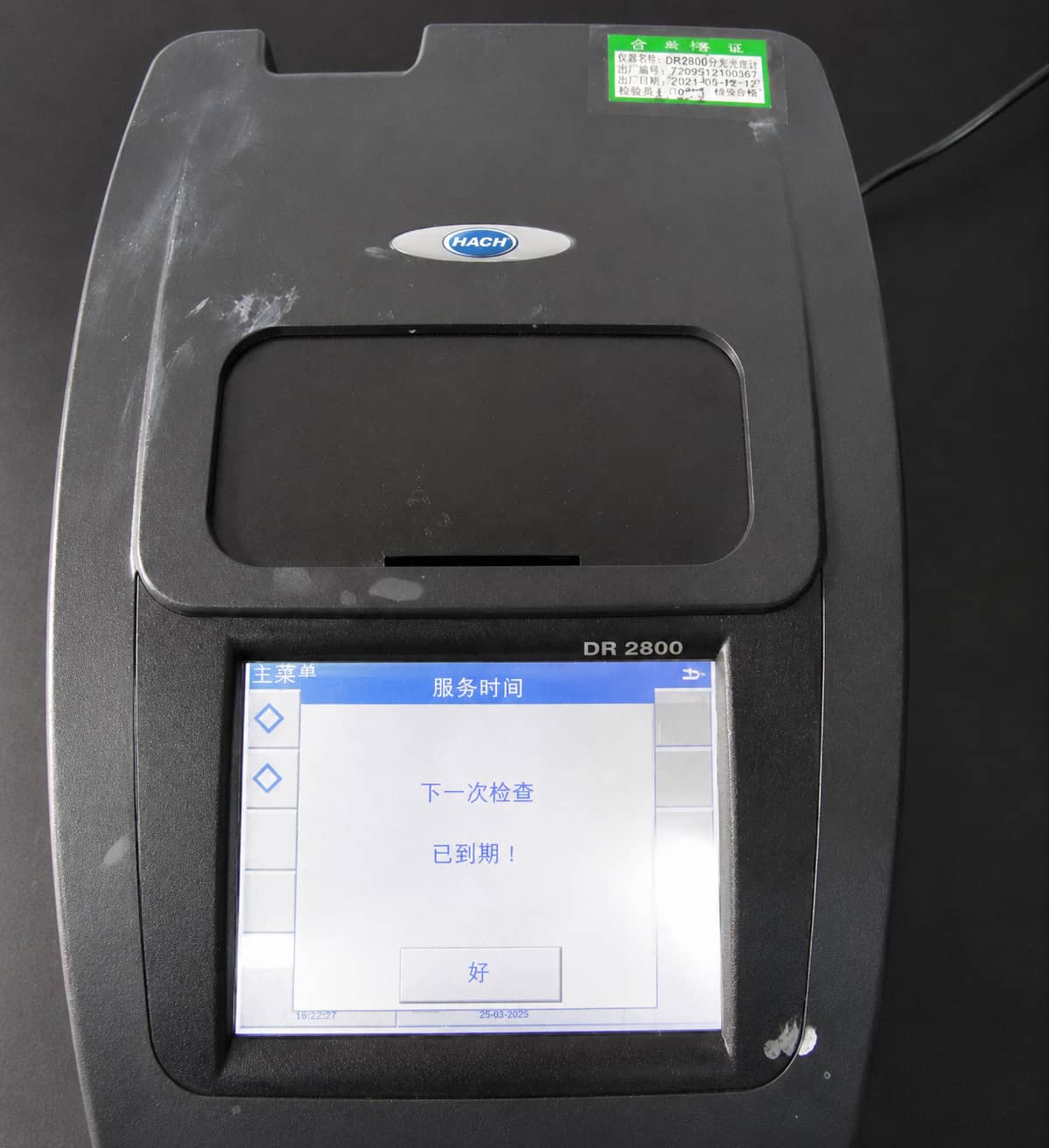
- Suspended solid particles: May puncture separators and create micro-short circuits (discoloration is a side symptom, not the direct short-circuit trigger)
- High-dosage specialty additives: Certain functional additives naturally deepen liquid color
- High-temperature long-term storage: Accelerates solvent-salt side reactions to form colored impurities
5. Sample-Level Electrolyte Storage Recommendations
- Conventional electrolyte baseline storage: Sealed glove box environment with internal moisture ≤5 ppm, ambient temperature ≤24°C
- Acceptable storage containers listed in internal storage specs: Aluminum bottles, steel cylinders, fluorinated plastic vessels; glass containers are not recommended for long-term storage (glass absorbs ambient moisture)
- Special electrolyte sealed storage rule: Maintain temperature below 20°C for four high-demand formula categories defined in Canrd material management files:
- High EC loading (>40 vol%) electrolyte
- High DMC fast-charging electrolyte (>40 vol%)
- High FEC additive electrolyte (>5 wt%)
- High-concentration LiPF6 electrolyte (>1.20M) with multi-additive blends including DTD
6. Troubleshooting Common Electrolyte-Related Cell Defects
- Continuous HF rise after electrolyte storage Root cause: Moisture ingress from glass storage containers drives ongoing LiPF6 hydrolysis. Fix: Switch fully sealed aluminum bottles low-moisture glove box storage as recommended in internal storage guides.
- Batch-to-batch conductivity fluctuation Primary inspection priorities summarized from internal abnormal handling records: LiPF6 feeding accuracy, closed mixing temperature control, solvent raw material ratio consistency.
- Severe pouch swelling after 85°C aging Solution: Blend PS additive to form cathode CEI films, paired with VC to stabilize anode SEI, validated by Canrd high-temperature aging comparative data.
- Fast capacity decay under 4.35V high-voltage cycling Fix: Optimize fluorinated additive blends validated under target high-voltage temperature conditions matching LCO/NCM cathode chemistry, based on internal high-voltage cycle test archives.
7. Emerging Electrolyte Development Directions
- Wide-temperature adaptable electrolyte: Solvent blend optimization to balance low-temperature discharge power and high-temperature cycle durability for EVs operating in extreme climates
- High-safety non-flammable electrolyte: Develop gel and solid-state systems to eliminate flammable liquid carbonate solvents, resolving thermal runaway risks (current tradeoff observed in internal lab tests: reduced room-temperature ionic conductivity)
- High-voltage resistant electrolyte: Lab CV testing shows some formulations tolerate 5V, yet real pouch cells fail above 4.3V; core R&D focus on high-voltage fluorinated film-forming additives
- Customized functional electrolyte: Electrolytes are the most adjustable core battery material, requiring tailored solvent/additive combinations for fast-charging, long-cycle, energy storage, and aerospace scenarios
8. FAQ
Q1: If moisture passes release specs, why does HF keep rising during storage?
Q2: Which additive works best for 85°C NCM pouch storage tests?
Q3: Can PC solvent be used in graphite anode electrolytes to boost high-temperature performance?
Q4: What five tests must every electrolyte batch complete before cell filling?
Q5: Is VC FEC a mandatory additive blend for all high-voltage LCO electrolytes?
9. Conclusion
Related Products & Services
Use Canrd products and R&D services to turn battery knowledge into practical experiments.
Coin Cell Case
ProductCoin cell cases for validating materials and electrochemical concepts from the article.
Use coin cell cases in your next test →Sodium Electrolyte
CategoryElectrolytes for sodium-ion battery research, compatibility tests, and cell validation.
Shop sodium electrolyte for validation →Cell Fabrication
ServiceGet support building dry cells, assembled cells, or custom formats for R&D validation.
Request cell fabrication support →Experimental Materials
CategoryBrowse materials for follow-up experiments, benchmarking, and product development.
Browse experimental battery materials →