

 contact@canrd.com
 +86 18928276992
 Home/Resources/Knowledge/Battery Material/Lithium-Ion Battery Electrolyte Formulation: How to Convert Ratios, Diagnose Discoloration & Scale U
Lithium-Ion Battery Electrolyte Formulation: How to Convert Ratios, Diagnose Discoloration & Scale U
Canrd August 12, 2026 330
1. Introduction: Core Pain Points This Guide Resolves
Most basic electrolyte articles only introduce raw material composition, while this technical guide focuses on practical communication and scale-up failures encountered daily by formulation engineers, production QC staff and lab researchers.
Misaligned formula notation can cause severe dosing deviations during lab-to-pilot transfer; unexplained electrolyte yellowing leads to mass raw material scrappage; coin-cell qualified formulas frequently fail soft-pack mass production. All test data, formula conversion rules and comparative experiments in this document are extracted from Canrd internal full-cell manufacturing training materials.
Content follows a problem-first logic consistent with the battery slurry mixing process guide: core technical operation rules → controlled experimental data → quality index interpretation → scale-up risk analysis → targeted troubleshooting FAQ. For foundational knowledge of electrolyte raw materials, VC/FEC/PS additive performance and basic physicochemical testing equipment, refer to our Part I technical article via the internal link above.
2. How to Read & Convert Lithium-Ion Battery Electrolyte Formulas (Primary Core Section)
Inconsistent formula expression between academia and production lines is a top source of trial production errors. This chapter breaks down every notation standard with real batching calculation cases from Canrd training archives.
2.1 What Does 1 M LiPF6 Actually Mean?
1 M refers to molar concentration of lithium salt dissolved in mixed solvent, not a fixed mass percentage value.
As shown in the table above from Canrd training materials, different binary/ternary carbonate blends carry distinct equivalent wt% values for 1M LiPF6, ranging from 10.31 wt% to 14.66 wt% across test systems. Canrd’s historical internal production reference used 12.4–12.5 wt% for common EC/EMC/DEC blends, but this range cannot be applied universally to all solvent formulas.
2.2v/v Volume Ratio vs w/w Mass Ratio: Key Differences & Use Case
Academic Volume Notation (v/v)
Example: 1M LiPF6,EC:DEC = 1:2 (v/v)
- Pros: Intuitive for mechanism research to adjust single solvent variables
- Limitation: Solvent volume fluctuates with ambient temperature, cannot be directly used for factory weighing batching
Industrial Mass Notation (w/w)
Mass-based proportioning is commonly preferred for mass production workshops, not a mandatory global standard:
- Core reason: Production quality control relies on mass weighing; temperature will not cause proportion deviation
- Standard practice: All factory batch records, supplier material specifications adopt mass percentage notation
2.3 Step-by-Step Volume-to-Mass Formula Conversion Case
We use the control group formula from Canrd internal lab papers as a full conversion demonstration: Original academic formula: 1M LiPF6, EC:DEC = 1:2 (v/v), no additions Conversion steps recorded in internal operation files:
- Look up pure EC and DEC density parameters from the density conversion table
- Convert volume ratio 1:2 to corresponding mass ratio ~40.4:59.6
- Calculate total solvent mass matching the 12.5 wt% 1M LiPF6 reference loading
- Recalculate solvent mass proportion when adding VC/LiTFSI via internal addition rules
2.4 Internal vs External Additive Calculation: Why "2 wt%" Creates Batch Deviations
Two mainstream additive calculation standards will produce different actual concentrations if mixed during batching, demonstrated with a 100g base electrolyte case:
-
External Addition Method (Mainly for Lab Control Group Screening)Definition: Prepare 100g base electrolyte first, then add extra additive on top of the total base massCase: Add 2g VC into 100g base electrolyteActual VC mass fraction = 2 ÷ 102 ≈ 1.96%Tradeoff: Easy horizontal comparison of additive effects for screening; high additive loading will dilute base solvent and lithium salt proportion
-
Internal Addition Method (Industrial Mainstream)Definition: Additive mass is included within the total 100g finished formula weight, solvent mass reduced correspondinglyCase: 2g VC occupies exactly 2% of total finished electrolyte massTradeoff: Zero communication deviation with material suppliers; each additive group requires independent solvent proportion recalculation
Key engineering reminder: Two research teams both labeling "2 wt% VC" may prepare electrolytes with distinct actual additive concentrations if they adopt different calculation modes.
3. Why Does Lithium Battery Electrolyte Turn Yellow or Brown? (Second Core Section)
Countless production batches are scrapped due to unexplained discoloration after glove box storage. This chapter analyzes controlled aging test data from Canrd internal materials to separate all contributing variables.
3.1 Three Main Factors Triggering Electrolyte Discoloration
From Canrd training records, three root drivers of discoloration are confirmed:
- LiPF6 Lithium Salt: Lithium salt catalyzes solvent transesterification and thermal decomposition to form colored impurities
- Additive Type & Loading: High-concentration fluorosulfonate special additives naturally deepen liquid chroma
- Storage Environment: Container material, storage temperature and air moisture ingress accelerate side reactions
Recommended sample storage specifications (training reference, not mandatory enterprise standards):
- Conventional electrolyte baseline storage: Sealed glove box with internal moisture ≤5ppm, ambient temperature ≤24°C
- Special high-additive / high-lithium-salt formulas: Hermetically sealed storage below 20°C
- Acceptable containers: Aluminum bottles, steel cylinders, fluorinated plastic vessels; glass containers not recommended for long-term storage (glass absorbs atmospheric moisture)
3.2 Controlled Aging Test Data: Solvent Discoloration Without & With LiPF6
Test 1: Pure carbonate solvent blank aging (50℃, 10 days, no LiPF6 added)
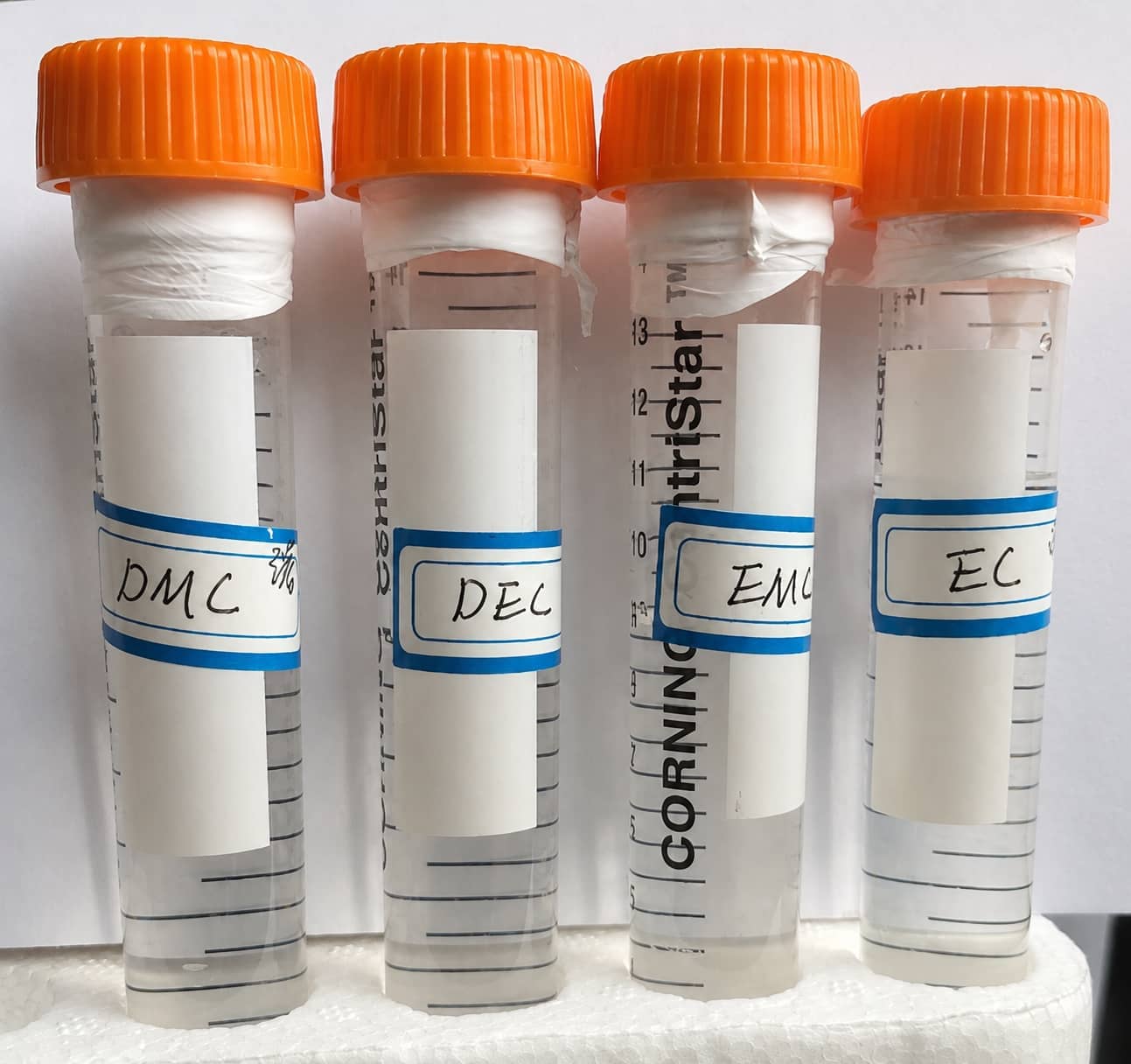
Test conclusion: EC, DMC, EMC, DEC all remain fully transparent under high-temperature conditions without lithium salt; pure solvent has no self-discoloration risk.
Test 2: Solvent mixed with LiPF6, 50℃ 10-day aging
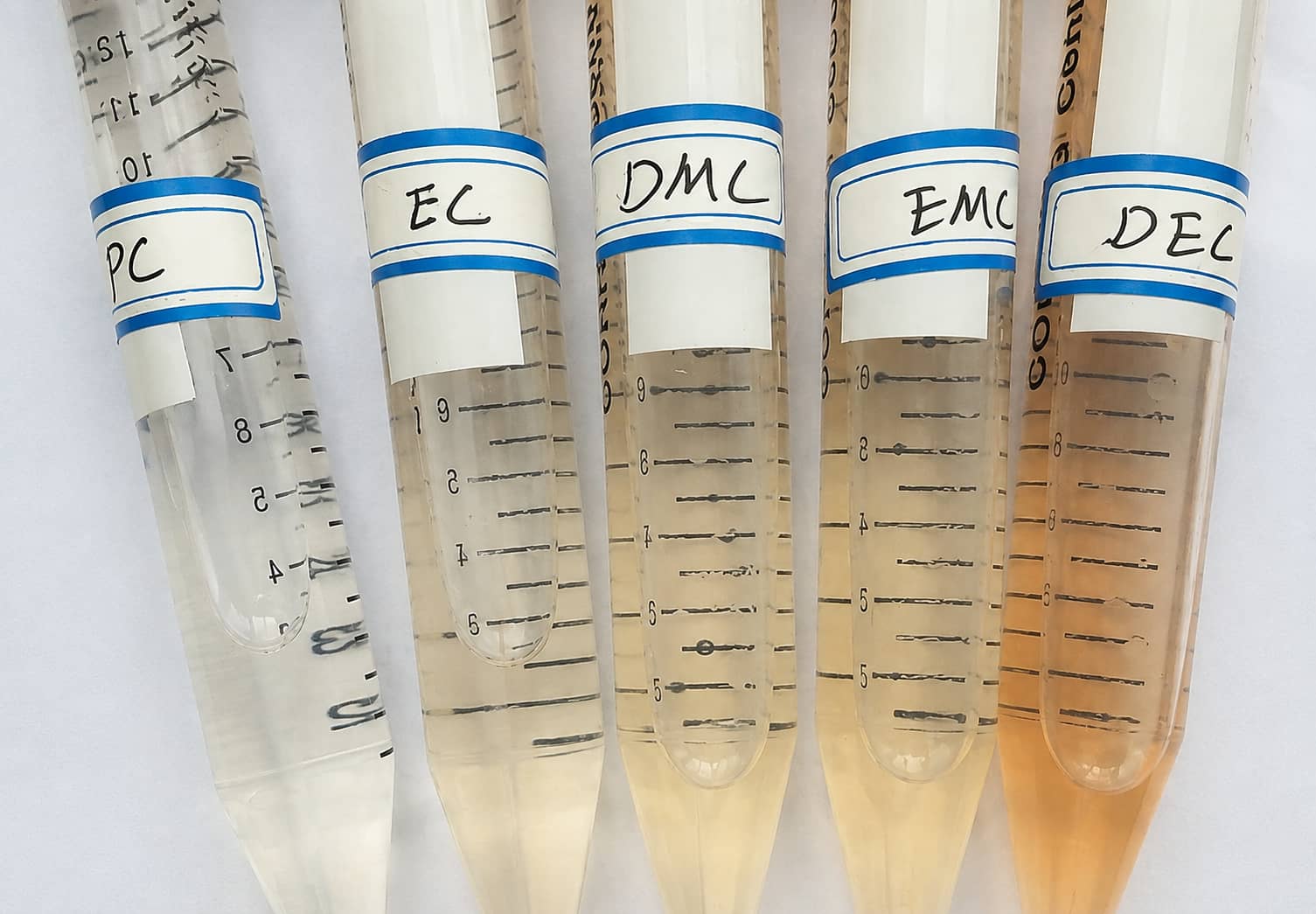
Discoloration severity ranking observed in this test: DEC > EMC > DMC ≈ EC ≈ PC Experimental note: Under this specific aging condition, LiPF6-solvent interaction significantly promoted colored byproduct generation, but this rule cannot be generalized to all temperature/time storage environments.
3.3 Electrode Contact Simulation Tests (Anode Lithium Flake / High-Voltage LCO Cathode)
To replicate real cell storage aging conditions, Canrd designed two electrode contact simulation experiments:
- Simulate fully charged graphite anode (Solvent +12% LiPF6 + lithium metal sheet, 60℃ 7 days)
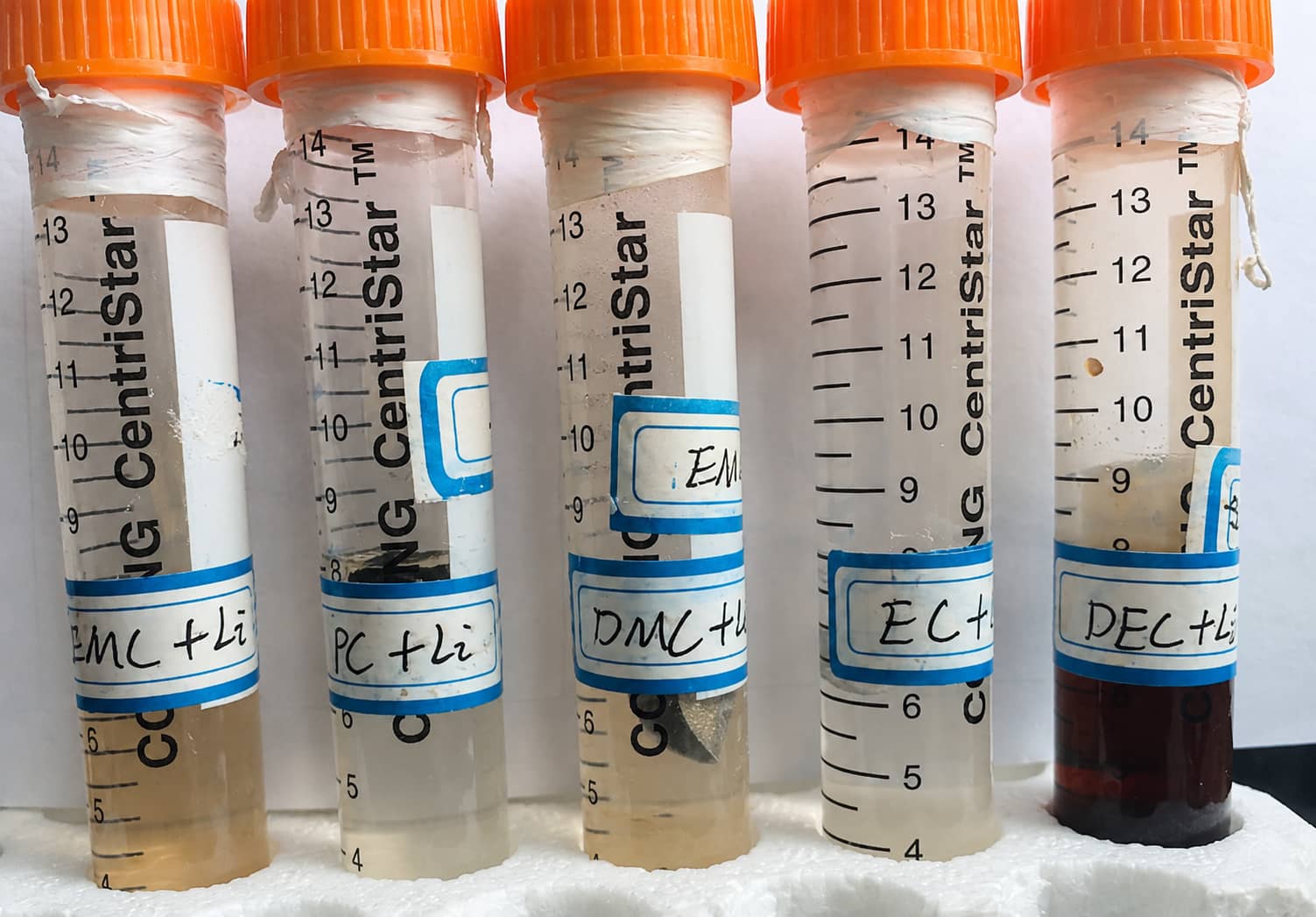
Test observation: DEC solvent group showed obvious dark reddish-brown discoloration after contact with lithium flakes; other carbonate solvents only presented mild color change under identical conditions. No comparable severe reaction was visible for other solvents in this single test.
- Simulate fully charged high-voltage LCO cathode (Solvent +12% LiPF6 + LCO electrode, 60℃ 8 days, 4.4V & 4.45V cut-off)
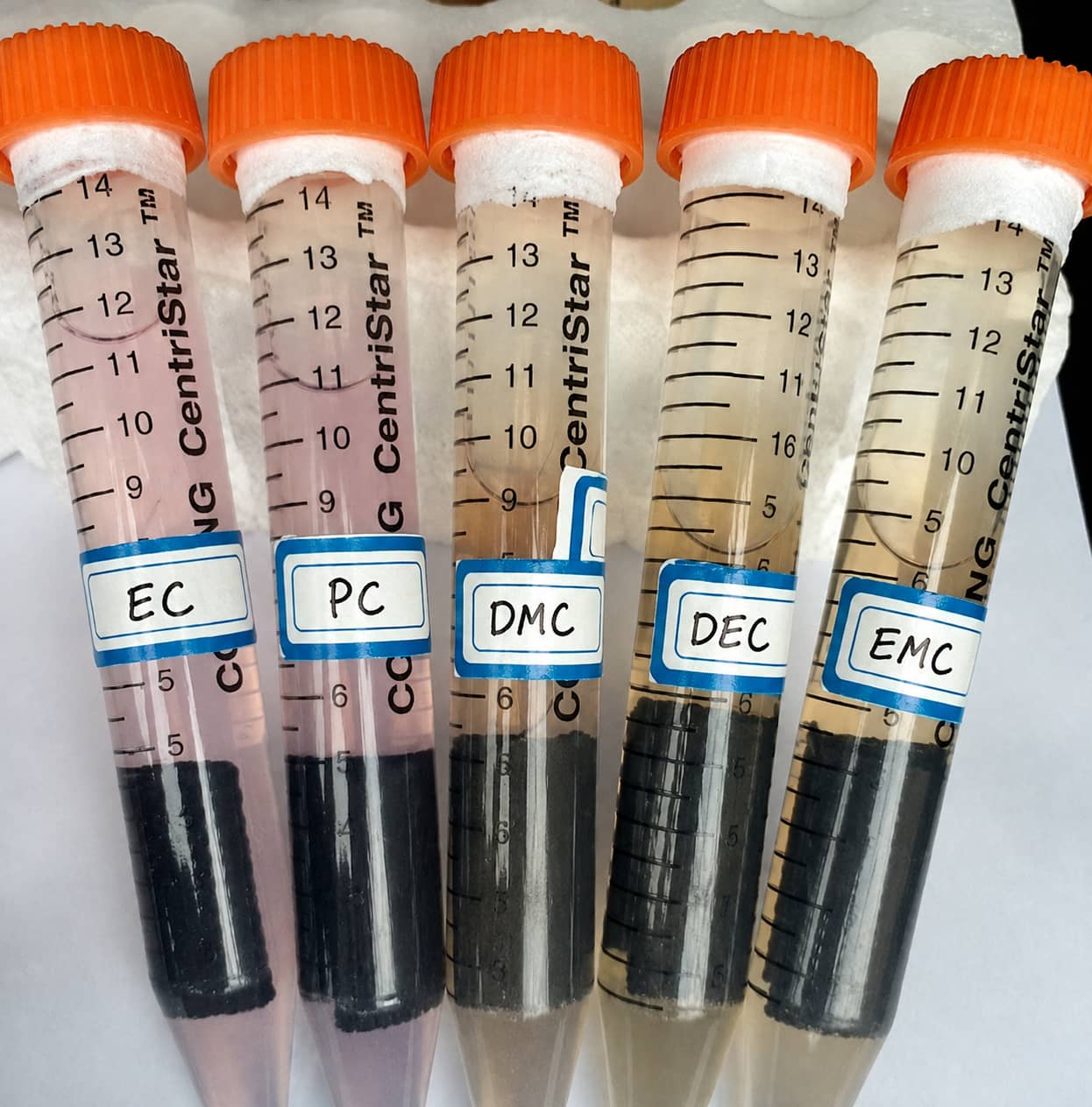
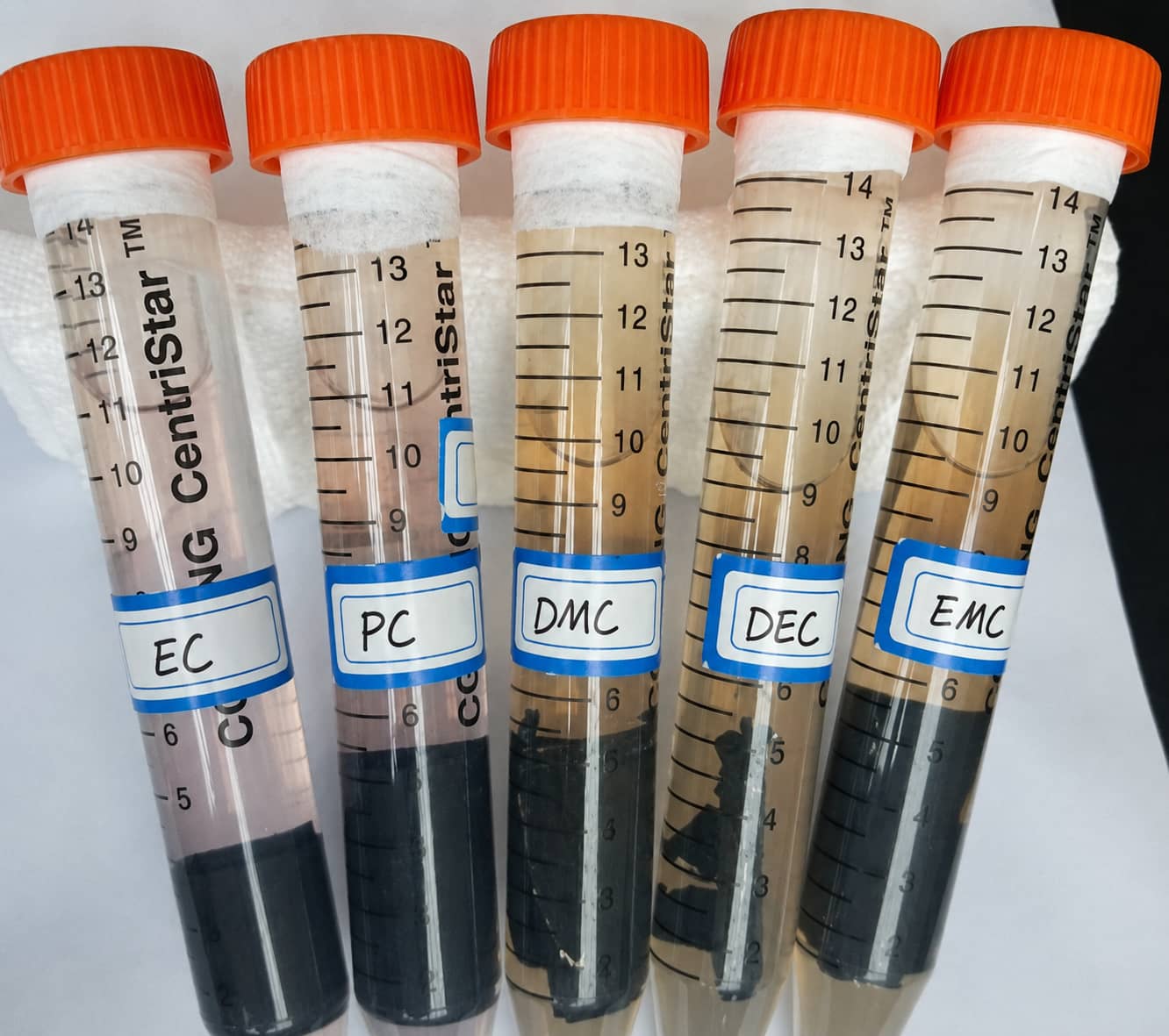
Observation note: Pink discoloration appeared in high-voltage LCO test groups; training materials indicate this pink hue may be associated with cobalt-containing species, but additional compositional testing is required to draw definitive conclusions.
3.4 Critical Question: Does Discolored Electrolyte Equal Unqualified Material?
Color change is only a visual diagnostic signal, not a direct pass/fail standard for electrolyte batches. If electrolyte turns light yellow after storage, complete full QC re-inspection including moisture, HF, density, conductivity and chroma first:
- If all physicochemical indexes meet reference thresholds: Proceed to small pouch cell validation to confirm cycling and high-temperature storage performance
- If HF/moisture exceeds reference limits or severe dark brown discoloration occurs with suspended particles: Batch should be discarded to avoid cell swelling and capacity decay risks
4. How to Interpret Common Electrolyte QC Reference Metrics
The following values are historical industry reference thresholds sorted from Canrd training documents, not universal mandatory global standards; each project should customize release limits according to cell design and formulation.
| Test Item | General Reference Threshold | Key Interpretation Notes From Internal Data |
|---|---|---|
| Moisture Content | ≤20 ppm | Tighten to 7–10 ppm for high-voltage long-cycle formulas |
| Free HF | ≤50 ppm | DTD sulfur-containing additives interfere with NaOH acid-base titration |
| Density | Formula-specific fixed range | Deviation from validated range triggers inspection of solvent ratio and lithium salt feeding accuracy |
| Ionic Conductivity | Formula-specific fixed range | Influenced jointly by lithium concentration and solvent viscosity; abnormal readings require temperature calibration during testing |
| Chroma | ≤50 Hazen | Fluorinated high-additive specialty electrolytes adopt customized higher allowable chroma limits |
4.1 Interference Risk: DTD Additive Causes False High HF Titration Results
DTD itself reacts with standard NaOH titrant during HF testing, generating artificially elevated HF readings that do not reflect actual free HF concentration inside electrolyte. When formulas contain DTD, validate analytical method anti-interference performance before judging batches out of spec based solely on titration data.
4.2 How to Judge Abnormal Density & Conductivity Batch Data
Density and conductivity serve as paired consistency markers for fixed electrolyte formulations. Any stable deviation from pre-validated ranges indicates potential risks including inaccurate lithium salt weighing, uneven solvent mixing, or solvent volatilization during closed batching processes.
5. Why Electrolyte Formulas Need Re-Validation Across Cell Systems
Identical electrolyte blends deliver vastly different performance when matched to different cathode/anode materials or cut-off voltages, per Canrd high-voltage LCO test data:
With LCO cathode material, higher charging cut-off voltage accelerates cobalt ion dissolution and electrolyte catalytic decomposition, leading to faster capacity attenuation. No single universal electrolyte formula fits all voltage and material combinations.
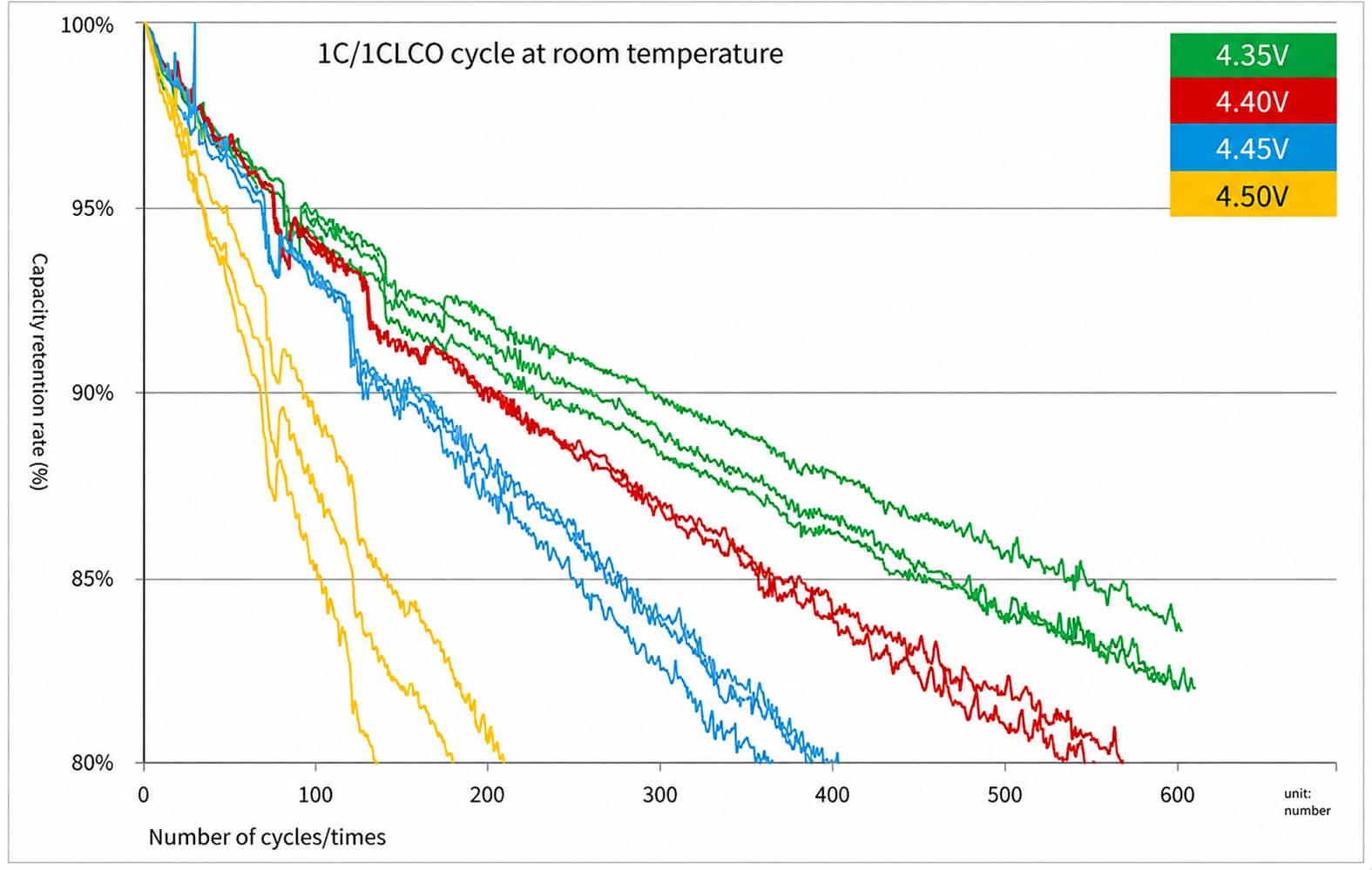
Training reference optimization ideas (directional reference only, not fixed universal recipes):
-
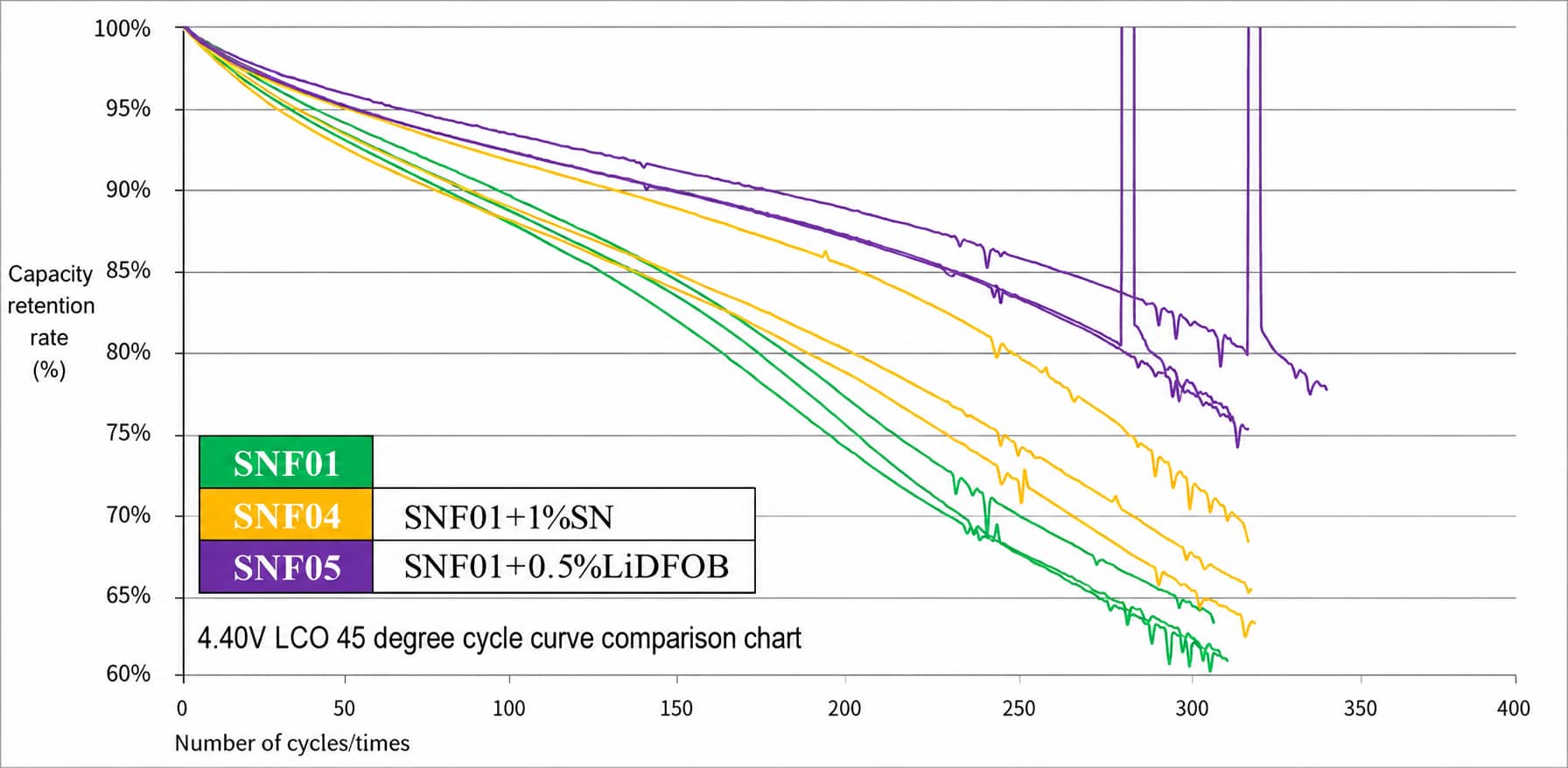
LCO Cathode (4.20–4.45V): Nitrile additives (ADN/SN) as candidate blends to suppress cobalt leaching
-
LMO Cathode: LiBOB additive candidate to reduce manganese dissolution
-
High-Ni NCM Series: Increase PS additive loading and compound nitrile additives to mitigate transition metal side reactions
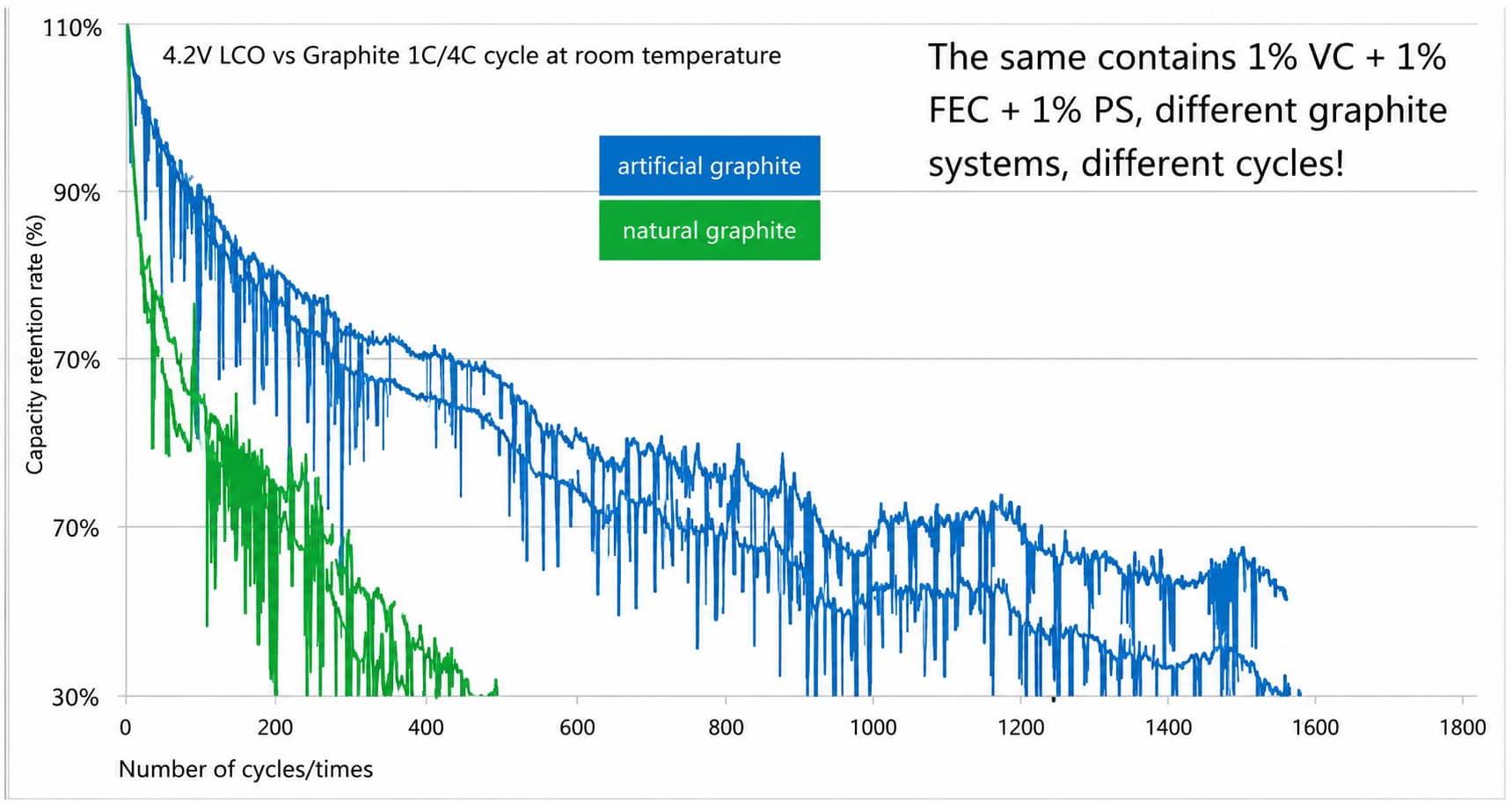
For graphite anode mainstream systems, VC FEC compound additives are mature film-forming candidates validated in internal tests; different graphite batches still produce distinct cycle gaps with identical electrolyte:
For formulas operating above the 4.6V training reference boundary, fluorinated solvents and co-lithium salts are candidate optimization routes:
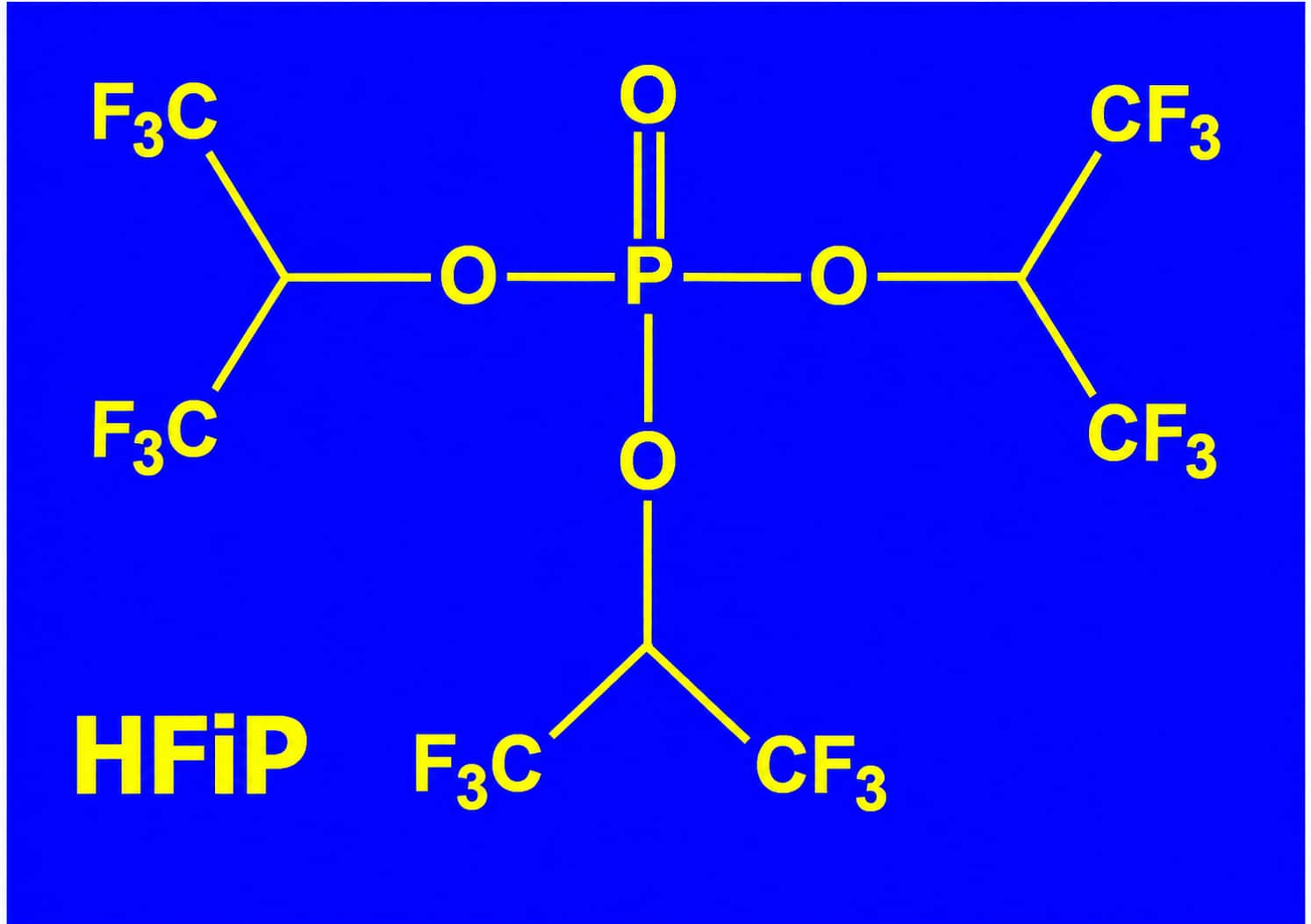
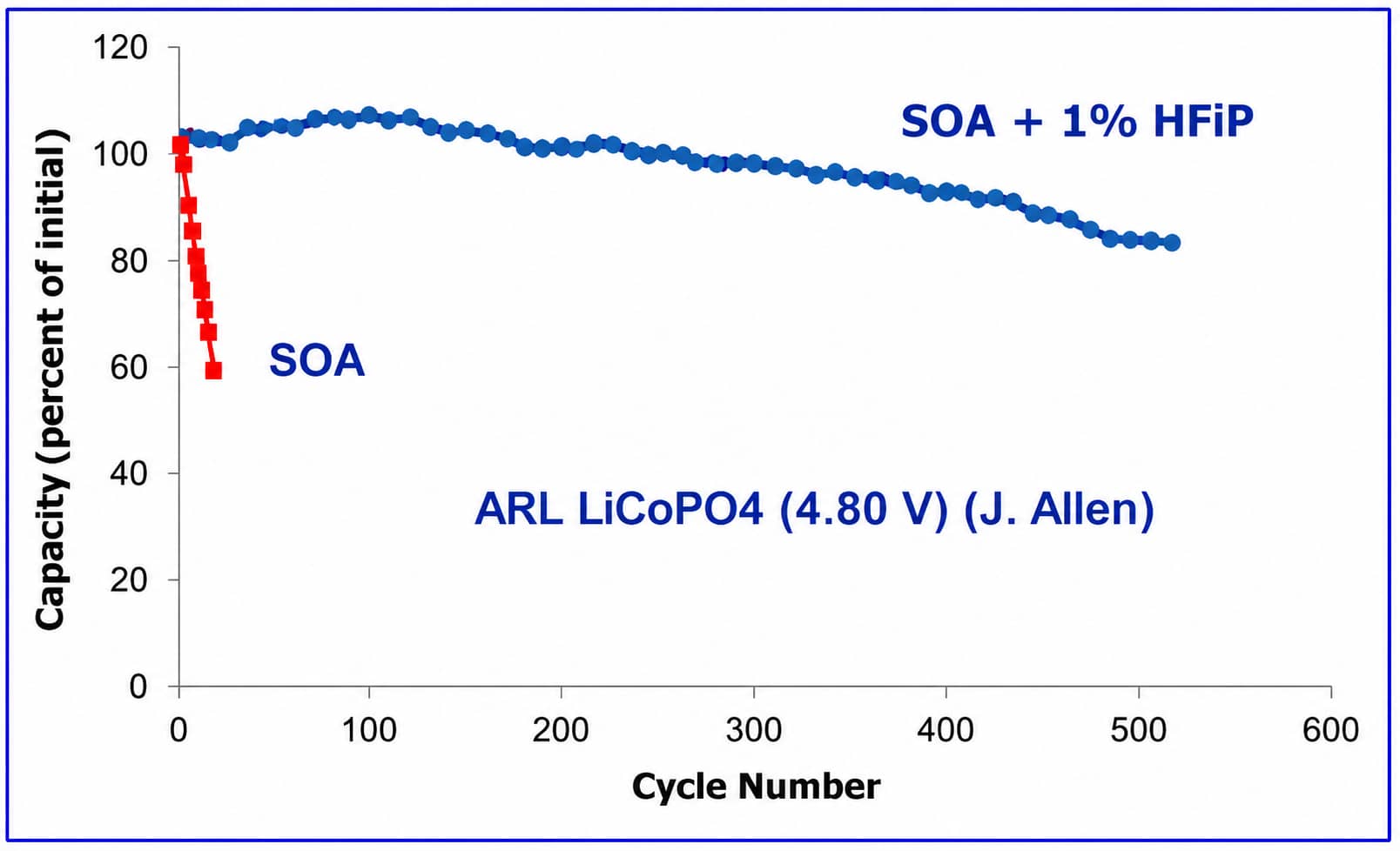
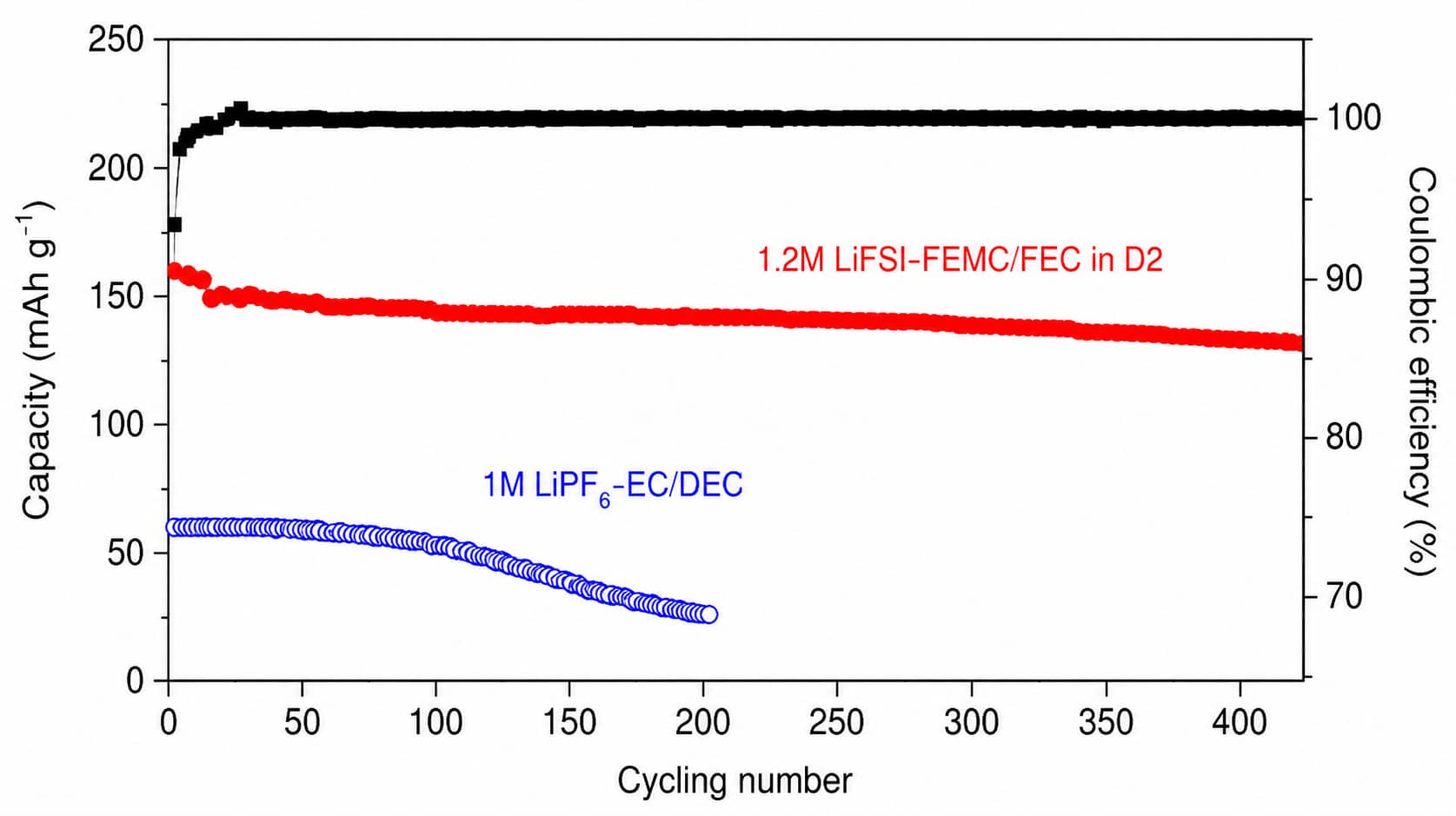
Important reminder: 4.6V is only a historical design reference boundary in training materials, not a mandatory industry threshold requiring fluorinated solvent replacement for all high-voltage formulas.
6. Why Lab Electrolyte Works in Coin Cells But Fails in Pouch Cells (Third Core Section)
Many researchers achieve stable coin-cell cycle data yet encounter severe swelling, rapid capacity fade and low consistency during soft-pack mass production. This chapter summarizes core gaps extracted from Canrd internal comparison records.
6.1 Core Gaps Between Academic Lab Formulas & Commercial Production Electrolyte
| Comparison Dimension | University Lab Electrolyte | Mass-Production Commercial Electrolyte |
|---|---|---|
| Formula Notation | Volume ratio external additive addition | Mass ratio internal additive addition |
| Design Priority | Novel electrochemical mechanism, short-term coin cell performance | Long cycle, high-temperature storage, batch consistency, low production cost |
| Cell Matching | Small coin cells with excessive electrolyte volume (high E/L ratio) | Large soft pack, aluminum shell cells with minimal electrolyte loading |
| Formulation Complexity | Single/dual additive simple solvent blends | Multi-additive composite systems to solve swelling, voltage drop simultaneously |
| Raw Material System | Novel experimental lithium salts/fluorinated solvents with unstable stability | Mature five-carbonate solvent platform with verified industrial additives |
6.2 Standard Full-Cell Validation Workflow Before Mass Scale-Up
To avoid costly scale-up failure after coin-cell screening, Canrd internal operation specifications require sequential verification steps:
- Complete all electrolyte QC index testing (moisture, HF, density, conductivity, chroma)
- Half-cell coin screening for initial cycle and high-temperature storage performance
- Small pouch cell validation matching target electrode areal loading and N/P ratio
- Long cycle, 85°C aging, low-temperature discharge and impedance testing
- Batch repeatability verification with pilot batching equipment
7. FAQ
Q1: How do I convert journal v/v electrolyte formulas to factory mass batching standards without dosing deviation?
A: Refer to the solvent density & 1M LiPF6 conversion table, first translate volume proportion into mass ratio, then adopt internal addition calculation mode for all additives to avoid dilution deviation.
Q2: My electrolyte is transparent after batching but turns amber after one week of glove box storage, what is the root cause?
A: LiPF6-solvent catalytic side reactions drive discoloration, accelerated by glass containers absorbing trace moisture and storage temperature exceeding 24°C. Switch airtight aluminum vessels and follow glove box moisture control rules.
Q3: DTD is added to my formula, HF titration results always exceed reference thresholds, does this mean the electrolyte batch is unqualified?
A: DTD reacts with NaOH titrant and creates false high HF readings. Verify the test method’s anti-interference capability before judging batches out of spec based solely on titration data.
Q4: The electrolyte performs perfectly in coin cells but fails severely in large soft packs, how to optimize the formulation?
A: Coin cells carry far excess electrolyte volume compared to commercial pouches. Conduct targeted pouch-cell validation, adjust VC/FEC/PS additive loading according to high-temperature swelling test results.
Q5: Do all 4.45V NCM811 formulas need fluorinated solvent replacement?
A: Fluorinated solvents are only candidate routes above the 4.6V training reference boundary. Formulas between 4.4–4.6V can adopt nitrile fluorinated additive blends without full solvent replacement, subject to full-cell verification.
8. Conclusion
This guide fully integrates formula conversion calculation cases, controlled solvent/electrode aging discoloration experiments, QC index interpretation rules and lab-to-commercial scale-up risk analysis from Canrd internal manufacturing training materials. It solves communication errors, raw material scrappage and scale-up failures that basic Part I electrolyte content cannot address.
To master fundamental electrolyte raw materials, basic additive performance and routine testing equipment, return to the foundational Part I article via the top internal link. For cross-process optimization of anodes, binders and slurry preparation, use embedded internal links to build a complete lithium battery material R&D knowledge system.
For formulas operating above the 4.6V training reference boundary, fluorinated solvents and co-lithium salts are candidate optimization routes:
Previous
Lithium-Ion Battery ...Related Products & Services
Use Canrd products and R&D services to turn battery knowledge into practical experiments.
Coin Cell Case
ProductCoin cell cases for validating materials and electrochemical concepts from the article.
Use coin cell cases in your next test →Sodium Electrolyte
CategoryElectrolytes for sodium-ion battery research, compatibility tests, and cell validation.
Shop sodium electrolyte for validation →Cell Fabrication
ServiceGet support building dry cells, assembled cells, or custom formats for R&D validation.
Request cell fabrication support →Experimental Materials
CategoryBrowse materials for follow-up experiments, benchmarking, and product development.
Browse experimental battery materials →