

 contact@canrd.com

 +86 18928276992




Details
1. Coating surface density does not include current collector material.
2. Theoretical areal capacity (mAh/cm2) = Coating surface density (mg/cm2) * Active material ratio * Specific capacity (mAh/g) ÷ 1000.
3. Theoretical mass of active material (mg) = Coating surface density (mg/cm2) * Active material ratio * Area of the electrode (cm2).
4. Actual weight-based calculation of active material (mg) = (Weight of electrode (mg) - Current collector surface density (mg/cm2) * Area of the electrode (cm2)) * Active material ratio.
5. Actual weight of active material should be used when calculating specific capacity, as the coating surface density has tolerances.
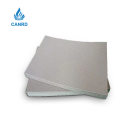
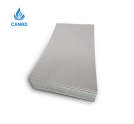
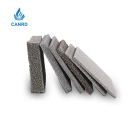
1. Ultra-lightweight: It has the highest specific surface area and a specific gravity of 0.2-0.3, which is 1/4 of water, 1/3 of wood, 1/10 of aluminum, and 1/30 of iron. It is extremely lightweight.
2. Sound absorption: The porous structure exhibits wide-frequency sound absorption characteristics.
3. Electromagnetic wave shielding: It provides approximately 90dB shielding against electronic waves with its relatively thin thickness.
4. Processability: It can be cut, bent, and easily adhered.
5. Fire resistance: It maintains shape stability and is difficult to ignite, exhibiting high temperature resistance.
6. Recyclability: Metallic waste materials can be 100% recycled.
7. Thermal conductivity: The porous material has strong thermal conductivity.
8. Breathability: With a homogeneous three-dimensional network structure, it acts as a filter and exhibits excellent stability in the flow of gases and fluids.
9. Sound insulation: With additional treatment, it can achieve high noise interception and exhibits good sound insulation.
10. Exquisite appearance, practical interior: Through various processing methods, it is suitable for indoor decoration.
11. High temperature resistance of over 1100 degrees, resistance to various acid and alkali corrosion, good permeability, uniform pore structure, and fast heat transfer.

Nickel foam thickness tolerance: 0-0.05mm.
Besoin de support R&D ?
Parcourez les categories produits cles et reliez les materiaux batterie aux services R&D de Canrd.
Materiaux experimentaux
CategorieCathodes, anodes, electrolytes, separateurs et autres materiaux de recherche batterie.
Acheter des materiaux cathode, anode et electrolyte →Equipement de laboratoire
CategorieEquipements de laboratoire batterie pour lignes pilotes, outillages et workflows de test.
Parcourir les equipements de laboratoire batterie →Electrodes et cellules
CategorieElectrodes personnalisees, cellules seches et composants de cellules pour validation R&D.
Voir les electrodes et cellules batterie personnalisees →Electrolyte sodium
CategorieElectrolytes sodium-ion pour recherche et validation de batteries sodium.
Acheter des electrolytes sodium →Services R&D
ServiceServices R&D batterie complets, de l evaluation materiaux a la fabrication de cellules et analyse de defaillance.
Explorer les services R&D Canrd →Evaluation de materiaux
ServiceCaracterisation, tests electrochimiques et evaluation de compatibilite des materiaux batterie.
Evaluer vos materiaux batterie →Fabrication d electrodes
ServiceFeuilles et rouleaux d electrodes personnalises selon votre chimie cible et vos besoins process.
Demander une fabrication d electrodes →Fabrication de cellules
ServiceCellules seches, cellules assemblees et formats personnalises pour validation R&D.
Construire des cellules de recherche personnalisees →Contact
PageDemandez a Canrd d associer produits, materiaux et services a votre projet.
Obtenir un support produit et R&D →
