

 contact@canrd.com

 +86 18928276992


Details
Product Advantages
Mixed Cellulose Ester (MCE)
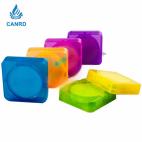
Features: Smooth membrane surface, thin‑light texture, high porosity, excellent retention performance, good hydrophilicity, large water flux, uniform microporous structure and extremely low adsorption rate. Not resistant to organic solvents, strong acids or strong‑alkali solutions. Tolerable pH range: 2‑9. Only suitable for filtration of aqueous reagents or other aqueous‑phase solvents. Cost‑effective.
Applications: ‑ Sterilization and particle removal in laboratory and small‑scale production processes ‑ Sterile filtration of culture media and nutrient solutions ‑ Bacteria population determination in water bodies
Product Description & Recommendations
Brief Introduction to Microporous Membrane
Among membrane‑separation technologies, microporous filter membranes are the most widely‑used membrane type, featuring simple and fast operation. They deliver high gas flux, high particle retention rate, good temperature resistance, resistance to strong acids, strong alkalis, organic solvents and oxidants. Other properties include aging resistance, non‑stick performance, non‑flammability, non‑toxicity and favorable biocompatibility.
Materials are divided into organic and inorganic categories. Based on its separation characteristics, microporous filter membrane mainly intercepts particles, bacteria and other contaminants from gas and liquid phases for purification, separation and concentration purposes.
For microfiltration, retention performance is defined by pore size, generally ranging from 0.1 ~ 1 μm. It can separate large‑diameter bacteria, suspended solids and so on. It can be applied for general feed‑liquid clarification, safety filtration and air sterilization. Widely used in scientific research, pharmaceutical hygiene, biochemistry, food, energy, microelectronics, nanotechnology, environmental protection and other fields.
Applications of Microporous Filter Membrane
This product is mainly used for filtration of mobile phases and samples in chromatographic analysis. It effectively protects chromatographic columns, infusion pump pipeline systems, injection valves and other components from contamination.
It is widely adopted in gravimetric analysis, micro‑analysis, colloid separation and sterile tests. Select the appropriate filter membrane according to your sample to be filtered during operation.
Besoin de support R&D ?
Parcourez les categories produits cles et reliez les materiaux batterie aux services R&D de Canrd.
Materiaux experimentaux
CategorieCathodes, anodes, electrolytes, separateurs et autres materiaux de recherche batterie.
Acheter des materiaux cathode, anode et electrolyte →Equipement de laboratoire
CategorieEquipements de laboratoire batterie pour lignes pilotes, outillages et workflows de test.
Parcourir les equipements de laboratoire batterie →Electrodes et cellules
CategorieElectrodes personnalisees, cellules seches et composants de cellules pour validation R&D.
Voir les electrodes et cellules batterie personnalisees →Electrolyte sodium
CategorieElectrolytes sodium-ion pour recherche et validation de batteries sodium.
Acheter des electrolytes sodium →Services R&D
ServiceServices R&D batterie complets, de l evaluation materiaux a la fabrication de cellules et analyse de defaillance.
Explorer les services R&D Canrd →Evaluation de materiaux
ServiceCaracterisation, tests electrochimiques et evaluation de compatibilite des materiaux batterie.
Evaluer vos materiaux batterie →Fabrication d electrodes
ServiceFeuilles et rouleaux d electrodes personnalises selon votre chimie cible et vos besoins process.
Demander une fabrication d electrodes →Fabrication de cellules
ServiceCellules seches, cellules assemblees et formats personnalises pour validation R&D.
Construire des cellules de recherche personnalisees →Contact
PageDemandez a Canrd d associer produits, materiaux et services a votre projet.
Obtenir un support produit et R&D →
