

 contact@canrd.com
 +86 18928276992


Details
Basic Information:
It is laboratory equipment used for condensation to achieve condensation or reflux functions.
It consists of two glass tubes, an inner tube and an outer tube. The smaller inner tube passes through the larger outer tube. The upper and lower sides of the outer tube are equipped with barbed hose nipples, which serve as the water outlet and water inlet respectively.
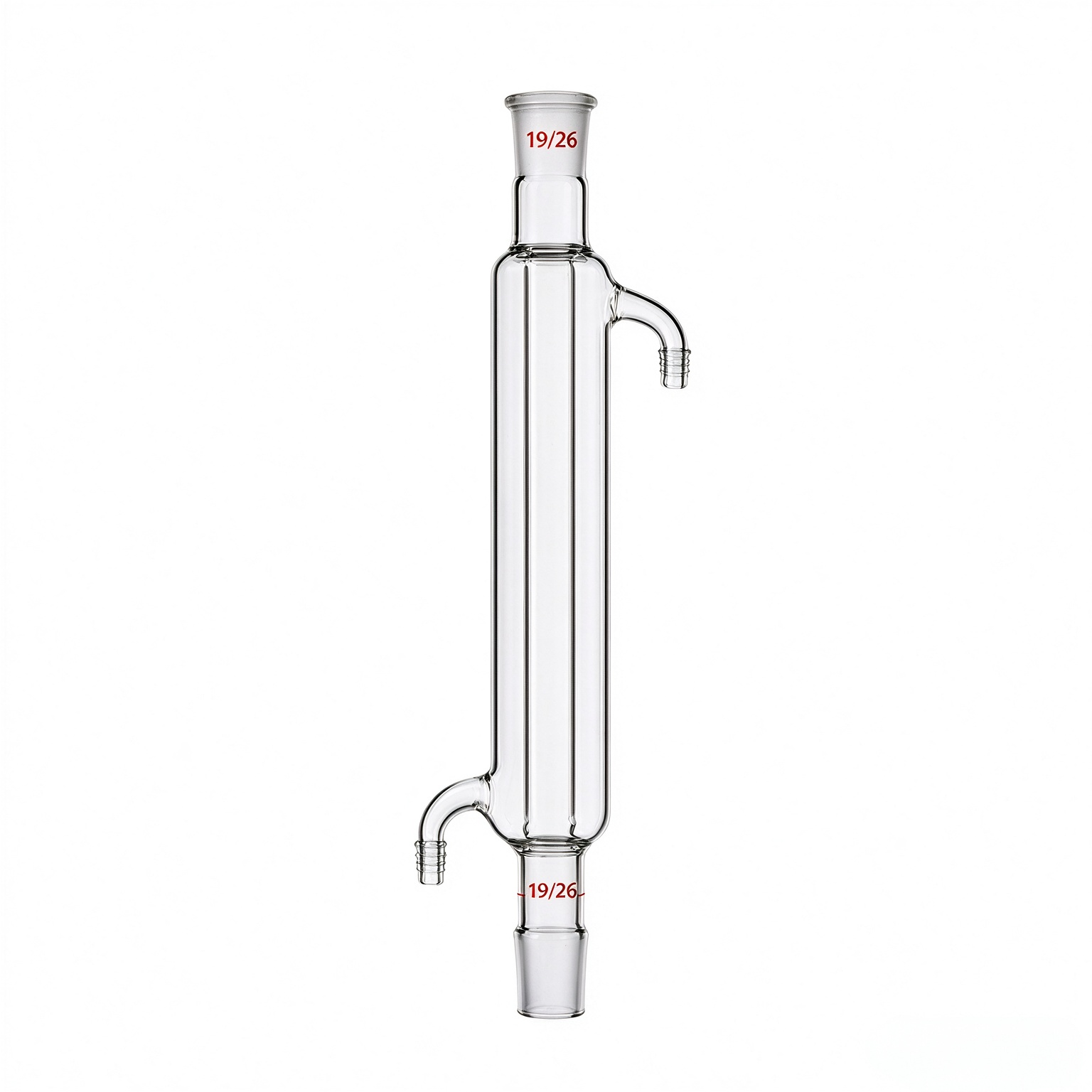
Straight Condenser
The inner tube of a straight condenser is a straight glass tube. It is used for distillation and fractional distillation of substances with a boiling point below 140°C. It is mainly applied to inclined distillation setups and is not suitable for reflux.
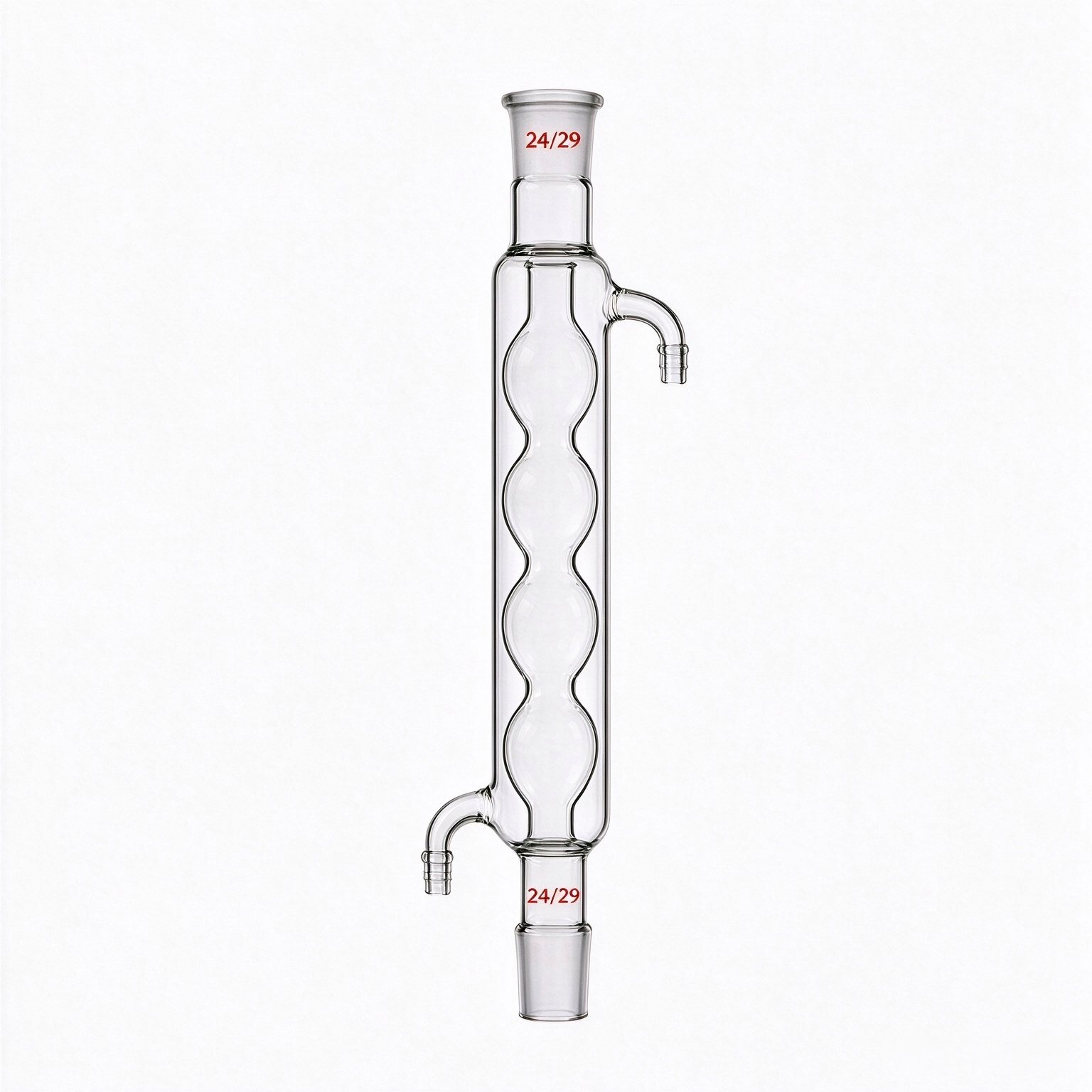
Allihn Condenser
The inner tube of an Allihn condenser consists of several interconnected glass
It is used for reflux in organic synthesis and is suitable for liquids of various boiling points.
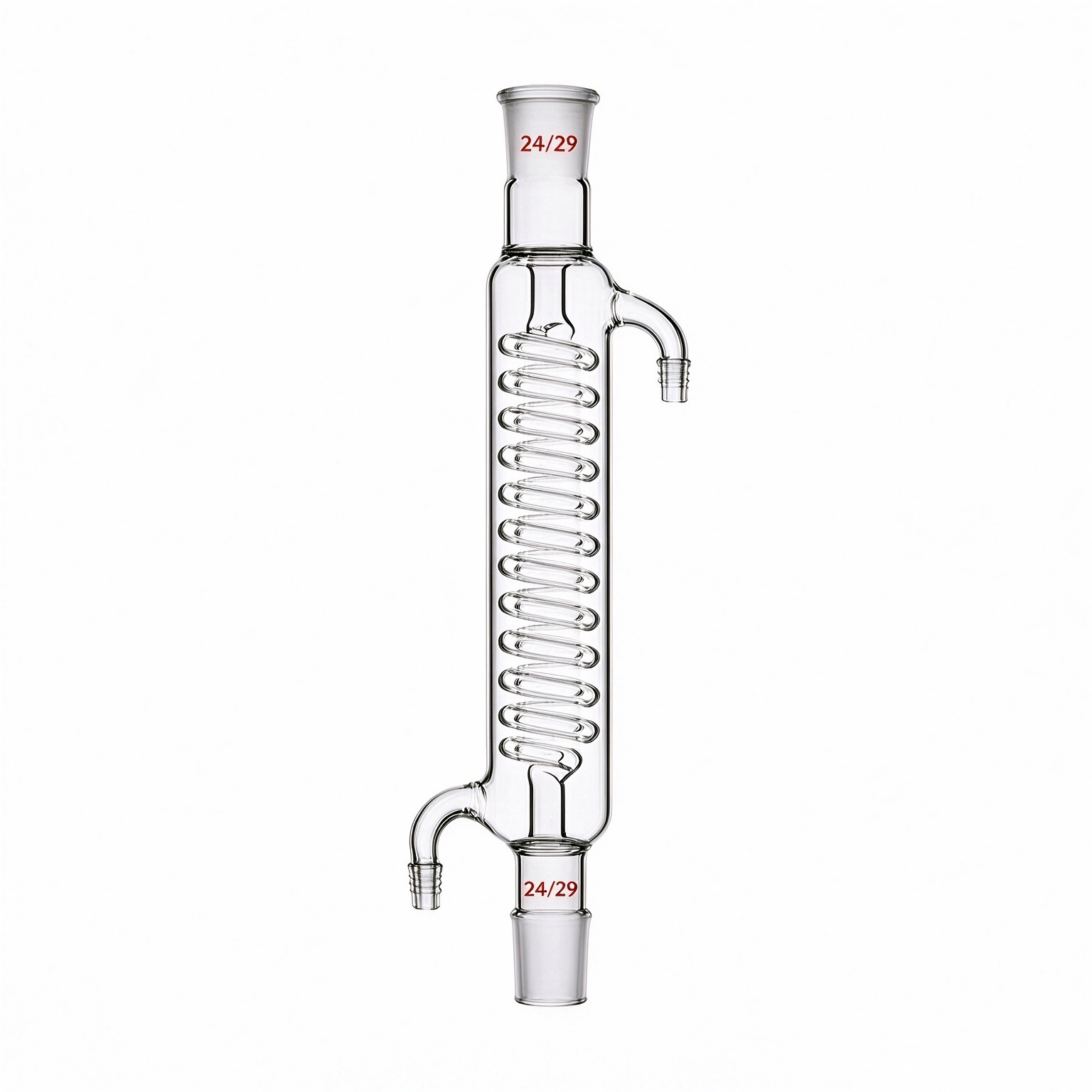
Graham Condenser
The inner tube of a Graham condenser is spiral-shaped. It is used for reflux in organic synthesis and is suitable for liquids with relatively low boiling points.
Usage Instructions
1. Insert the condenser tube correctly into the iron stand, with the inner tube and outer tube aligned and securely clamped.
2. Connect the cooling water hoses to the lower inlet and upper outlet to ensure smooth water flow.
3. During use, maintain a steady cooling water flow and avoid sudden changes in water pressure.
4. After the experiment, stop the cooling water first, then remove the condenser tube once it has cooled to room temperature.
5. Clean and dry the condenser tube before storage to prevent residue and contamination.
Precautions
1. Before use, inspect the condenser tube for cracks, scratches, or damage. Do not use a damaged tube.
2. Ensure the cooling water inlet and outlet are connected correctly. The water inlet is usually at the bottom, and the water outlet is at the the top.
3. Avoid over-tightening the clamps to prevent stress on the glass tube.
4. During distillation or reflux, control the heating rate to avoid bumping and vapor overflow.
5. If leakage or abnormal conditions are found during use, stop the experiment immediately and handle it safely.
Condensation Effect
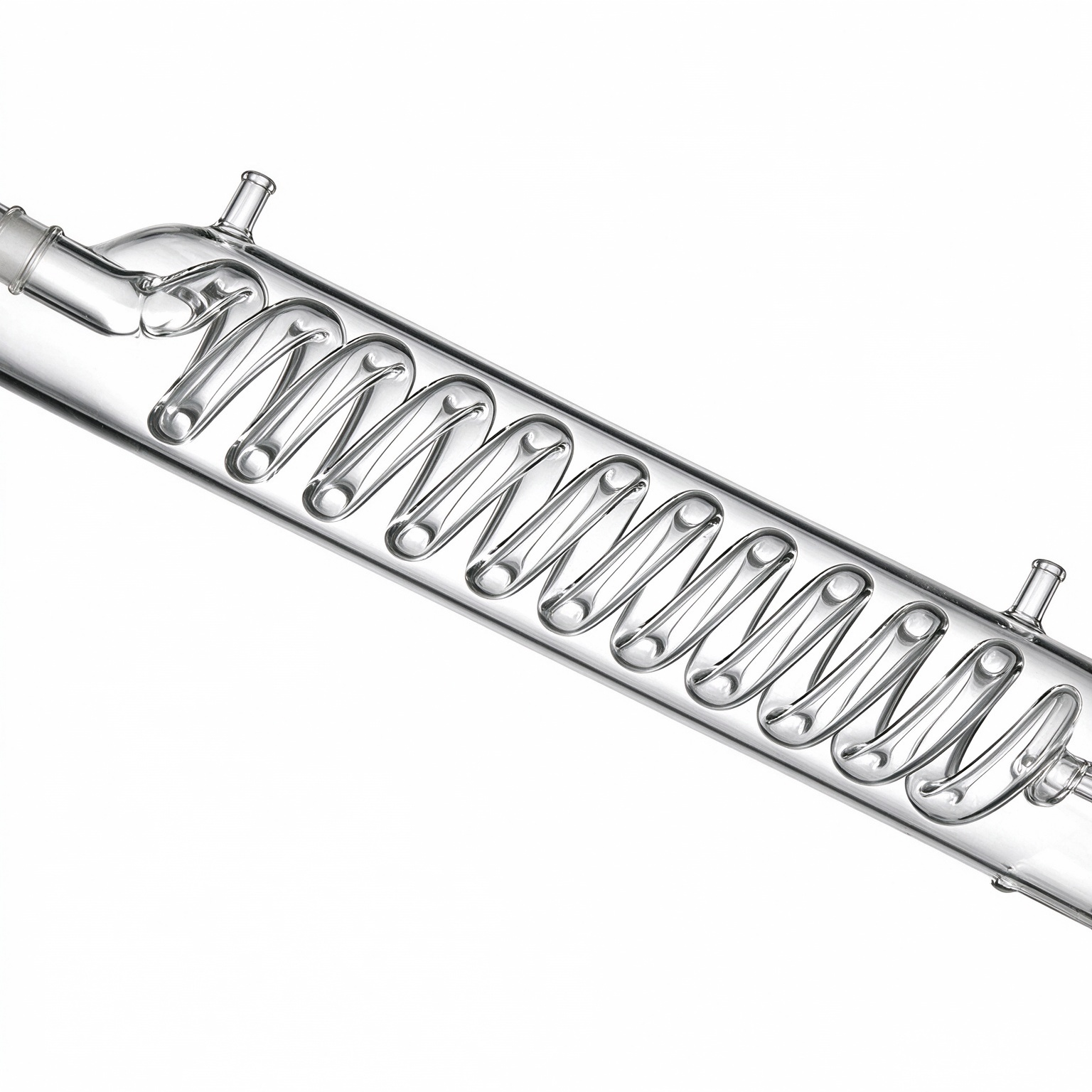
Proper cooling ensures efficient condensation. When the cooling water flow is stable, the vapor is effectively cooled and condensed into liquid. If the cooling water flow is too low, condensation efficiency will decrease, and uncondensed vapor may escape. If the flow is too high, it may cause unnecessary water consumption and thermal stress on the glass. Maintaining an appropriate flow rate helps achieve stable condensation and better experimental results.
Applicable Scenarios
Condensers are widely used in chemical experiments, pharmaceutical research, environmental testing, and material analysis. They are suitable for distillation, reflux, solvent recovery, and other processes that require vapor cooling and liquefaction. They can be used in both organic synthesis and inorganic preparation. Select the appropriate condenser type according to the experimental requirements and operating conditions.
Besoin de support R&D ?
Parcourez les categories produits cles et reliez les materiaux batterie aux services R&D de Canrd.
Materiaux experimentaux
CategorieCathodes, anodes, electrolytes, separateurs et autres materiaux de recherche batterie.
Acheter des materiaux cathode, anode et electrolyte →Equipement de laboratoire
CategorieEquipements de laboratoire batterie pour lignes pilotes, outillages et workflows de test.
Parcourir les equipements de laboratoire batterie →Electrodes et cellules
CategorieElectrodes personnalisees, cellules seches et composants de cellules pour validation R&D.
Voir les electrodes et cellules batterie personnalisees →Electrolyte sodium
CategorieElectrolytes sodium-ion pour recherche et validation de batteries sodium.
Acheter des electrolytes sodium →Services R&D
ServiceServices R&D batterie complets, de l evaluation materiaux a la fabrication de cellules et analyse de defaillance.
Explorer les services R&D Canrd →Evaluation de materiaux
ServiceCaracterisation, tests electrochimiques et evaluation de compatibilite des materiaux batterie.
Evaluer vos materiaux batterie →Fabrication d electrodes
ServiceFeuilles et rouleaux d electrodes personnalises selon votre chimie cible et vos besoins process.
Demander une fabrication d electrodes →Fabrication de cellules
ServiceCellules seches, cellules assemblees et formats personnalises pour validation R&D.
Construire des cellules de recherche personnalisees →Contact
PageDemandez a Canrd d associer produits, materiaux et services a votre projet.
Obtenir un support produit et R&D →
