

 contact@canrd.com

 +86 18928276992
Introduction of Key Technology of Cathode Materials --- Ternary Cathode
1.Material systems and basic theory
1.1 Chemical composition and crystal structure of trivalent materials
The crystal structure of the ternary cathode materials (linixCoyMnzO2 or linixCoyAlzO2) is a lamellar a-NaFeO2 type, with space group R-3m. Nickel cobalt manganese (aluminum) ions occupy the 3a position, lithium ions occupy the 3b position, and oxygen ions occupy the 6c position. Nickel content directly affects:
Specific capacity : Ni²+ / Ni⁴+ redox couple provides the main capacity ( about 15-20mAh / g per 10% increase in Ni content )
Structural stability : High Ni material ( Ni ≥ 80 % ) is prone to H2 → H3 phase transition , resulting in lattice distortion rate of more than 6 %
Thermal stability : Thermal decomposition temperature decreases by about 15 ℃ per 10 % increase in nickel content
1.2 Technology comparison of low- and medium-nickel and high-nickel systems
|
System type |
Typical Model |
Nickel content |
Specific capacity (mAh / g) |
Heat out of control temperature |
|
Medium and Low Nickel |
50-70% |
155-175 |
220-250°C |
|
|
165-185 |
||||
|
High Nickel |
≥ 80% |
195-220 |
180-210 ℃ |
|
|
NCA90 |
200-220 |
2.Deep analysis of precursor preparation processes
2.1 Cohesion reaction mechanism
Reactions that occur in a continuously stirred reactor (CSTR):
Ni²⁺ + Co²⁺ + Mn²⁺ + 2OH⁻ → (NiCoMn)(OH)₂↓
Four phases of control:
Nucleation stage (0-30min): pHThe value jumps to more than 10.5, forming 5-20nm crystal nuclei
Growth stage ( 1-10h ) : Ostwald ripening dominates , D50 increases to 3-5μm
Densification stage ( 10-20h ) : surface energy is controlled by ammonia concentration , densification density is 1.8-2.2g / cm3
Curing stage ( 2-4h ) : Eliminate internal stress , reduce BET surface area to 10-15m2 / g
2.2 Critical equipment and parameter matrix
1 Level 5 serial reactor system (specialty for high nickel):
|
Bus Station |
Temperature control |
PH range |
Ammonia concentration (g / L) |
Mixing power (kW / m3) |
|
1# |
55±0.5 ℃ |
11.8-12.2 |
2.0-2.5 |
3.5-4.0 |
|
2# |
58±0.3℃ |
11.5-11.8 |
1.8-2.2 |
4.0-4.5 |
|
3# |
60±0.2℃ |
11.2-11.5 |
1.5-1.8 |
4.5-5.0 |
|
4# |
62±0.2℃ |
10.8-11.2 |
1.0-1.5 |
5.0-5.5 |
|
5# |
65±0.1℃ |
10.5-10.8 |
0.5-1.0 |
5.5-6.0 |
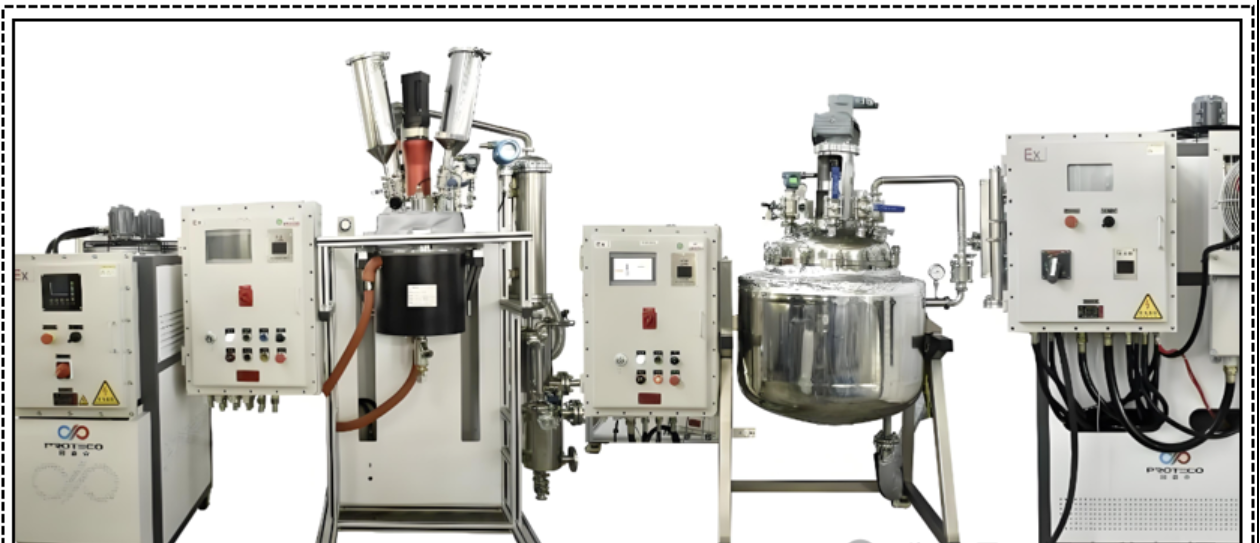
2 Parameters of medium and low nickel materials:
Single reactor reaction time : 8-12h
Particle distribution: D10=2.5 μm, D50=4.5 μm, D90=8.0 μm
Specific surface area : 12-18m2 / g
3.Core technologies of lithium blending and sintering processes
3.1 Lithium source selection and rationing calculation
The formula for the lithium overload coefficient:
Li / (Ni Co Mn) = 1.05-1.10 (low and medium nickel)
Li/(Ni Co Al) = 1.08-1.15 (high nickel)
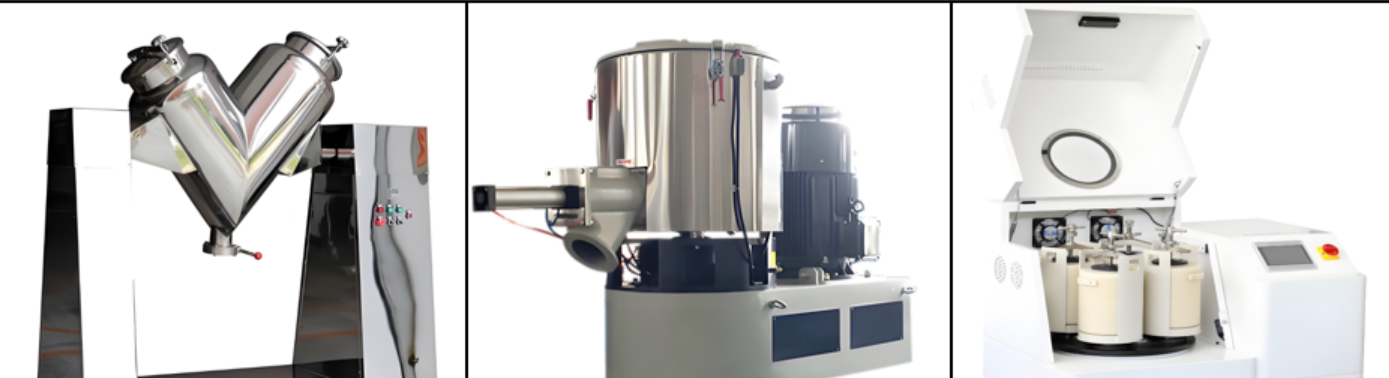
Mixed manufacturing process comparison:
|
parameter |
Dry method of mixing |
Wet mixing |
|
|
equipment |
V-mixer |
High Speed Hybrid |
Planetary ball milling machine |
|
speed |
15-25rpm |
200-500rpm |
200-300rpm |
|
time |
2-4h |
0.5-1h |
4-6h |
|
homogeneity |
RSD≥5% |
RSD≥5% |
RSD ≤ 2% |
|
System of application |
Medium and Low Nickel |
System-wide |
High Nickel |
3.2 Sintering Dynamics and Equipment Selection
Push Plate Kiln vs Roller Kiln vs Return Kiln:
|
Indicator |
Crane kiln (low and medium nickel) |
Crane kilns (whole system) |
Reverse kiln (high nickel) |
|
Temperature uniformity |
±5°C |
±1°C |
±1°C |
|
Climate control |
air |
Air or oxygen |
O2 concentration 5-15% |
|
Rate of heating |
3-5 °C/min |
3-5 °C/min |
1-2 °C/min |
|
production capacity |
200kg / batch |
300kg / batch |
500kg / day |
|
Lithium residual control |
1.2-1.8% |
1.0-2.0% |
0.8-1.2% |
Typical sintering curves:
NCM622: Room temperature → 400 ℃ (2 h) → 750 ℃ (12 h) → furnace cooling
Ncm811: Room temperature → 300 ℃ (2H, O2 5%) → 500 ℃ (3H, o210 %) → 750 ℃ (10h, o215 %) → rapid cooling
4.Post-treatment and surface modification techniques
4.1 Crushing grading process
Parameters for jet stream crushing machines:
Working pressure : 0.8-1.2MPa
Speed of classification wheel : 4000-8000rpm
D50 control accuracy: ± 0.3 μm
Production capacity : 100-300kg/h
Rating criteria:
|
Indicator |
Low and medium nickel requirements |
High nickel requirements |
|
D10 |
2. 0-3.0 μm |
3. 0-4.0 μm |
|
D50 |
4. 0-5.0 μm |
5. 0-6.5 μm |
|
D90 |
10 micrometers |
12 micrometers |
|
Length coefficient |
<1.2 |
<1.0 |
4.2 Surface cladding techniques
Wet cladding process:
Coating agent : AlPO₄ , Li₂ TiO₃ , LiAlO₂
Reaction conditions : solid-liquid ratio 1 : 3 , 80 ℃ , pH = 9-10 , stirring for 2 h
Coating thickness : 2-5nm
Coating amount : 0.5-2.0wt %
Atomic layer deposition (ALD) technology:
Deposited material : Al₂O₃ , TiO₂
Deposition rate : 0.1nm / cycle
Vacuum of equipment: 10⁻³ Pa
Film uniformity : > 95 %
5.Key performance indicators and test methods
5.1 Electrochemical properties
|
Test projects |
Methodological standards |
Typical values of medium and low nickel |
High nickel target value |
|
First efficiency |
GB/T 30835 |
85-88% |
88-92% |
|
1C cycle life |
25°C, 2.8–4.3V |
1500 weeks ≥ 80% |
1000 weeks ≥ 90% |
|
High temperature performance |
Storage at 45 ° C for 7 days |
Capacity maintained at ≥ 95% |
≥92% |
|
DCIR elongation |
1C cycle 500 weeks |
<25% |
<15% |
5.2 Physical properties
|
parameter |
Test equipment |
Control standards |
|
Vibration density |
Hall Flow Rate Meter |
≥2.2 g/cm³ |
|
Compared to surface area |
BET nitrogen sorbent |
0.3-0.8 m²/g |
|
Magnetic foreign objects |
≤ 100ppb |
|
|
Water content |
Calffaut Water Meter |
≤500ppm |
6.Core influencing factors and control strategies
6.1 Quality control of raw materials
|
Elements of impurities |
Allowable upper limit (ppm) |
Effect mechanisms |
|
Na |
<50 |
Blocking the diffusion of lithium ions |
|
Ca |
<20 |
Generating a LiCaPO4 Blocking Channel |
|
Fe |
<10 |
Catalyst for Electrolyte Decomposition |
|
S |
<100 |
Formation of Li2SO4 increases interface impedance |
6.2 Tolerance analysis of process parameters
|
working procedure |
Key parameters |
Allowable range of volatility |
Impact on performance |
|
Together, we settled |
PH value |
±0.05 |
★★★★★ |
|
Ammonia Concentration |
±0.1g/L |
★★★★☆ |
|
|
Sinter |
Maximum temperature |
± 3 ℃ |
★★★★★ |
|
Oxygen Concentration |
±1vol% |
★★★★☆ |
|
|
smash |
Level wheel speed |
±50rpm |
★★★Rainbowly |
7.Frontier technologies and development trends
7.1 Breakthroughs in monocrystalline technology
Synthesis process : Melt salt method ( LiNO₃-LiOH co-melting system )
Single crystal size: 3–5 μm
Improved cycle performance : 1C / 2000 cycles > 88 % capacity retention
7.2 Concentration gradient materials
Composition of nuclear layer : Ni80Co10Mn10
Shell composition : Ni50Co20Mn30
Thickness of transition layer : 200-500nm
Improved thermal stability : DSC peak temperature increased by 30 ℃
7.3 Solid-state battery adaptation technology
Interface modification: LiNbO₃ / LiTaO₃ coating
Sintering temperature optimization : 850-950 ℃
Ion conductivity: > 10⁻⁴ S/cm (Matching with sulfide electrolytes)
8.CONCLUSIONS
The industrial production of trivalent cathode materials has formed a complete technical system from raw material refinement (metal purity ≥ 99.95%), precursor synthesis (particle size CV value < 10%), to sintering process (oxygen pressure closed-loop control).
For high-nickel materials, it is necessary to establish a process-wide inert gas protection system (dew point ≤ -40 ° C, oxygen content ≤ 10 ppm), and to introduce online laser particle analysis (sampling every 30 seconds) and real-time XRD monitoring (fluctuation of lattice parameters a and c values ≤ 0.005Å per batch detection).
With the maturity of technologies such as multi-element mixing (Mg / Ti / Zr co-mixing) and microstructure regulation (secondary spherical porosity 15-20%), triad materials are continuously evolving towards higher energy density (≥ 300 Wh / kg) and longer cycle life (≥ 1500 weeks).
--End--
Canrd Brief Introduce:
Canrd use high battery R&D technology(core members are from CATL) and strong Chinese supply chain to help many foreign companies with fast R&D.
We provide lab materials, electrodes, custom dry cells, material evaluation, perfomance and test, coin/pouch/cylindrical cell equipment line, and other R&D services.
📱 WhatsApp/WeChat: 86 189 2827 6992
📧 Email: janice@canrd.com
🛒 Product Website: : www.canrud.com
Produits et services associes
Utilisez les produits et services R&D Canrd pour transformer les connaissances batterie en experiences pratiques.
Boitier coin cell
ProduitBoitiers coin cell pour valider les materiaux et concepts electrochimiques de l article.
Utiliser des boitiers coin cell dans votre prochain test →Electrolyte sodium
CategorieElectrolytes pour recherche sodium-ion, tests de compatibilite et validation de cellules.
Acheter electrolyte sodium pour validation →Fabrication de cellules
ServiceSupport pour construire cellules seches, cellules assemblees ou formats sur mesure.
Demander un support de fabrication de cellules →Materiaux experimentaux
CategorieParcourez les materiaux pour experiences de suivi, benchmarking et developpement produit.
Voir les materiaux batterie experimentaux →
