

 contact@canrd.com
 +86 18928276992
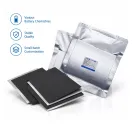
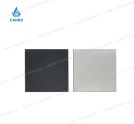
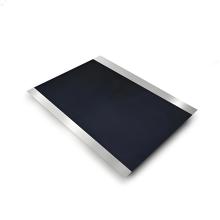
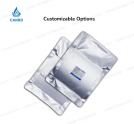
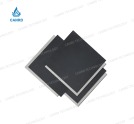
Details
| Canrd | 10*10cm | 5 sheets/pack | Coating | ||||
| NO. | Electrode Name | Model | Main Material | Active Material Capacity (mAh/g) | Loading | Areal Density (mg/cm²) | Areal Capacity (mAh/cm²) |
| 1 | NCM811 Electrode | SY33 | NCM811 Single Crystal | 188 | 94.50% | 9.20 | 1.63 |
| 2 | NCM811 Electrode | SY34 | — | 188 | 94.50% | 21.50 | 3.82 |
| 3 | NCM622 Electrode | SY25 | NCM622 Single Crystal-B | 168 | 96.70% | 10.00 | 1.62 |
| 4 | NCM622 Electrode | SY24 | — | 168 | 96.70% | 21.60 | 3.51 |
| 5 | NCM523 Electrode | SY15 | NCM523 | 165 | 94.00% | 19.70 | 3.06 |
| 6 | NCM523 Electrode | SY13 | NCM523 | 165 | 94.00% | 10.50 | 1.63 |
| 7 | LCO Electrode | LC02 | High Voltage Lithium Cobalt Oxide-Z-4.45V | 178 | 96.40% | 10.00 | 1.72 |
| 8 | LRM Electrode | FL01 | Lithium-rich Manganese-based-E | 280 | 95.00% | 5.96 | 1.59 |
| 9 | Graphite Electrode | SM02 | Natural Graphite (Standard)-A | 340 | 95.70% | 5.80 | 1.89 |
| 10 | Fast Charging Graphite Electrode | SM04 | Fast Charging Graphite-B | 350 | 96.70% | 5.60 | 1.90 |
| 11 | Silicon Carbon Electrode | SC02 | Silicon Carbon Anode 1800 (Porous Carbon Deposited Silicon) | 420 | 95.00% | 4.80 | 1.92 |
| 12 | NFM Electrode | NT02 | Sodium Nickel Iron Manganese Oxide | 127 | 95.50% | 12.27 | 1.49 |
| 13 | NFM Electrode | NT03 | — | 127 | 95.50% | 8.00 | 0.97 |
| 14 | Hard Carbon Electrode | YT02 | Imported Hard Carbon (5 μm) | 300 | 95.50% | 6.00 | 1.72 |
| 15 | LFP Electrode | LF07 | Lithium Iron Phosphate (High Compaction Density) |
150 | 91.50% | 12.30 | 1.69 |
| 16 | LNMO Electrode | NM01 | High Voltage Lithium Nickel Manganese Oxide-B | 130 | 96.00% | 7.50 | 2.00 |
| 17 | NFPP Electrode | NF01 | Sodium Iron Phosphate Pyrophosphate | 100 | 93.50% | 15.30 | 1.43 |
| 18 | Vanadium Pentoxide Electrode | VO02 | Vanadium Pentoxide | 300 | 80.00% | 5.00 | 1.20 |
| 19 | Manganese Dioxide Electrode | MO02 | Modified Manganese Dioxide (γ-phase) - Long Cycle | 100 | 90.00% | 10.00 | 0.90 |
| 20 | Zinc Negative Electrode | ZA01 | Pure Zinc Powder / Alloy Zinc Powder | / | 70.0%–96.0% | 5.0–15.0 | / |
| 21 | Super capacitor dry process electrode | 6M2302001 | YP50 activated carbon | / | 96.0% | 11.50 | / |
| 22 | Zinc–iodine battery electrode | ZIXX01 | iodine-based active substances | / | / | 20-80 | / |
MOQ for Custom Small Electrode Sheets: 10*10cm/pcs,5cs/pack,1pack
To place an order or request a quotation, please Contact Us.
Rolling can increase the compaction density of the electrode, improve the electronic conductivity of the electrode, and enhance adhesion
1. The surface density needs to be determined based on the actual weighing results
2. Before placing it in the glove box, the punched polarizer needs to be vacuum baked at 105 ℃ for 4 hours
3. The surface density of the coating does not include the current collector;
4. Theoretical surface capacity mAh/cm2=coating surface density mg/cm2 * active material ratio * gram capacity mAh/g ÷ 1000
5. Theoretical amount of active substance (mg)=coating surface density mg/cm2 * active substance ratio * small disc area cm2
6. The actual amount of active substance calculated by weighing (mg)=(weight of small disc mg - current collector surface density mg/cm2 * area of small disc cm2) * proportion of active substance
7. When calculating the gram capacity, the actual amount of active substance weighed shall be used. Due to the tolerance of the coating surface density, the actual weight shall prevail
8. This pole piece can be matched with our SM02XX, LT01XX, SC01XX negative pole pieces for use
This product must be tested in accordance with the test methods and electrolytes recommended by
Canrd to achieve the corresponding performance.Since the test method and electrolyte have a great
influence on the performance of the battery, any change in the test method or electrolyte may reduce
the performance of the pole piece; be sure to check this information before purchasing.
Customized (5 Pcs / Pack): Please Quote.
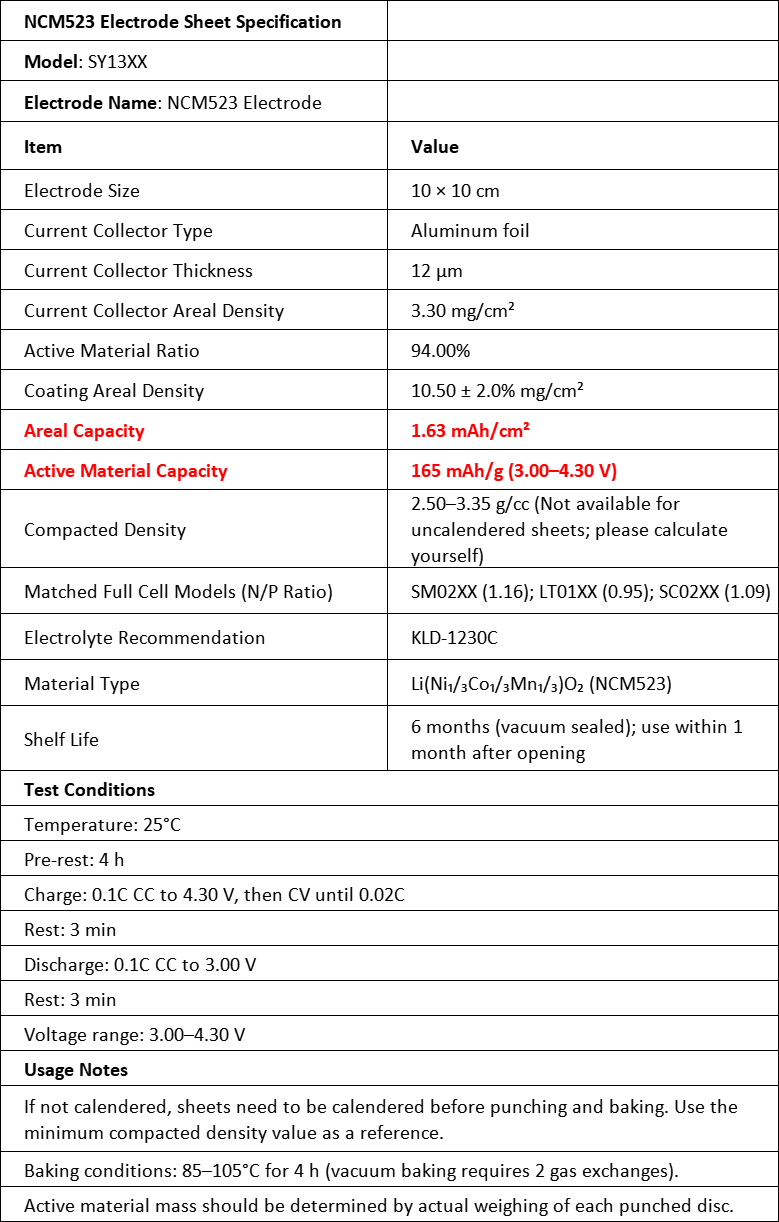
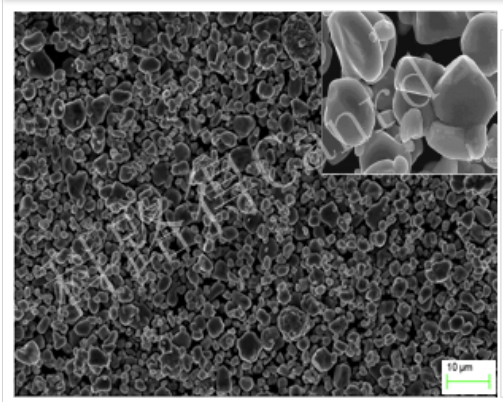
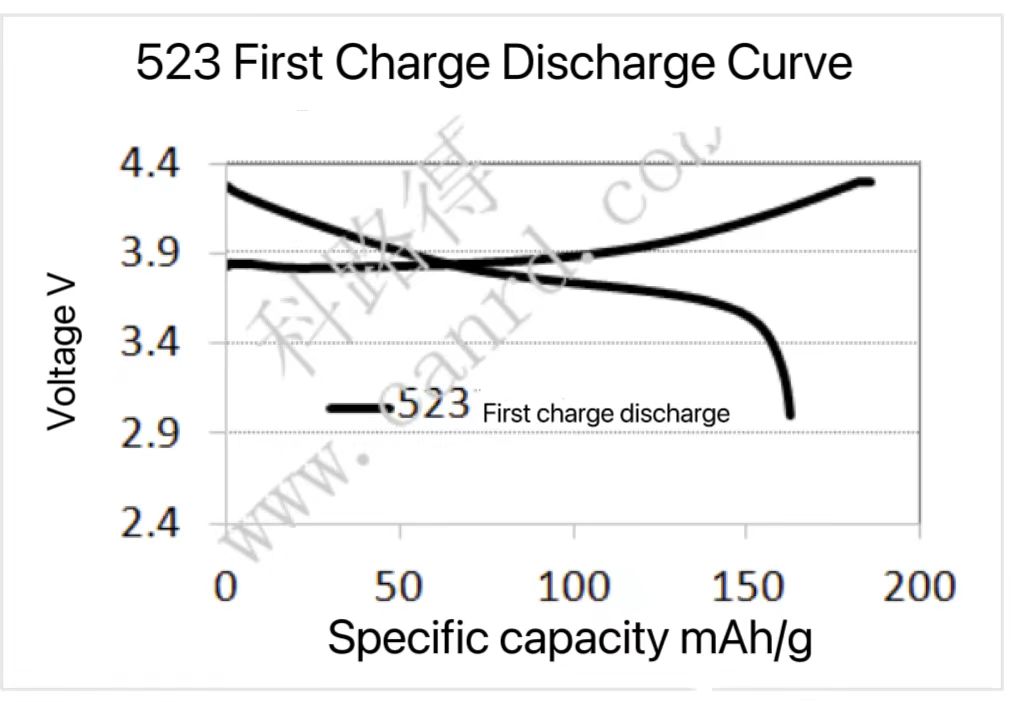
First charge and discharge test conditions: temperature 25 ℃, first charge at a constant current of 0.1C to 4.3V, then charge at a constant voltage until the current is less than 0.02C, and then discharge at a constant current of 0.1C to 3.0V
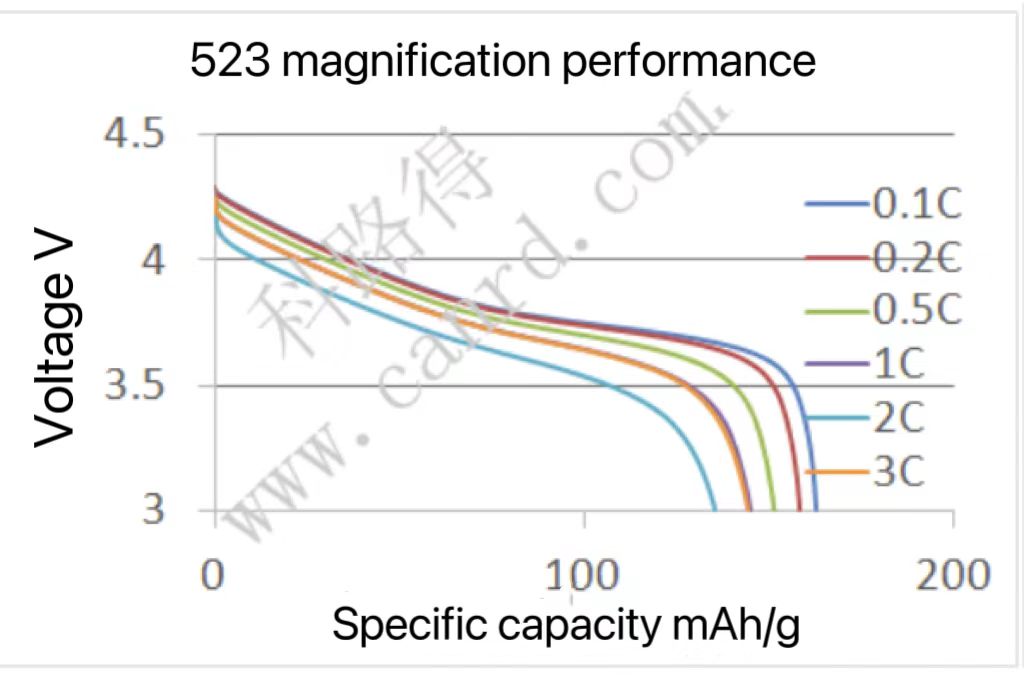
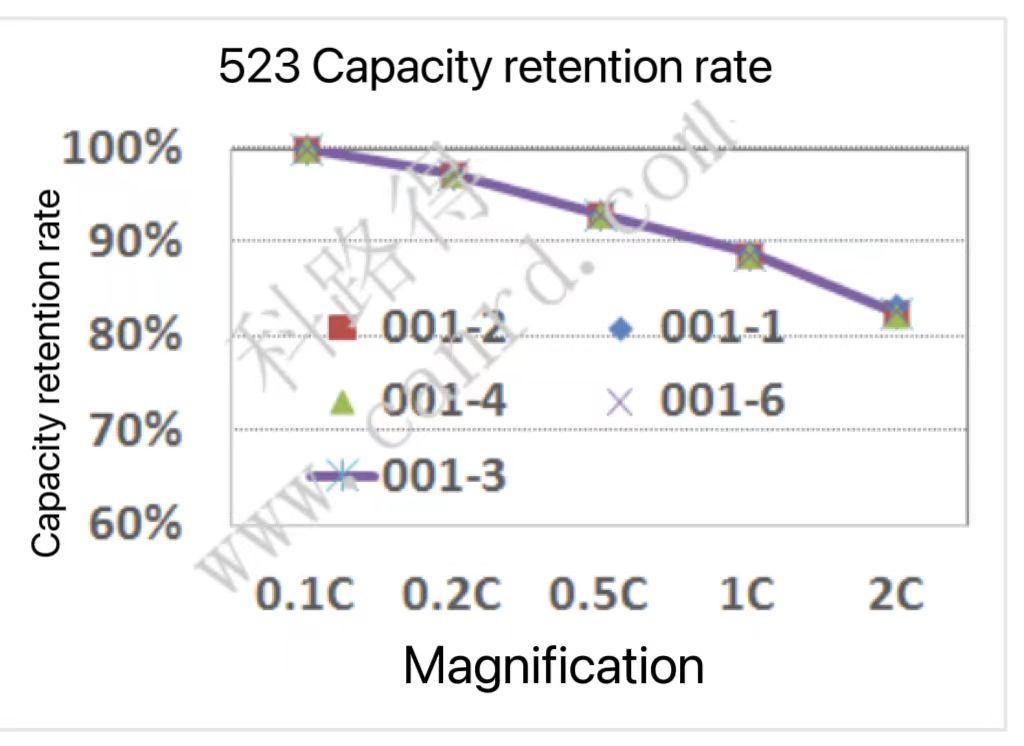
Rate test conditions: Temperature of 25 ℃, first charge at a constant current of 0.5C to 4.3V, then charge at a constant voltage until the current is less than 0.02C, and then discharge at a constant current rate of 0.1C/0.2C/0.5C/1C/2C/3C to 3.0V
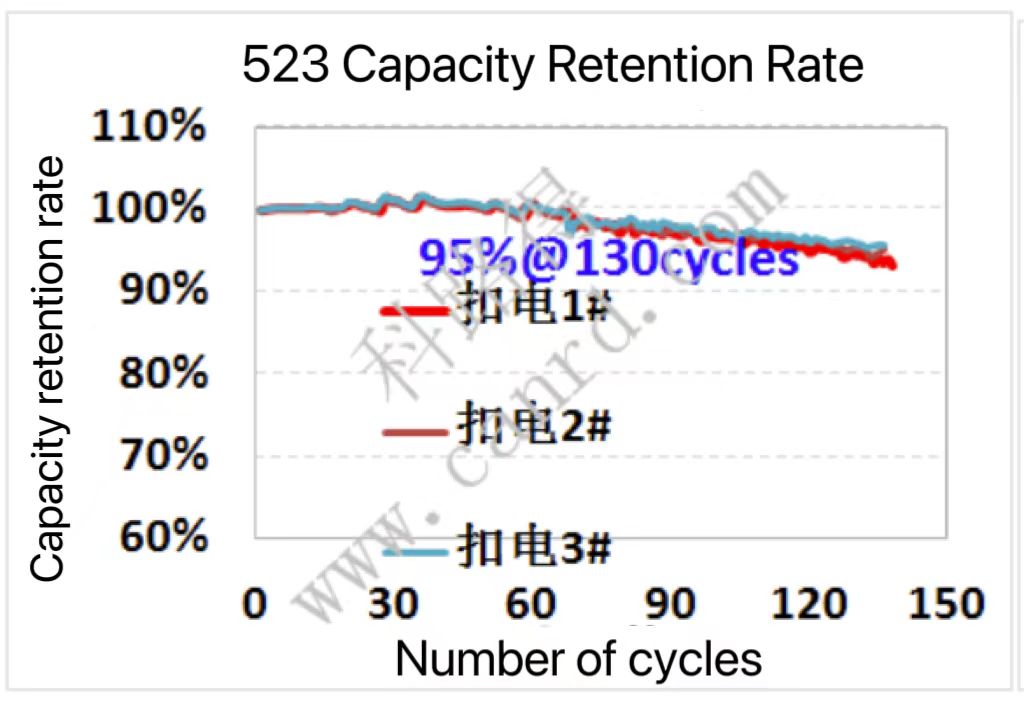
Cycle test conditions: temperature 25 ℃, first charge at 0.5C constant current to 4.3V, then charge at constant voltage until the current is less than 0.02C, and then discharge at 1C constant current to 3.0V
Preguntas Frecuentes
Busca o explora preguntas comunes para encontrar respuestas rápidamente

Necesitas soporte R&D?
Explora categorias clave de productos y conecta materiales de bateria con los servicios R&D de Canrd.
Materiales experimentales
CategoriaCatodos, anodos, electrolitos, separadores y otros materiales para investigacion de baterias.
Comprar materiales de catodo, anodo y electrolito →Equipos de laboratorio
CategoriaEquipos de laboratorio de baterias para lineas piloto, utillajes y flujos de prueba.
Ver equipos de laboratorio de baterias →Electrodos y celdas
CategoriaElectrodos personalizados, celdas secas y componentes de celdas para validacion R&D.
Ver electrodos y celdas de bateria personalizados →Electrolito de sodio
CategoriaOpciones de electrolito de ion sodio para investigacion y validacion de baterias de sodio.
Comprar electrolitos de bateria de sodio →Servicios R&D
ServicioServicios completos de R&D de baterias, desde evaluacion de materiales hasta fabricacion de celdas y analisis de fallos.
Explorar servicios R&D de Canrd →Evaluacion de materiales
ServicioCaracterizacion, pruebas electroquimicas y evaluacion de compatibilidad para materiales de bateria.
Evaluar tus materiales de bateria →Fabricacion de electrodos
ServicioLaminas y rollos de electrodos personalizados segun tu quimica y proceso objetivo.
Solicitar fabricacion de electrodos →Fabricacion de celdas
ServicioCeldas secas, celdas ensambladas y formatos personalizados para validacion R&D.
Construir celdas de investigacion personalizadas →Contacto
PaginaPide a Canrd combinar productos, materiales y servicios para tu proyecto.
Obtener soporte de producto y R&D →
