

 contact@canrd.com
 +86 18928276992


Details
Packaging, Transportation, and Storage
1. Packaging Material: Plastic bottle
2. Storage Conditions: Store in a sealed container at room temperature.
3. Shelf Life: 2 years from the date of production.
4. Hazard Class: 4 (Hazardous Goods Classification and Handling Guidelines)
5. Packaging Class: III (Packaging Class)
Other
1. This product is suitable as a binder for the positive electrode of lithium-ion batteries.
2. It is recommended to store in a sealed container in a well-ventilated, dry, and dark environment to prevent moisture absorption.
It exhibits high viscosity and binding properties in certain solvents.

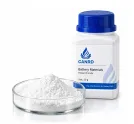
PVDF5130 is a suspension compound with a molecular weight of 1.1 million. The 5130 particle size is slightly larger, at 100 micrometers, and contains polar functional groups, resulting in better viscosity, lower dosage, and higher purity.
Overview :
Binder PVDF is an important part of the positive and negative electrodes of lithium ion batteries. It is used to bind the active materials and the active materials and The binder between the current collector. Is the 1 kind of macromolecule two polymer materials. Its performance determines the binding force between the positive and negative active materials of the battery and between the matrix
Related Articles
PVDF, CMC, PAA, etc.! Research on Lithium Battery Binders
Research on adhesion mechanisms and common binders for lithium-ion batteries.
Introduction to lithium battery production process, process flow, principle, formula, and parameters
Details lithium battery production: mixing, coating, rolling, slitting.
Research on the Causes of Separator Wrinkling in Lithium-ion Batteries and Its Elimination Strategie
Causes of Separator Wrinkling in Lithium-ion Batteries and How to Eliminate Them
Overview :
Binder PVDF is an important part of the positive and negative electrodes of lithium ion batteries. It is used to bind the active materials and the active materials and The binder between the current collector. Is the 1 kind of macromolecule two polymer materials. Its performance determines the binding force between the positive and negative active materials of the battery and between the matrix
Benötigen Sie R&D-Unterstützung?
Entdecken Sie wichtige Produktkategorien und verbinden Sie Batteriematerialien mit Canrds R&D-Services.
Experimentelle Materialien
KategorieKathoden, Anoden, Elektrolyte, Separatoren und weitere Materialien für Batterieforschung.
Kathoden-, Anoden- und Elektrolytmaterialien kaufen →Laborgeräte
KategorieBatterielaborgeräte für Pilotlinien, Vorrichtungen und Testabläufe.
Batterielaborgeräte ansehen →Elektroden und Zellen
KategorieKundenspezifische Elektroden, Trockenzellen und Zellkomponenten für R&D-Validierung.
Kundenspezifische Batterieelektroden und Zellen ansehen →Natrium-Elektrolyt
KategorieNatrium-Ionen-Elektrolyte für Natriumbatterieforschung und Validierung.
Natrium-Batterieelektrolyte kaufen →R&D-Services
ServiceGanzheitliche Batterie-R&D-Services von Materialbewertung bis Zellfertigung und Fehleranalyse.
Canrd R&D-Services entdecken →Materialbewertung
ServiceCharakterisierung, elektrochemische Tests und Kompatibilitätsbewertung für Batteriematerialien.
Batteriematerialien bewerten lassen →Elektrodenfertigung
ServiceKundenspezifische Elektrodenblätter und -rollen für Ihre Zielchemie und Prozessanforderungen.
Elektrodenfertigung anfragen →Zellfertigung
ServiceTrockenzellen, montierte Zellen und kundenspezifische Zellformate für R&D-Validierung.
Kundenspezifische Forschungszellen bauen →Kontakt
SeiteCanrd kann Produkte, Materialien und Services passend zu Ihrem Projekt kombinieren.
Produkt- und R&D-Support erhalten →
