

 contact@canrd.com

 +86 18928276992




Details
1. Coating surface density does not include current collector material.
2. Theoretical areal capacity (mAh/cm2) = Coating surface density (mg/cm2) * Active material ratio * Specific capacity (mAh/g) ÷ 1000.
3. Theoretical mass of active material (mg) = Coating surface density (mg/cm2) * Active material ratio * Area of the electrode (cm2).
4. Actual weight-based calculation of active material (mg) = (Weight of electrode (mg) - Current collector surface density (mg/cm2) * Area of the electrode (cm2)) * Active material ratio.
5. Actual weight of active material should be used when calculating specific capacity, as the coating surface density has tolerances.
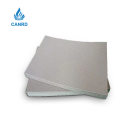
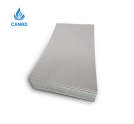
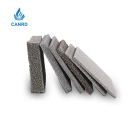
1. Ultra-lightweight: It has the highest specific surface area and a specific gravity of 0.2-0.3, which is 1/4 of water, 1/3 of wood, 1/10 of aluminum, and 1/30 of iron. It is extremely lightweight.
2. Sound absorption: The porous structure exhibits wide-frequency sound absorption characteristics.
3. Electromagnetic wave shielding: It provides approximately 90dB shielding against electronic waves with its relatively thin thickness.
4. Processability: It can be cut, bent, and easily adhered.
5. Fire resistance: It maintains shape stability and is difficult to ignite, exhibiting high temperature resistance.
6. Recyclability: Metallic waste materials can be 100% recycled.
7. Thermal conductivity: The porous material has strong thermal conductivity.
8. Breathability: With a homogeneous three-dimensional network structure, it acts as a filter and exhibits excellent stability in the flow of gases and fluids.
9. Sound insulation: With additional treatment, it can achieve high noise interception and exhibits good sound insulation.
10. Exquisite appearance, practical interior: Through various processing methods, it is suitable for indoor decoration.
11. High temperature resistance of over 1100 degrees, resistance to various acid and alkali corrosion, good permeability, uniform pore structure, and fast heat transfer.

Nickel foam thickness tolerance: 0-0.05mm.
Benötigen Sie R&D-Unterstützung?
Entdecken Sie wichtige Produktkategorien und verbinden Sie Batteriematerialien mit Canrds R&D-Services.
Experimentelle Materialien
KategorieKathoden, Anoden, Elektrolyte, Separatoren und weitere Materialien für Batterieforschung.
Kathoden-, Anoden- und Elektrolytmaterialien kaufen →Laborgeräte
KategorieBatterielaborgeräte für Pilotlinien, Vorrichtungen und Testabläufe.
Batterielaborgeräte ansehen →Elektroden und Zellen
KategorieKundenspezifische Elektroden, Trockenzellen und Zellkomponenten für R&D-Validierung.
Kundenspezifische Batterieelektroden und Zellen ansehen →Natrium-Elektrolyt
KategorieNatrium-Ionen-Elektrolyte für Natriumbatterieforschung und Validierung.
Natrium-Batterieelektrolyte kaufen →R&D-Services
ServiceGanzheitliche Batterie-R&D-Services von Materialbewertung bis Zellfertigung und Fehleranalyse.
Canrd R&D-Services entdecken →Materialbewertung
ServiceCharakterisierung, elektrochemische Tests und Kompatibilitätsbewertung für Batteriematerialien.
Batteriematerialien bewerten lassen →Elektrodenfertigung
ServiceKundenspezifische Elektrodenblätter und -rollen für Ihre Zielchemie und Prozessanforderungen.
Elektrodenfertigung anfragen →Zellfertigung
ServiceTrockenzellen, montierte Zellen und kundenspezifische Zellformate für R&D-Validierung.
Kundenspezifische Forschungszellen bauen →Kontakt
SeiteCanrd kann Produkte, Materialien und Services passend zu Ihrem Projekt kombinieren.
Produkt- und R&D-Support erhalten →
