

 contact@canrd.com
 +86 18928276992
Details
Product Description and Recommendations:
- The material and fabricated electrode sheets must be handled in a low-humidity environment throughout the entire process, with a dew point below −30 °C.
- Before coin cell assembly, the electrode sheets must be vacuum-dried at 170 °C for 5 days. The exhaust gas generated during drying must be collected and properly treated.
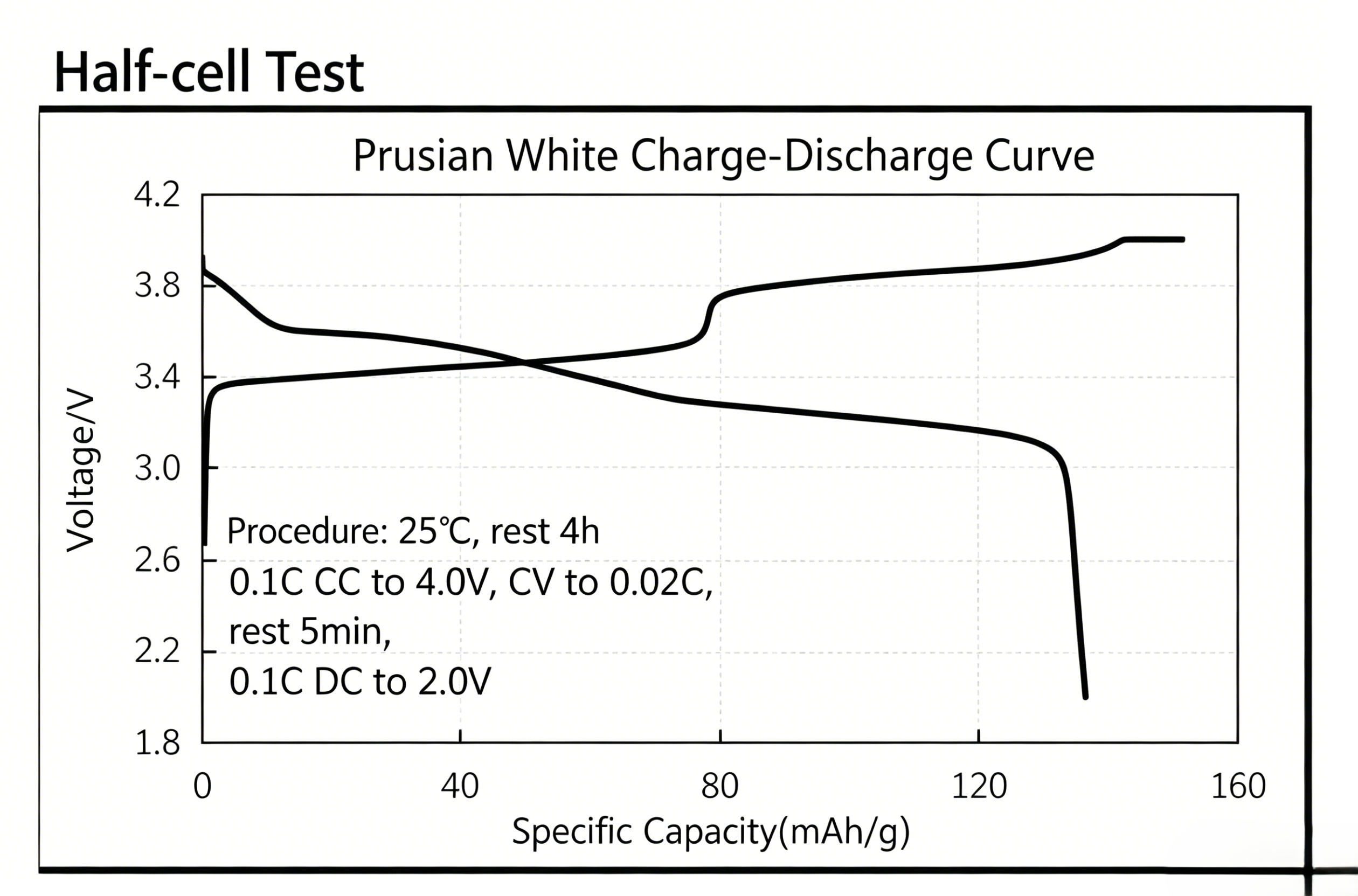
- If the drying conditions specified in Item 2 cannot be achieved, vacuum-dry the electrode sheets at 120 °C for 30 h. During drying, re-evacuate the chamber at least twice, for 3 min each time. After drying, maintain the vacuum while cooling to room temperature, and re-evacuate the chamber at least twice during cooling, for 3 min each time. Test data obtained under these drying conditions are provided in the “Half-Cell Testing” section below.
- Use the electrode sheets as soon as possible after fabrication.
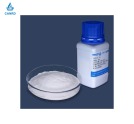
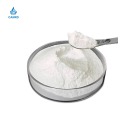
Sodium ion positive electrode material, Prussian
Crystal structure: no impurity peaks
Micro-morphology: quasi-cubic particle morphology.
Physicochemical Properties:
| Serial number | Test items | unit | Specification | Test results | Inspection method or instrument | ||
| 1 | Chemical composition | Na | (wt%) | 17.0±2.0 | 17.36 | ICP | |
| 2 | Fe | (wt%) | 22.0±0.5 | 22.14 | |||
| 3 | Mn | (wt%) | 22.0±0.5 | 22.36 | |||
| 4 | Na2CO3 | (wt%) | ≤1.000 | N.D. | Titration method | ||
| 5 | NaOH | (wt%) | ≤1.000 | N.D. | |||
| 6 | Physical characteristics | Particle size distribution | D10 | (μm) | ≥1.0 | 1.876 | Laser particle size analyzer |
| 7 | D50 | (μm) | 3.0~5.0 | 3.526 | |||
| 8 | D90 | (μm) | ≤7.0 | 5.924 | |||
| 9 | AD | (g/cm3) | ≥0.2 | 0.40 | Fully automatic specific surface and porosity analyzer | ||
| 10 | TD | (g/cm3) | ≤1.0 | 0.91 | Tapping density measuring instrument | ||
| 11 | pH | / | ≤9.0 | 8.23 | pH meter | ||
| 12 | Moisture | (wt%) | Crystal water | 101830 | Moisture measuring instrument | ||
| 13 | Electrochemical properties | First discharge capacity | (mAh/g) | ≥145.0 | 158.4 | CR2032 0.1/0.1C(4.0-2.0V) |
|
| 14 | First time efficiency | (%) | ≥93.0 | 95.7 | |||
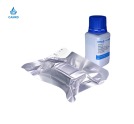
Packaging: Vacuum-sealed in an aluminum-laminated film pouch.
Storage Requirements: The material is moisture-sensitive and must be stored under vacuum in a cool, dry place.
Keep away from high-temperature environments and heat sources.
Need R&D Support?
Browse key product categories and connect battery materials with Canrd's R&D services for testing, fabrication, and project support.
Experimental Materials
CategoryCathode, anode, electrolyte, separator, and other materials for battery research.
Shop cathode, anode & electrolyte materials →Lab Equipment
CategoryBattery lab equipment for pilot lines, fixtures, and testing workflows.
Browse battery lab equipment →Electrodes & Cells
CategoryCustom electrodes, dry cells, and battery cell components for R&D validation.
View custom battery electrodes & cells →Sodium Electrolyte
CategorySodium-ion electrolyte options for sodium battery research and validation.
Shop sodium battery electrolytes →R&D Services
ServiceFull-chain battery R&D services from material evaluation to cell fabrication and failure analysis.
Explore Canrd R&D services →Material Evaluation
ServiceCharacterization, electrochemical testing, and compatibility evaluation for battery materials.
Evaluate your battery materials →Electrode Fabrication
ServiceCustom electrode sheets and rolls based on your target chemistry and process needs.
Request electrode fabrication →Cell Fabrication
ServiceDry cells, assembled cells, and custom-format cell builds for R&D validation.
Build custom research cells →Contact
PageAsk Canrd to match products, materials, and services for your project.
Get product and R&D support →