
 contact@canrd.com
 +86 18928276992


Details
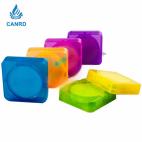
Polyvinylidene Fluoride (PVDF):
Characteristics: Hydrophobic membrane, does not absorb moisture, becomes hydrophilic membrane after treatment with ethanol or isopropanol, very low protein adsorption rate, resistant to chemical corrosion, and oxidation.
Applications: Western and Southern transfer, protein sequencing
- Sterilization filtration of protein solutions, cell culture medium, antibiotics, etc.
- Removal of particles from acids, alcohols, alkanes, aromatic hydrocarbons, and halogenated hydrocarbons
- Purification of suspended particles in the air and air sterilization in the fermentation industry
- Purification of insoluble substances in oils and analysis of solid particles by weight
- TCA precipitation in biological tests
- Can be sterilized using methods such as high temperature and pressure (30min/121℃) or ethylene oxide.
Introduction to Porous Membrane Products:
In membrane separation technology applications, porous membranes are the most widely used type of membrane due to their simplicity and ease of use. They have the characteristics of high gas flux, high particle retention rate, good temperature resistance, resistance to strong acids, strong alkalis, organic solvents, and oxidants, as well as resistance to aging, non-stickiness, non-flammability, non-toxicity, and good biocompatibility. The material of porous membranes can be divided into organic and inorganic categories. Considering the separation characteristics of porous membranes, their main applications are the removal of particles, bacteria, and other pollutants from gas and liquid phases to achieve purification, separation, and concentration. For microfiltration, the separation characteristics of the membrane are determined by its pore size, usually ranging from 0.1 to 1 μm, so microfiltration membranes can separate large diameter bacteria, suspended solids, and other substances. They can be used for the clarification of general liquid materials, safety filtration, and air sterilization. They are widely used in scientific research, medical and health, biochemistry, food, energy, microelectronics industry, nanotechnology, environmental protection, and other sectors.
Application of Porous Membranes:
This product is mainly used for the filtration of mobile phases and samples in chromatographic analysis, and it has a good effect in protecting chromatographic columns, infusion pump tubing systems, injection valves, etc. It is widely used in weight analysis, trace analysis, colloid separation, and sterile tests. During use, suitable membranes should be selected according to the filtered samples.
Related Articles
Introduction to diaphragm manufacturing process
Dry/wet processes for lithium-battery separators with coating and trends.
Polymer vs Li-Ion Batteries: The Key Differences You Can’t Afford to Ignore
his article mainly introduces Polymer vs Li-Ion Batteries.
Presentation of Wanhua Chemical: Comprehensive Solutions for Lithium Battery Anode Binders
Overview of Lithium - Ion Battery Binders
Efficient Polymer Interfaces for Ultra-Stable Aqueous Zinc-Metal Anodes
First Redox-Initiated Polymer Layers Revolutionize Aqueous Zn Anodes.
R&D 지원이 필요하신가요?
주요 제품 카테고리를 확인하고 배터리 소재를 Canrd R&D 서비스와 연결하세요.
실험 소재
카테고리배터리 연구용 양극, 음극, 전해액, 분리막 및 기타 소재.
양극, 음극 및 전해액 소재 보기 →실험 장비
카테고리파일럿 라인, 지그 및 테스트 워크플로용 배터리 실험 장비.
배터리 실험 장비 보기 →전극 및 셀
카테고리R&D 검증을 위한 맞춤 전극, 드라이 셀 및 배터리 셀 부품.
맞춤 배터리 전극 및 셀 보기 →나트륨 전해액
카테고리나트륨 배터리 연구 및 검증을 위한 나트륨 이온 전해액 옵션.
나트륨 배터리 전해액 보기 →R&D 서비스
서비스소재 평가부터 셀 제작 및 고장 분석까지 전주기 배터리 R&D 서비스.
Canrd R&D 서비스 살펴보기 →소재 평가
서비스배터리 소재의 특성 분석, 전기화학 테스트 및 호환성 평가.
배터리 소재 평가하기 →전극 제작
서비스목표 화학계와 공정 요구에 맞춘 맞춤 전극 시트 및 롤.
전극 제작 요청하기 →셀 제작
서비스R&D 검증을 위한 드라이 셀, 조립 셀 및 맞춤 셀 형식.
맞춤 연구 셀 제작하기 →문의
페이지Canrd가 프로젝트에 맞는 제품, 소재 및 서비스를 연결해 드립니다.
제품 및 R&D 지원 받기 →
