

 contact@canrd.com

 +86 18928276992


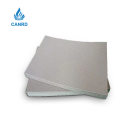
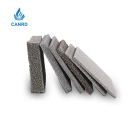


Details
1. Coating surface density does not include current collector material.
2. Theoretical areal capacity (mAh/cm2) = Coating surface density (mg/cm2) * Active material ratio * Specific capacity (mAh/g) ÷ 1000.
3. Theoretical mass of active material (mg) = Coating surface density (mg/cm2) * Active material ratio * Area of the electrode (cm2).
4. Actual weight-based calculation of active material (mg) = (Weight of electrode (mg) - Current collector surface density (mg/cm2) * Area of the electrode (cm2)) * Active material ratio.
5. Actual weight of active material should be used when calculating specific capacity, as the coating surface density has tolerances.
1. Ultra-lightweight: It has the highest specific surface area and a specific gravity of 0.2-0.3, which is 1/4 of water, 1/3 of wood, 1/10 of aluminum, and 1/30 of iron. It is extremely lightweight.
2. Sound absorption: The porous structure exhibits wide-frequency sound absorption characteristics.
3. Electromagnetic wave shielding: It provides approximately 90dB shielding against electronic waves with its relatively thin thickness.
4. Processability: It can be cut, bent, and easily adhered.
5. Fire resistance: It maintains shape stability and is difficult to ignite, exhibiting high temperature resistance.
6. Recyclability: Metallic waste materials can be 100% recycled.
7. Thermal conductivity: The porous material has strong thermal conductivity.
8. Breathability: With a homogeneous three-dimensional network structure, it acts as a filter and exhibits excellent stability in the flow of gases and fluids.
9. Sound insulation: With additional treatment, it can achieve high noise interception and exhibits good sound insulation.
10. Exquisite appearance, practical interior: Through various processing methods, it is suitable for indoor decoration.
11. High temperature resistance of over 1100 degrees, resistance to various acid and alkali corrosion, good permeability, uniform pore structure, and fast heat transfer.

Nickel foam thickness tolerance: 0-0.05mm.
R&D 지원이 필요하신가요?
주요 제품 카테고리를 확인하고 배터리 소재를 Canrd R&D 서비스와 연결하세요.
실험 소재
카테고리배터리 연구용 양극, 음극, 전해액, 분리막 및 기타 소재.
양극, 음극 및 전해액 소재 보기 →실험 장비
카테고리파일럿 라인, 지그 및 테스트 워크플로용 배터리 실험 장비.
배터리 실험 장비 보기 →전극 및 셀
카테고리R&D 검증을 위한 맞춤 전극, 드라이 셀 및 배터리 셀 부품.
맞춤 배터리 전극 및 셀 보기 →나트륨 전해액
카테고리나트륨 배터리 연구 및 검증을 위한 나트륨 이온 전해액 옵션.
나트륨 배터리 전해액 보기 →R&D 서비스
서비스소재 평가부터 셀 제작 및 고장 분석까지 전주기 배터리 R&D 서비스.
Canrd R&D 서비스 살펴보기 →소재 평가
서비스배터리 소재의 특성 분석, 전기화학 테스트 및 호환성 평가.
배터리 소재 평가하기 →전극 제작
서비스목표 화학계와 공정 요구에 맞춘 맞춤 전극 시트 및 롤.
전극 제작 요청하기 →셀 제작
서비스R&D 검증을 위한 드라이 셀, 조립 셀 및 맞춤 셀 형식.
맞춤 연구 셀 제작하기 →문의
페이지Canrd가 프로젝트에 맞는 제품, 소재 및 서비스를 연결해 드립니다.
제품 및 R&D 지원 받기 →
