

 contact@canrd.com

 +86 18928276992

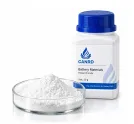
Details
| Product Code | IA-EN-SS-0142 |
|---|
| Test Items | Test Results | Method |
|---|---|---|
| Appearance | White powder, uniform and free of foreign matter | Visual Inspection |
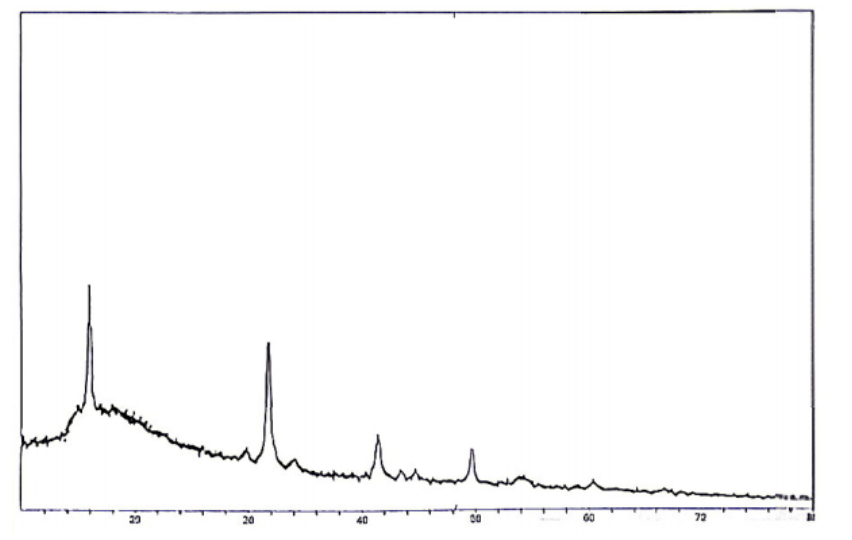
| Structure | LZAC | X-ray Diffractometer |
| Particle Size – D10 (μm) | 0.544 | Particle Size Analyzer |
| Particle Size – D50 (μm) | 2.546 | Particle Size Analyzer |
| Particle Size – D90 (μm) | 6.185 | Particle Size Analyzer |
| Moisture (ppm) | 8.5 | Karl Fischer Moisture Analyzer |
| Purity (%) | 99.9 | ICP |
| Ionic Conductivity (mS/cm) | 0.718 | Pressed into a pellet at 350 MPa and tested at 30°C by Electrochemical Impedance Spectroscopy |
| Electronic Conductivity (S/cm) | 1.16 × 10⁻⁸ | Pressed into a pellet at 350 MPa and tested at 25°C by Electrochemical Impedance Spectroscopy |
Test Conditions
| No. | Test Conditions |
|---|---|
| (1) | XRD Test: The sample was prepared in a glovebox under an inert atmosphere, avoiding exposure to polar-solvent vapors. The sample surface was sealed with polyimide adhesive film to isolate it from air and moisture. |
| (2) | Ionic Conductivity Test: A 100 mg powder sample was placed in a 10 mm-diameter die and pressed into a pellet at 350 MPa. The pressure was maintained at 350 MPa during the EIS test. Frequency range: 1 MHz–1 Hz; AC amplitude: 10 mV. |
| (3) | Electronic Conductivity Test: A 100 mg powder sample was placed in a 10 mm-diameter die and pressed into a pellet at 350 MPa. The pressure was maintained at 350 MPa during the i–t test. Constant voltage: 0.5 V; test duration: 1,800 s. |
| (4) | Particle Size Test: Wet laser diffraction was used. The powder was ultrasonically dispersed for 3 minutes in a dehydrated non-polar solvent, which was also used as the dispersing medium for the wet laser particle size measurement. |
Packaging, Transportation and Storage
Ionic Conductivity Test for Halide Electrolyte Powder
- For ionic conductivity testing of halide solid electrolyte powder, tableting pressure of 200–400 MPa is generally adopted.
- Stainless steel rods are used as blocking electrodes for cold-pressed green pellets. Applying pressure over 30 MPa on both sides enables favorable contact between electrodes and electrolyte.
- Test Procedures:
① Tableting: Weigh 100 mg electrolyte powder and load it into a mold with an inner diameter of 10 mm, then compress under 350 MPa.② Thickness Measurement: Measure the thickness of the electrolyte pellet inside the mold with a depth vernier caliper.③ Assembly: Fasten the assembled cell under 350 MPa, retain pressure via a steel fixture before testing.④ EIS Measurement: Connect the cell to an electrochemical workstation, set test parameters and start the measurement. The AC impedance test frequency range is 1 MHz to 1 Hz with a voltage amplitude of 10 mV.⑤ Ionic Conductivity Calculation: Halide materials are soft with tight inter-particle contact, so the AC impedance curve forms an approximately 45° upward-sloping straight line. For powders with inherently high impedance, a small grain boundary capacitive arc may appear in the high-frequency region. If the curve intersects the real axis Z', the intersection value is taken as total impedance; if the curve lies entirely above the real axis or contains inflection points, the projection of the curve’s lowest point onto the real axis is adopted as total impedance for ionic conductivity calculation.
Important Notes & Operation Recommendations
- Operating Environment: All operations must be performed inside a glove box filled with high-purity argon (O₂ & H₂O < 0.1 ppm). Any air exposure will cause moisture absorption, material decomposition and permanent performance degradation.
- Personal Protective Equipment (PPE): Chemical-resistant gloves (e.g., nitrile rubber gloves) are recommended even for glove-box operations. If handling outside the glove box, respirators, safety goggles and anti-static lab coats are mandatory.
Hazard Statements
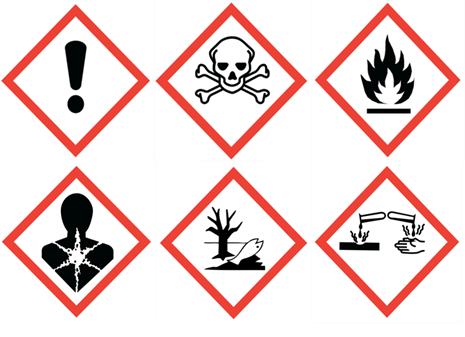
- Contact with water releases acidic gas.
- Fatal if swallowed, in skin contact or inhaled.
- Causes severe skin injuries and eye damage.
Precautionary Statements
- Avoid all contact with water.
- Handle in an inert-atmosphere glove box to prevent moisture ingress.
- Wear protective gloves, protective clothing, eye protection and face shields.
- Wash skin thoroughly after handling.
- Do not eat, drink or smoke while using this product.
- Avoid inhaling dust, fumes, gas, mist, vapor and spray.
- Prevent release into the environment.
Safe Storage
- Inside the glove box, the product is vacuum-sealed in fluorinated magnetic-cap bottles, then double-wrapped with aluminum plastic bags. Unopened packages can be stored under regular ambient conditions.
- If unpacking is required for use, all opening and subsequent storage operations must be conducted in an inert gas (e.g., argon) glove box with water and oxygen levels below 0.1 ppm.
First-Aid Measures
- If swallowed: Immediately call a poison control center or physician. Rinse mouth. Do NOT induce vomiting.
- If on skin (or hair): Remove all contaminated clothing at once. Rinse skin thoroughly with abundant water or take a full shower. Seek immediate medical advice/attention.
- If inhaled: Transfer the victim to fresh air and place them in a rest position that facilitates breathing. Seek immediate medical advice/attention.
- If in eyes: Rinse cautiously with running water for several minutes. Remove contact lenses if present and easily removable. Continue rinsing. Seek immediate medical advice/attention.
- Fire-fighting instructions: Use Class D fire extinguishers (for metal fires) or dry sand. Water, foam and carbon dioxide fire extinguishers are strictly prohibited.
Waste Disposal
- All waste materials shall be treated as hazardous chemical waste; arbitrary disposal is forbidden.
- Small contaminated articles may be wiped and cleaned with alkaline solution inside a fume hood.
R&D 지원이 필요하신가요?
주요 제품 카테고리를 확인하고 배터리 소재를 Canrd R&D 서비스와 연결하세요.
실험 소재
카테고리배터리 연구용 양극, 음극, 전해액, 분리막 및 기타 소재.
양극, 음극 및 전해액 소재 보기 →실험 장비
카테고리파일럿 라인, 지그 및 테스트 워크플로용 배터리 실험 장비.
배터리 실험 장비 보기 →전극 및 셀
카테고리R&D 검증을 위한 맞춤 전극, 드라이 셀 및 배터리 셀 부품.
맞춤 배터리 전극 및 셀 보기 →나트륨 전해액
카테고리나트륨 배터리 연구 및 검증을 위한 나트륨 이온 전해액 옵션.
나트륨 배터리 전해액 보기 →R&D 서비스
서비스소재 평가부터 셀 제작 및 고장 분석까지 전주기 배터리 R&D 서비스.
Canrd R&D 서비스 살펴보기 →소재 평가
서비스배터리 소재의 특성 분석, 전기화학 테스트 및 호환성 평가.
배터리 소재 평가하기 →전극 제작
서비스목표 화학계와 공정 요구에 맞춘 맞춤 전극 시트 및 롤.
전극 제작 요청하기 →셀 제작
서비스R&D 검증을 위한 드라이 셀, 조립 셀 및 맞춤 셀 형식.
맞춤 연구 셀 제작하기 →문의
페이지Canrd가 프로젝트에 맞는 제품, 소재 및 서비스를 연결해 드립니다.
제품 및 R&D 지원 받기 →
