

 contact@canrd.com

 +86 18928276992

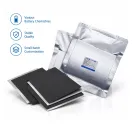
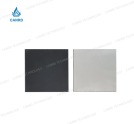

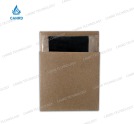
Details
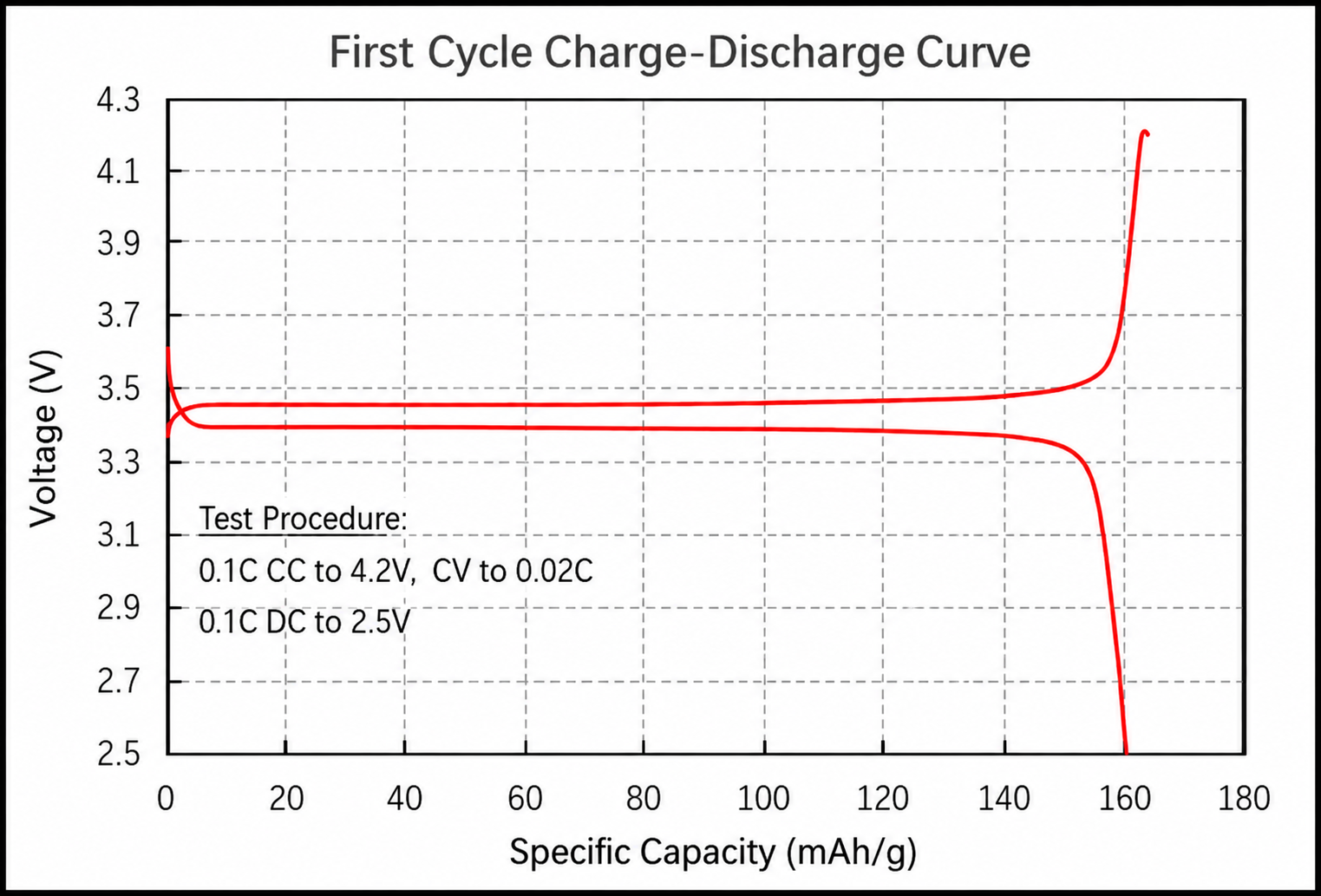
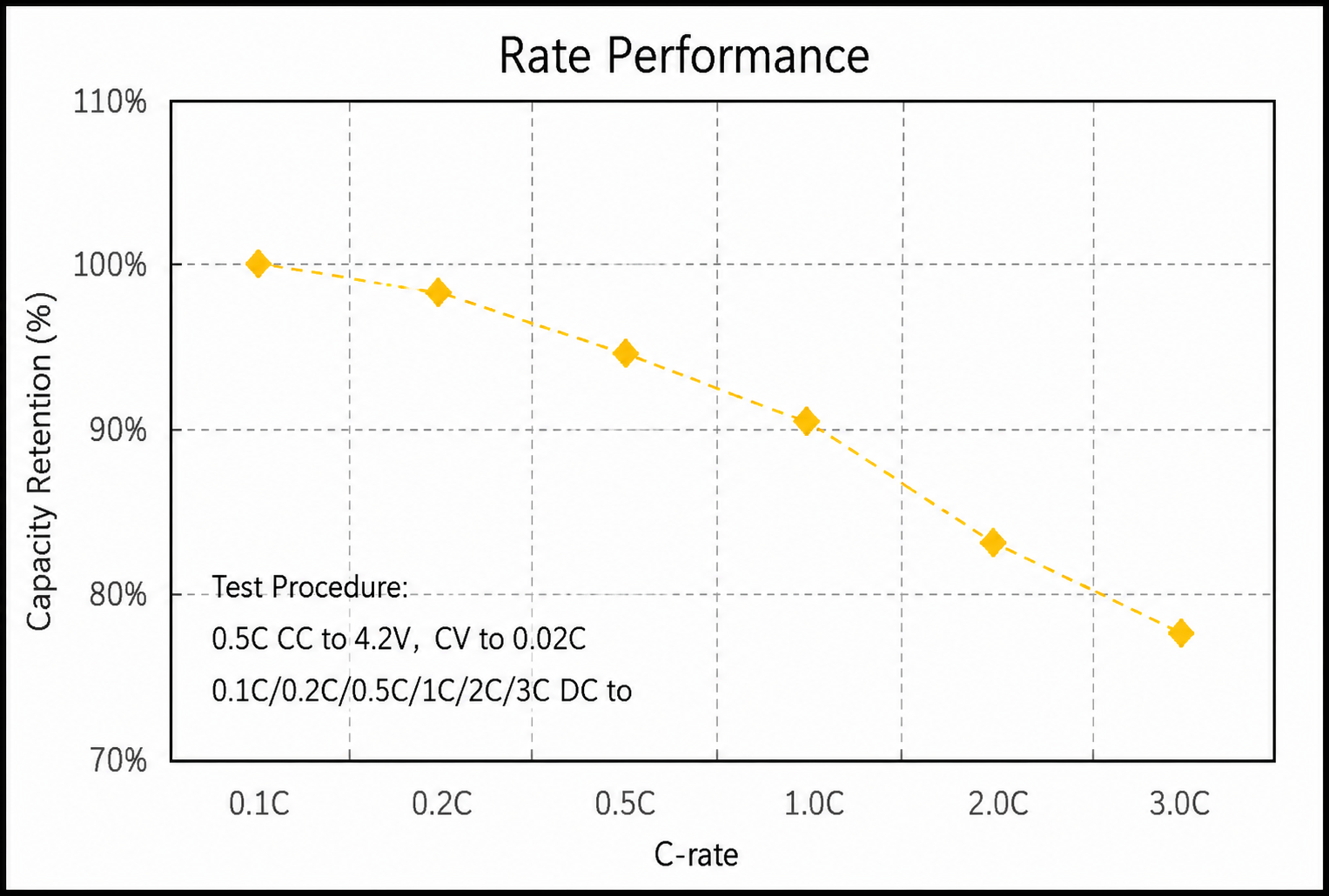
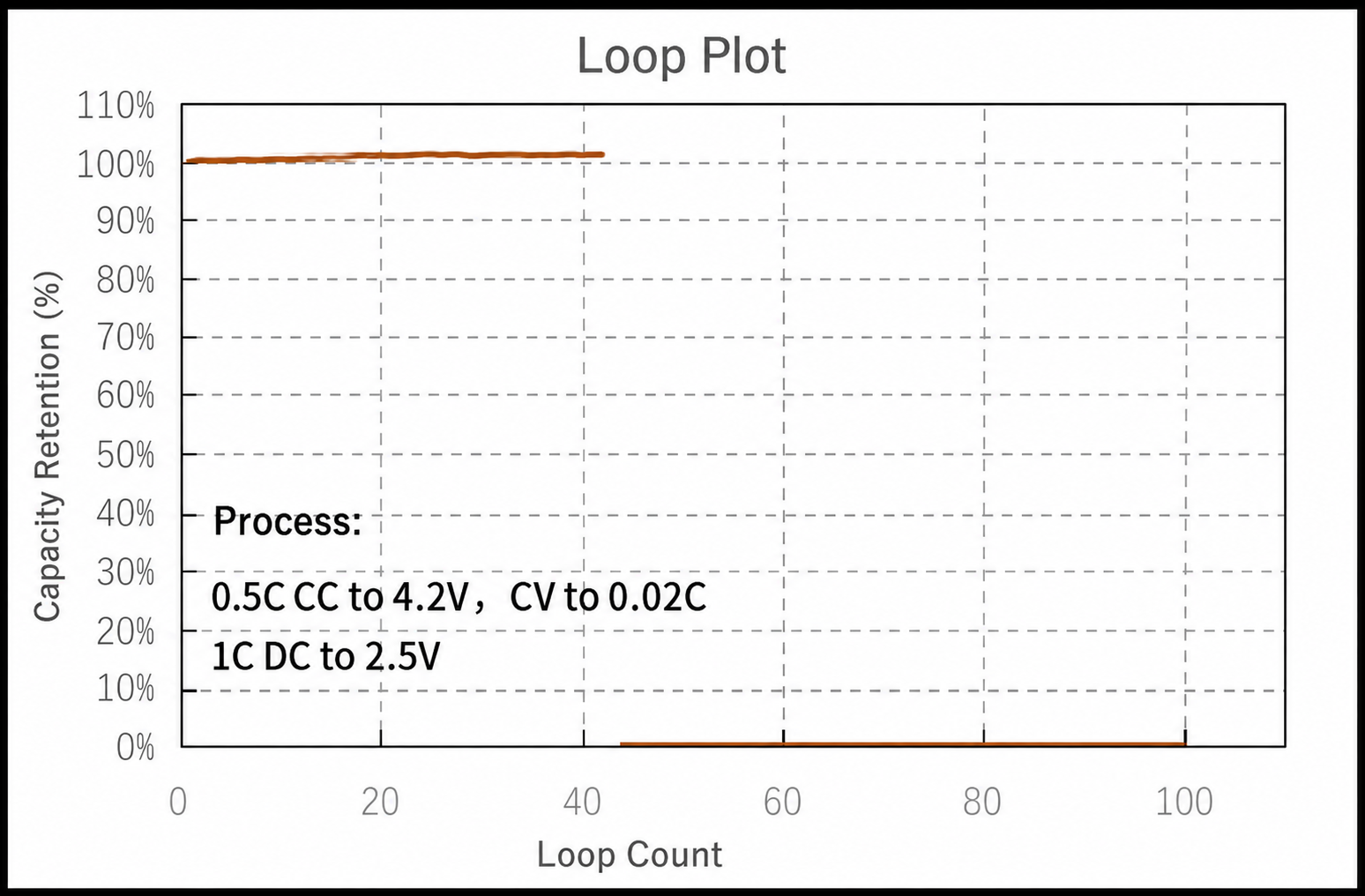
Specification Parameters
Item Specification / Value Coating Thickness Current Collector Areal Density (mg/cm²) 3.50 Electrode Sheet Size 10 × 10 Current Collector Thickness (μm) 14 (Carbon-Coated Aluminum Foil) Active Material Content 91.5% Compatible Electrode Sheet Models for Full-Cell Assembly (N/P Ratio) SM02XX (1.12); LT01XX (1.13); SC02XX (1.05) Electrode Compaction Density (g/cc) 1.50–2.00 (For uncalendered electrode sheets, no compaction density value is provided; calculate it independently.) Active Material Lithium Iron Phosphate (High Compaction) Current Collector Type Carbon-Coated Aluminum Foil Shelf Life 6 months (stored in vacuum-sealed packaging); use within 1 month after opening Recommended Electrolyte KLD-LFP01
Lithium Iron Phosphate Electrode Sheet Electrode Sheet Code LF07XX Active Material Specific Capacity (mAh/g) 150 (2.50–4.20 V) Test Condition Description Room temperature 25°C; rest for 4 h; charge at 0.1C (CC) to 4.20 V; CV charge at 4.20 V to 0.02C; rest for 3 min; discharge at 0.1C (CC) to 2.50 V; rest for 3 min Test Conditions Room temperature 25°C, 0.1/0.1C, 2.50–4.20 V Areal Capacity (mAh/cm²) 1.69 Coating Areal Density (mg/cm²) 12.30 (Tolerance: ±2.0%) Recommendations for Use 1. If the electrode sheet has not been calendered, it generally needs to be calendered before punching and drying. The minimum value in the Electrode Compaction Density row of this table may be used as a reference. 2. Drying conditions: 85–105°C for 4 h. If vacuum drying is used, perform two gas exchanges. 3. The active material mass shall be determined based on the actual weighing result of each punched disc.
Packaging, Transportation and Storage
1.Store under vacuum or double‑seal with self‑sealing bags inside a glove‑box. Especially for high‑nickel and sodium‑ion cathode materials, improper storage will increase the internal resistance of batteries.2.The electrode sheets are un‑calendered. Please calender the electrodes according to the suggested compaction density.3.The coating areal density shall be determined by actual weighing, which excludes the current collector.4. Actual mass of active material
(mg) = (disc weight (mg) - current- collector areal density (mg/cm2) x disc area (cm2))
5. Theoretical mass of active material
(mg) = coating areal density (mg/cm2) X active material mass fraction X disc area (cm2)
6. Theoretical areal capacity
specific capacity (mAh/g)+ 1000
(m Ah/cm2) = coating areal density (mg/cm2) X active material mass fraction Xspecific capacity (mAh/g)+ 10007.Specific capacity shall be calculated based on the gravimetrically measured active‑material mass. Given the tolerance of coating areal density, actual weighing shall prevail.8.Crease note: Single‑sided electrodes tend to curl after calendering. Flattening for packaging may introduce creases.
R&D 지원이 필요하신가요?
주요 제품 카테고리를 확인하고 배터리 소재를 Canrd R&D 서비스와 연결하세요.
실험 소재
카테고리배터리 연구용 양극, 음극, 전해액, 분리막 및 기타 소재.
양극, 음극 및 전해액 소재 보기 →실험 장비
카테고리파일럿 라인, 지그 및 테스트 워크플로용 배터리 실험 장비.
배터리 실험 장비 보기 →전극 및 셀
카테고리R&D 검증을 위한 맞춤 전극, 드라이 셀 및 배터리 셀 부품.
맞춤 배터리 전극 및 셀 보기 →나트륨 전해액
카테고리나트륨 배터리 연구 및 검증을 위한 나트륨 이온 전해액 옵션.
나트륨 배터리 전해액 보기 →R&D 서비스
서비스소재 평가부터 셀 제작 및 고장 분석까지 전주기 배터리 R&D 서비스.
Canrd R&D 서비스 살펴보기 →소재 평가
서비스배터리 소재의 특성 분석, 전기화학 테스트 및 호환성 평가.
배터리 소재 평가하기 →전극 제작
서비스목표 화학계와 공정 요구에 맞춘 맞춤 전극 시트 및 롤.
전극 제작 요청하기 →셀 제작
서비스R&D 검증을 위한 드라이 셀, 조립 셀 및 맞춤 셀 형식.
맞춤 연구 셀 제작하기 →문의
페이지Canrd가 프로젝트에 맞는 제품, 소재 및 서비스를 연결해 드립니다.
제품 및 R&D 지원 받기 →
