

 contact@canrd.com
 +86 18928276992
Details
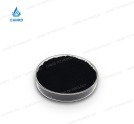
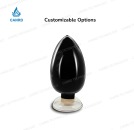
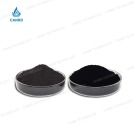
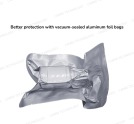
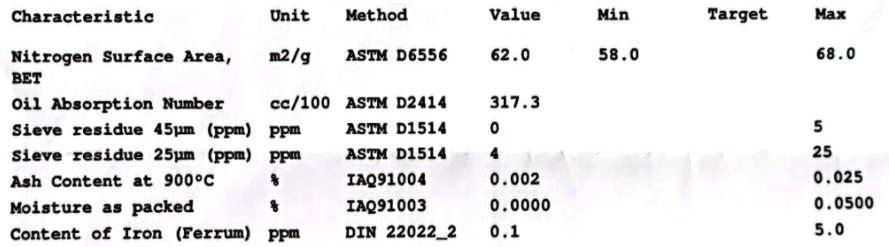
This acetylene black (Kappa 100) is developed as a high-purity conductive additive for energy storage and electrochemical research, offering a primary particle size of approximately 35 nm and a purity of 99.9%. Its fine nanoscale structure supports efficient electron transport and uniform dispersion in electrode formulations, making it suitable for use in lithium-ion batteries, supercapacitors, and other advanced energy materials where consistent conductivity is critical. Typically employed in small-scale experimental synthesis or prototype development, this material is available in multiple packaging sizes to accommodate varying research batch requirements. The combination of controlled particle dimensions and low impurity levels enhances its reliability for studying conductive network formation and electrochemical performance in next-generation battery systems.
Purity: 99.9%
Primary Particle Size: ~35nm
Related Articles
Effect of Conductive Additives on Electronic Conductivity of Lithium-Ion Battery Electrodes
Conductive agent SP enhances Li-ion battery powder/electrode conductivity.
자주 묻는 질문
검색하거나 일반적인 질문을 찾아보며 빠르게 답변을 확인하세요

Can acetylene black (Kappa 100) be used as a conductive carbon black for sodium electricity? Are there any other conductive carbon blacks that are more recommended for sodium electricity?
Koqin Black (ECP-600JD) and Koqin Black (EC-300J) — the customer wants to confirm what the conductivities of these two are?
The customer is asking whether the Koqin black we sell has undergone acidification or hydroxylation treatment. Please help answer, thank you.
Can acetylene black (Kappa 100) be used as a sodium-ion battery?
R&D 지원이 필요하신가요?
주요 제품 카테고리를 확인하고 배터리 소재를 Canrd R&D 서비스와 연결하세요.
실험 소재
카테고리배터리 연구용 양극, 음극, 전해액, 분리막 및 기타 소재.
양극, 음극 및 전해액 소재 보기 →실험 장비
카테고리파일럿 라인, 지그 및 테스트 워크플로용 배터리 실험 장비.
배터리 실험 장비 보기 →전극 및 셀
카테고리R&D 검증을 위한 맞춤 전극, 드라이 셀 및 배터리 셀 부품.
맞춤 배터리 전극 및 셀 보기 →나트륨 전해액
카테고리나트륨 배터리 연구 및 검증을 위한 나트륨 이온 전해액 옵션.
나트륨 배터리 전해액 보기 →R&D 서비스
서비스소재 평가부터 셀 제작 및 고장 분석까지 전주기 배터리 R&D 서비스.
Canrd R&D 서비스 살펴보기 →소재 평가
서비스배터리 소재의 특성 분석, 전기화학 테스트 및 호환성 평가.
배터리 소재 평가하기 →전극 제작
서비스목표 화학계와 공정 요구에 맞춘 맞춤 전극 시트 및 롤.
전극 제작 요청하기 →셀 제작
서비스R&D 검증을 위한 드라이 셀, 조립 셀 및 맞춤 셀 형식.
맞춤 연구 셀 제작하기 →문의
페이지Canrd가 프로젝트에 맞는 제품, 소재 및 서비스를 연결해 드립니다.
제품 및 R&D 지원 받기 →
