



Lithium-ion Full Cell Manufacturing Process Training--Design-2
1.Role and Selection Criteria of Anode Materials
1.1.Principles for Selecting Anode Materials for Lithium-ion Batteries
Selection Principles for Anode Materials:
High specific energy;
As low as possible electrode potential relative to lithium electrode;
Good reversibility during charging and discharging processes;
Favorable surface structure that forms a good SEI film with the electrolyte;
Excellent structural dimensions and mechanical stability during insertion/extraction processes to ensure good cycling performance;
Good electronic and ionic conductivity of the insertion compound to reduce polarization;
High diffusion coefficient of lithium ions within the material for facile rapid charging and discharging;
Abundant resources and low cost;Stable and non-toxic in air.
2.Types of Anode Materials
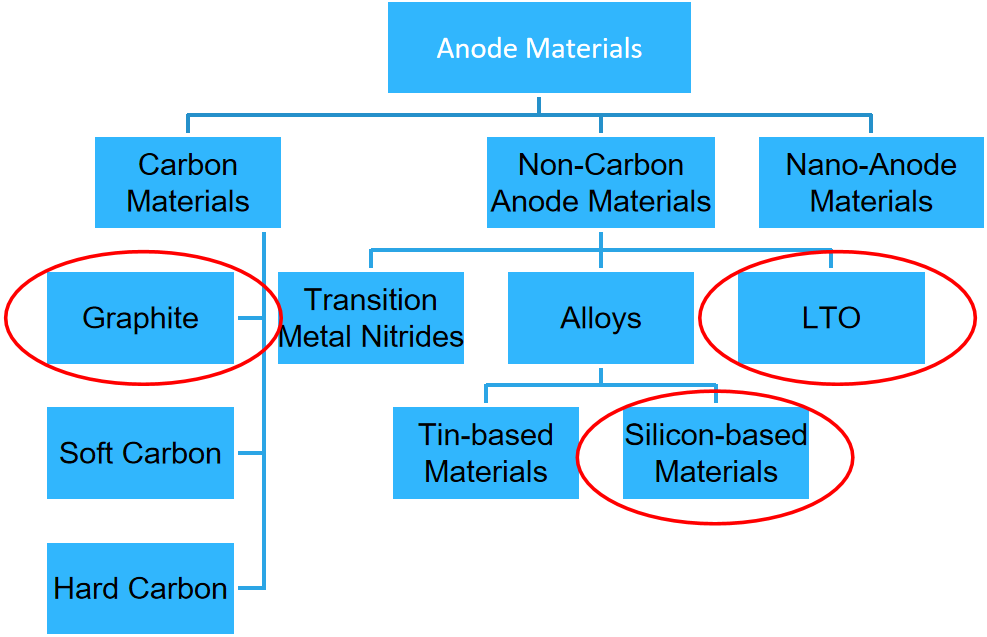
Classification of Anode Materials for Lithium-ion Batteries:
Currently, the commercialized anode materials are mainly graphite, LTO, and silicon-based materials.
2.1.Development Direction
Silicon anodes and lithium metal anodes have become the medium- to long-term development directions due to their high specific capacity.
3.Introduction to Anode Materials
3.1.Graphite
1.Graphite is a commonly used anode material in lithium-ion batteries.
Graphite mainly includes:
Natural Graphite
Artificial Graphite
2.What is Graphite?
①Graphite has a layered structure, with the layers bound together by van der Waals forces.
②The basal plane and edge plane of graphite exhibit different properties.

4.Commonly Used Modification Schemes for Graphite Anodes
4.1.Graphite Material Charging and Discharging
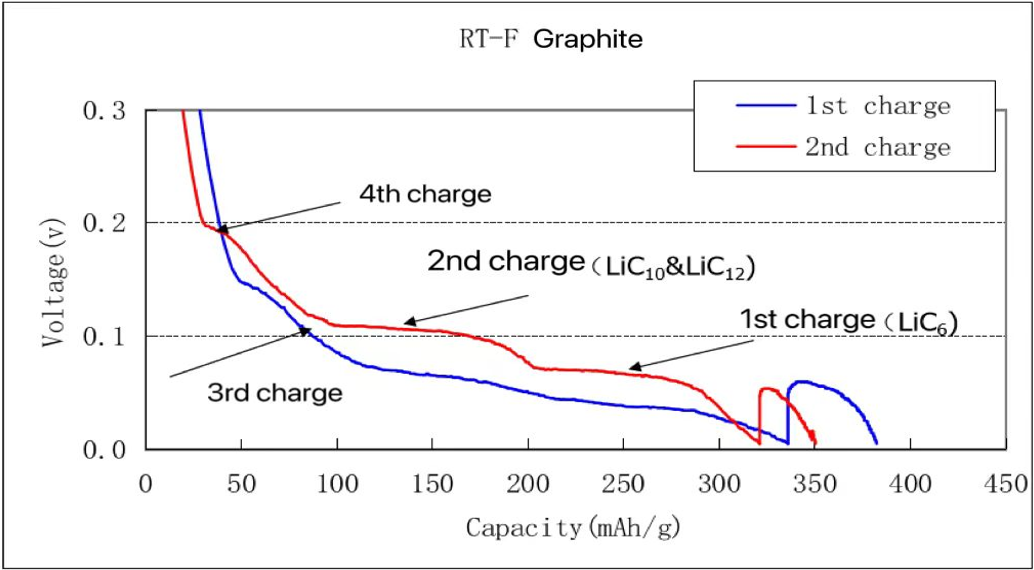
During the insertion of lithium into graphite, the charging and discharging voltage remains relatively stable. The reversible insertion of lithium ions into the graphite layers primarily occurs below 0.2V. There are distinct lithium insertion platforms near the three potential levels of 0.2V, 0.12V, and 0.08V.
4.2.Compatibility of Graphite with Electrolytes
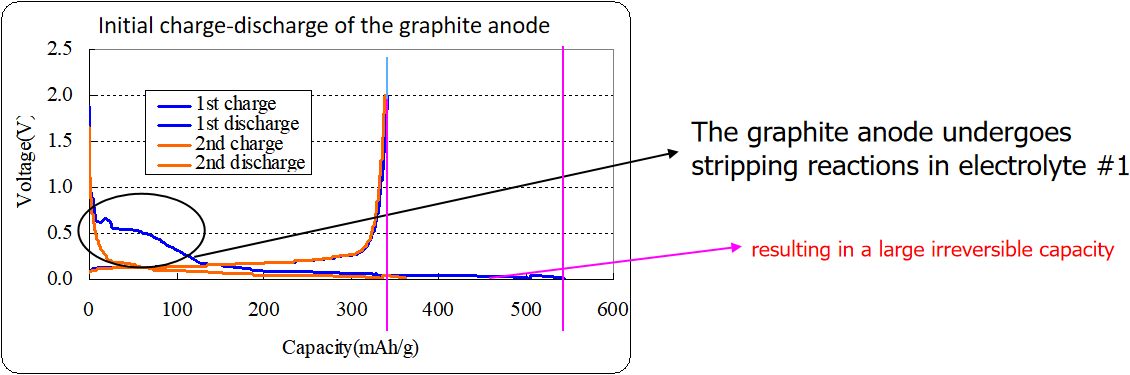
The choice of electrolyte has a significant impact on the electrochemical performance of the material!

4.3.Soft Carbon and Hard Carbon
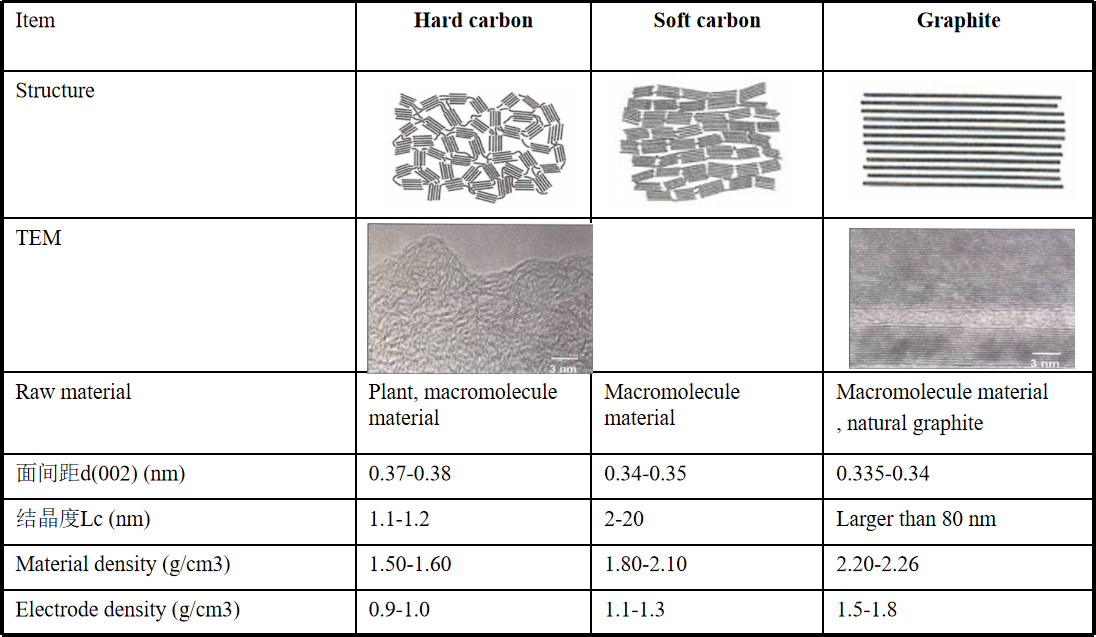
1.Soft carbon, also known as easily graphitized carbon, is amorphous carbon that can be graphitized at temperatures above 2500°C. Soft carbon has a low degree of crystallization (or graphitization), small grain size, and a large interplanar spacing (d002). It exhibits good compatibility with electrolytes. However, it has a high irreversible capacity during the initial charge-discharge cycle, a relatively low output voltage, and no distinct charge-discharge platform potential. Common examples of soft carbon include petroleum coke, needle coke, carbon fibers, and carbon microspheres.
2.Hard carbon refers to carbon that is difficult to graphitize. It is the pyrolysis carbon of high-molecular-weight polymers, and this type of carbon remains difficult to graphitize even at temperatures above 2500°C. Common examples of hard carbon include resin carbon (such as phenolic resin, epoxy resin, and polyfurfuryl alcohol PFA-C).

4.4.Comparison of Different Carbon Material Structures
4.5.Titanium Oxides(Li4Ti5O12)
Spinel Structure
Poor Conductivity (~ 10-13 S/cm)
High Potential (vs.Li)
Typically Prepared by Solid-Phase Method
Advantages:
Excellent structural stability of the crystal during lithium ion insertion/extraction; zero strain
Outstanding cycling performance and discharge voltage platform
High potential (1.56V), avoiding electrolyte decomposition and formation of interfacial protective films
Abundant raw material sources (TiO2, Li2CO3, LiOH, or other lithium salts)

4.6.The main disadvantages of LTO are its high voltage platform, low specific capacity, and high cost, which limit its applications.

4.7.Alloy-based Materials
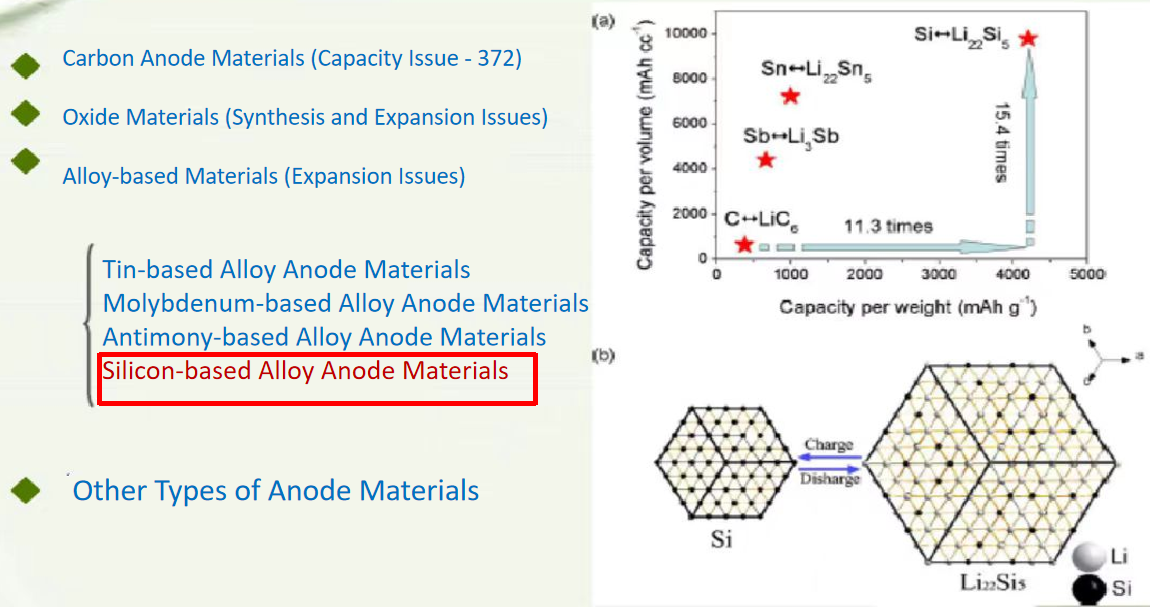
Silicon-Carbon Battery = 50% Silicon-Carbon Material (Nano-Silicon + Composite Technology) + 50% Supporting Facilities
4.8.Silicon Anode
1.Although alloys have high capacity, they also experience significant volume expansion (up to 300%). Nanostructuring is necessary to mitigate this expansion.
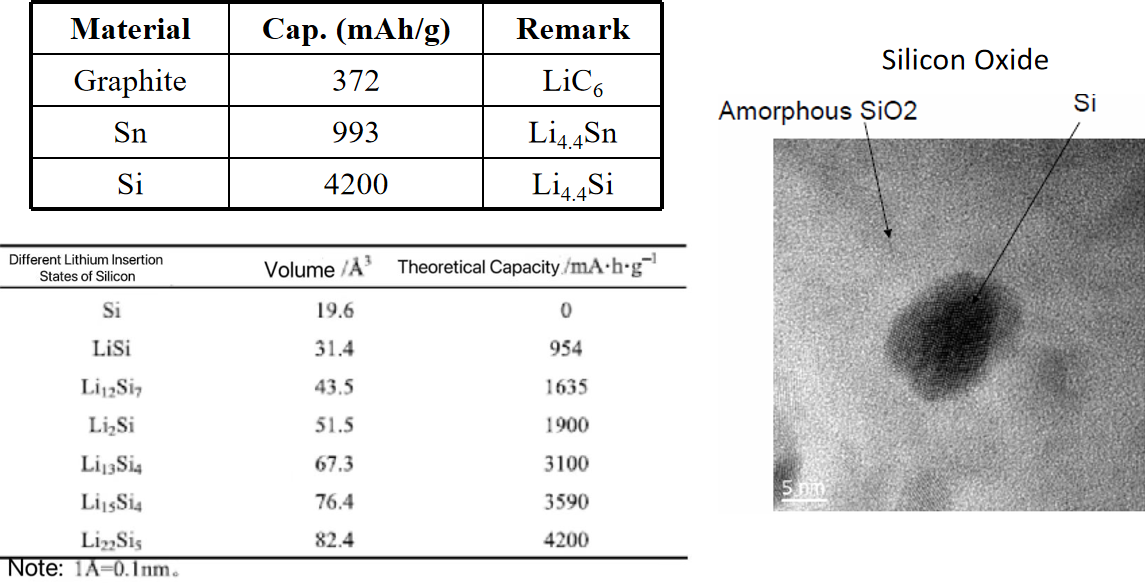
2.Currently commercialized silicon anodes are primarily silicon oxide and silicon/carbon composite materials.

4.9.Material Modification for High Energy Density
Purpose:1. Increase the graphitization degree of the material and enhance its energy density.
Purpose:2.Reduce surface defects, lower reactive sites, and minimize electrolyte consumption, thereby ensuring high initial efficiency and cycling performance of the battery.

4.10.Material Modification - Low Rebound

4.11.Material Modification - Balanced Type
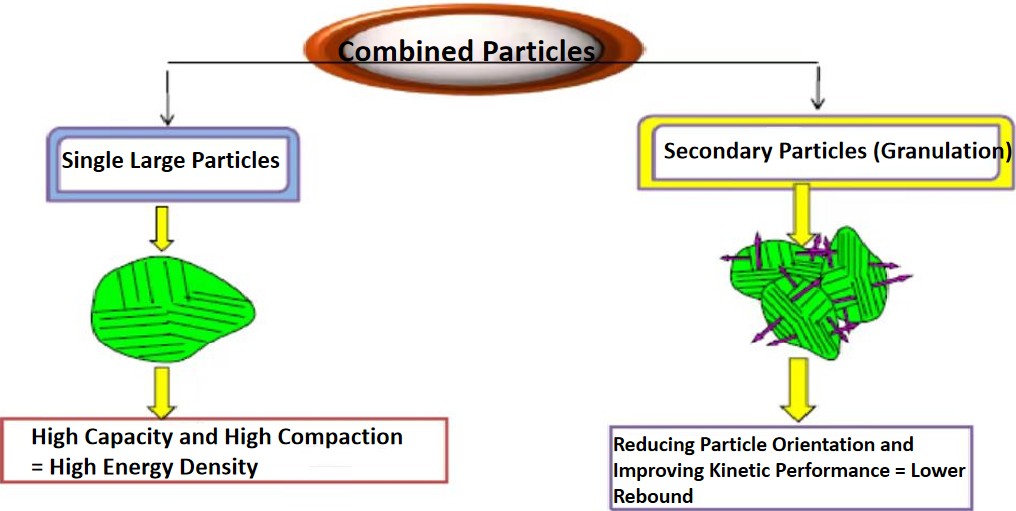
4.12.Material Modification -Fast Charging
Interface Design - Coating with Amorphous Carbon

Idea: Coating with amorphous carbon can significantly reduce the electrochemical reaction impedance of the material, enhancing its power performance and performance at low temperatures.
4.13.Material Modification - Fast Charging
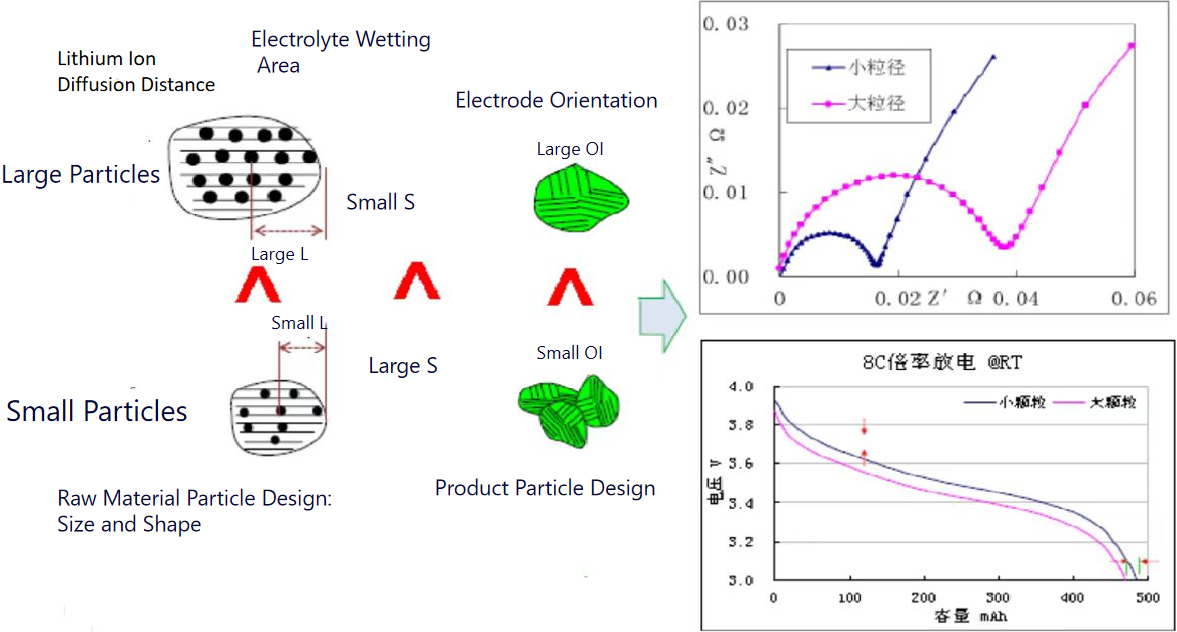
Idea: Using small-particle graphite to shorten the lithium ion diffusion distance, increase electrolyte wetting area, and reduce the OI value of the electrode, effectively enhancing the material's rate capability and fast charging performance.
5.Canrd Brief Introduce
Canrd use high battery R&D technology(core members are from CATL) and strong Chinese supply chain to help many foreign companies with fast R&D. We provide lab materials, electrodes, custom dry cells, material evaluation, perfomance and test, coin/pouch/cylindrical cell equipment line, and other R&D services.
📱 WhatsApp/WeChat: 86 189 2827 6992
📧 Email: janice@canrd.com
🛒 Product Website: www.canrud.com

Related Products & Services
Use Canrud products and R&D services to turn battery knowledge into practical experiments.
Coin Cell Case
ProductCoin cell cases for validating materials and electrochemical concepts from the article.
Use coin cell cases in your next test →Sodium Electrolyte
CategoryElectrolytes for sodium-ion battery research, compatibility tests, and cell validation.
Shop sodium electrolyte for validation →Cell Fabrication
ServiceGet support building dry cells, assembled cells, or custom formats for R&D validation.
Request cell fabrication support →Experimental Materials
CategoryBrowse materials for follow-up experiments, benchmarking, and product development.
Browse experimental battery materials →