



Its function is to ensure strong adhesion between active materials, conductive carbon black, and current collectors, prevent material pulverization and electrode delamination, and maintain stable charging and discharging of the battery.
Binders used for the cathode and anode during electrode fabrication are different. Today we will introduce the cathode binder – PVDF.
PVDF, short for Polyvinylidene Fluoride, is a fluorine-containing polymer. It can be classified into homopolymers and copolymers.PVDF homopolymer is produced by free-radical polymerization of vinylidene fluoride (VDF) monomers and is widely used in lithium batteries, such as Arkema HSV900, Solvay 5130, etc.PVDF copolymer is polymerized from VDF and other fluorine-containing vinyl monomers. By introducing specific functional groups, it obtains improved properties such as enhanced toughness, with typical grades including Arkema LBG, 2810, etc.
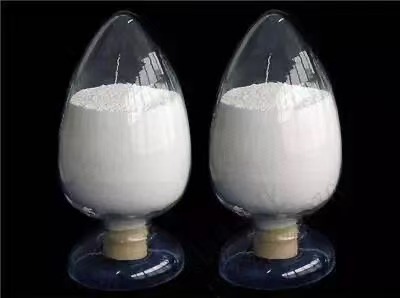
(PVDF powder)
At room temperature, PVDF is a white powder or crystalline solid with a crystallinity of 50% and a density of 1.75–1.78 g/cm³. It is soluble in the organic solvent NMP.Besides being used as a lithium-ion battery binder, PVDF is also widely applied in engineering plastics, coatings, and other products.Why is PVDF chosen as the binder among numerous materials?

(Monomer structure formula of PVDF)
PVDF is widely used as a cathode binder in lithium-ion batteries for the following main reasons:
First, PVDF is chemically inert to the electrolyte and has excellent thermal stability.
As a component inside the battery, the binder is in direct contact with the electrolyte, so it must not react with electrolyte components.In addition, the battery generates heat during charging and discharging, requiring the binder to maintain good adhesion even under harsh conditions such as high or low temperatures to ensure normal battery operation.
As a fluoropolymer, PVDF has high bond energy, which gives it excellent chemical resistance, oxidation resistance, and thermal stability.It can be used in the temperature range of -40 °C to 150 °C, and its thermal decomposition temperature exceeds 300 °C, making it the preferred material for binders.
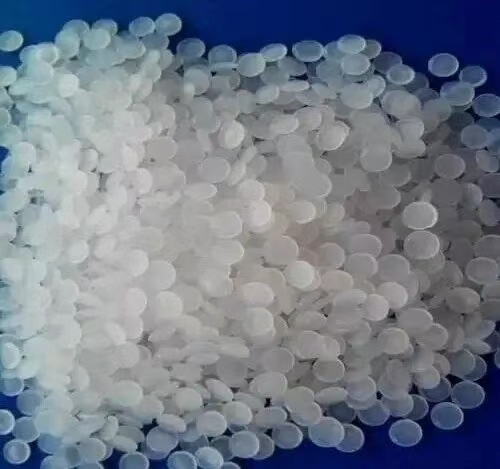
(PVDF pellets)
Second, PVDF has outstanding adhesion performance.
Lithium-ion batteries can undergo hundreds, thousands, or even tens of thousands of cycles, with a service life of several years or longer.This means the binder must have sufficient adhesion strength to remain effective throughout the battery’s cycle life.
As a high-molecular-weight polymer, PVDF provides excellent adhesion with only a small dosage.Furthermore, specific functional groups can be introduced during production to develop binders with tailored properties, such as improved toughness and processability, which help enhance production efficiency and battery performance.

(PVDF pellets)
Second, PVDF has outstanding adhesion performance.
Lithium-ion batteries can undergo hundreds, thousands, or even tens of thousands of cycles, with a service life of several years or longer.This means the binder must have sufficient adhesion strength to remain effective throughout the battery’s cycle life.
As a high-molecular-weight polymer, PVDF provides excellent adhesion with only a small dosage.Furthermore, specific functional groups can be introduced during production to develop binders with tailored properties, such as improved toughness and processability, which help enhance production efficiency and battery performance.
📱 WhatsApp/WeChat: +86 189 2827 6992
📧 Email: janice@canrd.com
🛒 Product Website: : www.canrud.com
