

 contact@canrd.com

 +86 18928276992


Details
Product Advantages
Mixed Cellulose Ester (MCE)
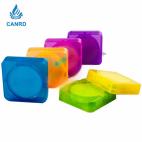
Features: Smooth membrane surface, thin‑light texture, high porosity, excellent retention performance, good hydrophilicity, large water flux, uniform microporous structure and extremely low adsorption rate. Not resistant to organic solvents, strong acids or strong‑alkali solutions. Tolerable pH range: 2‑9. Only suitable for filtration of aqueous reagents or other aqueous‑phase solvents. Cost‑effective.
Applications: ‑ Sterilization and particle removal in laboratory and small‑scale production processes ‑ Sterile filtration of culture media and nutrient solutions ‑ Bacteria population determination in water bodies
Product Description & Recommendations
Brief Introduction to Microporous Membrane
Among membrane‑separation technologies, microporous filter membranes are the most widely‑used membrane type, featuring simple and fast operation. They deliver high gas flux, high particle retention rate, good temperature resistance, resistance to strong acids, strong alkalis, organic solvents and oxidants. Other properties include aging resistance, non‑stick performance, non‑flammability, non‑toxicity and favorable biocompatibility.
Materials are divided into organic and inorganic categories. Based on its separation characteristics, microporous filter membrane mainly intercepts particles, bacteria and other contaminants from gas and liquid phases for purification, separation and concentration purposes.
For microfiltration, retention performance is defined by pore size, generally ranging from 0.1 ~ 1 μm. It can separate large‑diameter bacteria, suspended solids and so on. It can be applied for general feed‑liquid clarification, safety filtration and air sterilization. Widely used in scientific research, pharmaceutical hygiene, biochemistry, food, energy, microelectronics, nanotechnology, environmental protection and other fields.
Applications of Microporous Filter Membrane
This product is mainly used for filtration of mobile phases and samples in chromatographic analysis. It effectively protects chromatographic columns, infusion pump pipeline systems, injection valves and other components from contamination.
It is widely adopted in gravimetric analysis, micro‑analysis, colloid separation and sterile tests. Select the appropriate filter membrane according to your sample to be filtered during operation.
R&Dサポートが必要ですか?
主要な製品カテゴリを確認し、バッテリー材料をCanrdのR&Dサービスにつなげます。
実験材料
カテゴリバッテリー研究向けの正極、負極、電解液、セパレーターなど。
正極・負極・電解液材料を見る →実験装置
カテゴリパイロットライン、治具、試験ワークフロー向けのバッテリー実験装置。
バッテリー実験装置を見る →電極とセル
カテゴリR&D検証向けのカスタム電極、乾燥セル、セル部材。
カスタムバッテリー電極とセルを見る →ナトリウム電解液
カテゴリナトリウム電池研究と検証向けのナトリウムイオン電解液。
ナトリウム電池電解液を見る →R&Dサービス
サービス材料評価からセル作製、故障解析までの一貫したバッテリーR&Dサービス。
Canrd R&Dサービスを見る →材料評価
サービスバッテリー材料の特性評価、電気化学試験、適合性評価。
バッテリー材料を評価する →電極作製
サービス対象化学系とプロセスに合わせたカスタム電極シートやロール。
電極作製を依頼する →セル作製
サービスR&D検証向けの乾燥セル、組立セル、カスタムセル形式。
カスタム研究セルを作製する →お問い合わせ
ページCanrdが製品、材料、サービスをプロジェクトに合わせて提案します。
製品とR&Dサポートを受ける →
