

 contact@canrd.com
 +86 18928276992
Details
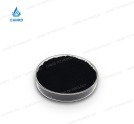
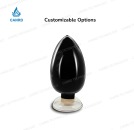
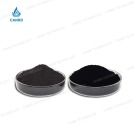
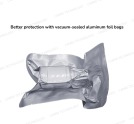
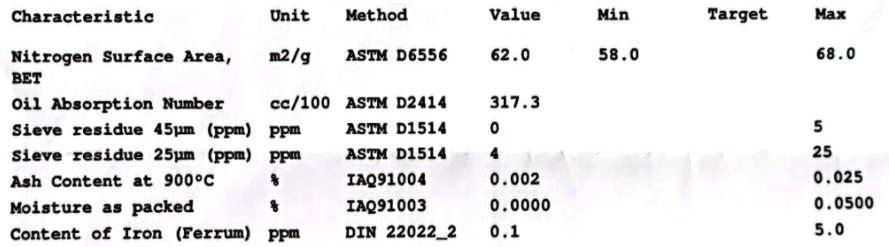
This acetylene black (Kappa 100) is developed as a high-purity conductive additive for energy storage and electrochemical research, offering a primary particle size of approximately 35 nm and a purity of 99.9%. Its fine nanoscale structure supports efficient electron transport and uniform dispersion in electrode formulations, making it suitable for use in lithium-ion batteries, supercapacitors, and other advanced energy materials where consistent conductivity is critical. Typically employed in small-scale experimental synthesis or prototype development, this material is available in multiple packaging sizes to accommodate varying research batch requirements. The combination of controlled particle dimensions and low impurity levels enhances its reliability for studying conductive network formation and electrochemical performance in next-generation battery systems.
Purity: 99.9%
Primary Particle Size: ~35nm
Related Articles
Effect of Conductive Additives on Electronic Conductivity of Lithium-Ion Battery Electrodes
Conductive agent SP enhances Li-ion battery powder/electrode conductivity.
よくある質問
検索または一般的な質問を閲覧して、素早く回答を見つける

Can acetylene black (Kappa 100) be used as a conductive carbon black for sodium electricity? Are there any other conductive carbon blacks that are more recommended for sodium electricity?
Koqin Black (ECP-600JD) and Koqin Black (EC-300J) — the customer wants to confirm what the conductivities of these two are?
The customer is asking whether the Koqin black we sell has undergone acidification or hydroxylation treatment. Please help answer, thank you.
Can acetylene black (Kappa 100) be used as a sodium-ion battery?
R&Dサポートが必要ですか?
主要な製品カテゴリを確認し、バッテリー材料をCanrdのR&Dサービスにつなげます。
実験材料
カテゴリバッテリー研究向けの正極、負極、電解液、セパレーターなど。
正極・負極・電解液材料を見る →実験装置
カテゴリパイロットライン、治具、試験ワークフロー向けのバッテリー実験装置。
バッテリー実験装置を見る →電極とセル
カテゴリR&D検証向けのカスタム電極、乾燥セル、セル部材。
カスタムバッテリー電極とセルを見る →ナトリウム電解液
カテゴリナトリウム電池研究と検証向けのナトリウムイオン電解液。
ナトリウム電池電解液を見る →R&Dサービス
サービス材料評価からセル作製、故障解析までの一貫したバッテリーR&Dサービス。
Canrd R&Dサービスを見る →材料評価
サービスバッテリー材料の特性評価、電気化学試験、適合性評価。
バッテリー材料を評価する →電極作製
サービス対象化学系とプロセスに合わせたカスタム電極シートやロール。
電極作製を依頼する →セル作製
サービスR&D検証向けの乾燥セル、組立セル、カスタムセル形式。
カスタム研究セルを作製する →お問い合わせ
ページCanrdが製品、材料、サービスをプロジェクトに合わせて提案します。
製品とR&Dサポートを受ける →
