

 contact@canrd.com
 +86 18928276992
Cell Section: Detailed Process Introduction of Cell Formation and Capacity Testing
I.Introduction
As a representative of modern high-performance secondary batteries, each stage of the manufacturing process of lithium-ion batteries directly impacts the performance, lifespan, and safety of the final product. Among these, Formation and Aging & Grading are crucial post-processing techniques in cell manufacturing. This article will systematically analyze the core aspects of these processes, covering their principles, key parameters, influencing factors, and directions for technological development.
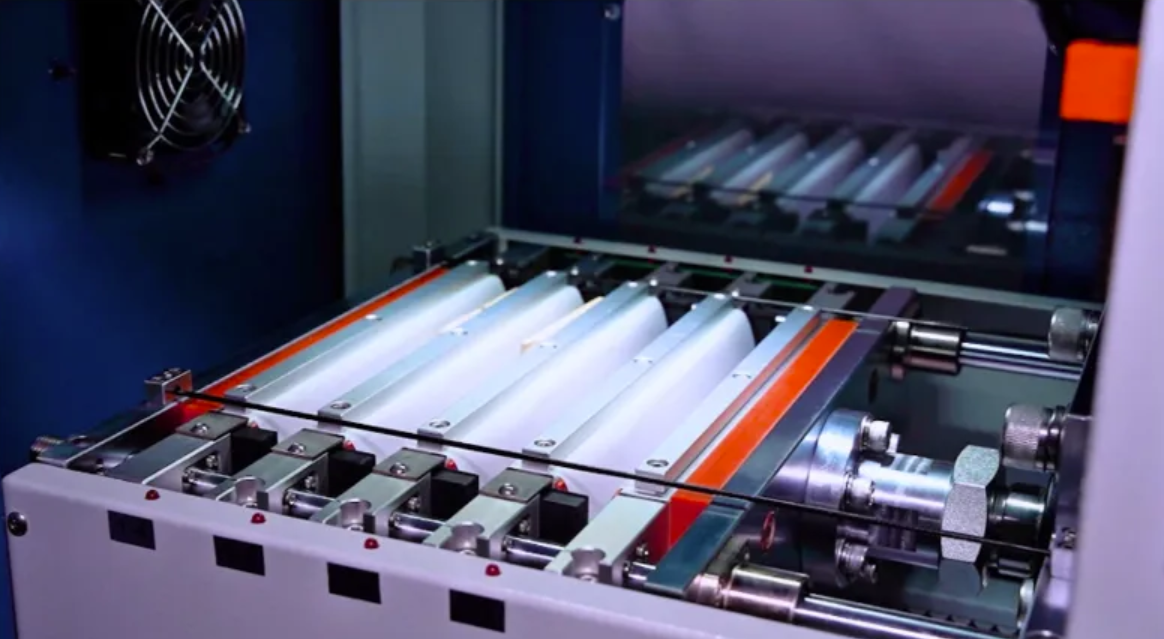
II.Formation Process
- Definition and Purpose of Formation Process
The formation process refers to the initial charging activation of a cell, during which solid electrolyte interface (SEI) films are formed on the surface of the anode through electrochemical reactions. The main functions include:
- SEI Film Formation: Passivating the active surface of the anode to prevent continuous decomposition of the electrolyte.
- Removal of Residual Moisture: Reducing moisture content through electrochemical decomposition.
- Activation of Electrode Materials: Optimizing the pathways for lithium-ion intercalation and deintercalation.
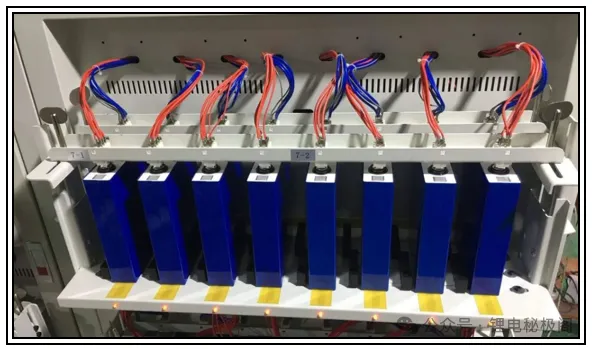
- Formation Process Flow
A typical formation process is divided into three stages:
- Pre-Charging Stage: Cells are initially charged at a low current (0.02C-0.1C) up to a voltage of 3.0-3.5V.
- High-Temperature Aging: Cells are left to rest in an environment of 45-60°C for 12-48 hours to promote the stabilization of the SEI layer.
- Second Charging: Cells are charged to full capacity using a multi-stage constant current-constant voltage (CC-CV) method, typically up to 4.2V.
- Key Parameter Control
- Current Density: The initial current should be kept below 0.1C to avoid the formation of lithium dendrites.
- Temperature Control: An ideal formation temperature is around 25±2°C. While higher temperatures can accelerate reactions, they may lead to uneven SEI formation.
- Voltage Window: The cutoff voltage for the initial charge should be adjusted according to the cathode material (e.g., 4.0V for LCO, 3.8V for NCM, and 3.5V for LFP).
- Pressure Holding Time: Cells need to dwell at a specific voltage point for 1-2 hours to stabilize polarization.
- Process Focus Areas
- Pouch Cells: Pay attention to fixture pressure (5-10kPa) to prevent swelling and deformation.
- Cylindrical Cells: Focus on controlling stress distribution within the wound core to avoid internal short circuits.
- Prismatic Cells: Optimize the electrolyte filling amount to balance SEI formation and gas generation.
- Analysis of Influencing Factors
|
Factor |
Influence Mechanism |
|
Electrolyte Formulation |
Inclusion of FEC additive can enhance the stability of the SEI film and reduce resistance. |
|
Anode Material |
Silicon-based materials require longer formation times compared to graphite (with silicon expansion rates reaching up to 300%). |
|
Electrolyte Wettability |
Poor wetting can lead to localized electrode overreaction, triggering lithium plating risks. |
|
Environmental Humidity |
Dew point requirement is ≤ -40°C; excessive moisture can lead to the formation of LiOH/Li2CO3, degrading the SEI film. |
III.Aging & Grading Process
- Definition and Purpose of Aging & Grading
Aging & grading is a process of calibrating cell capacity and screening performance through charge-discharge testing. Its core objectives include:
- Capacity Sorting: Eliminate cells with capacity deviation >2% to ensure pack consistency;
- Internal Resistance Screening: Identify cells with high internal resistance (typically required ≤30mΩ);
- Self-Discharge Detection: Voltage drop must be <5mV/day after 72 hours of standing.
- Aging & Grading Process Flow
- First Charge-Discharge: Complete a charge-discharge cycle at 1C current and record actual capacity;
- High-Temperature Aging: Store at 55℃ for 7 days to accelerate unstable side reactions;
- Secondary Grading: Retest capacity and calculate capacity decay rate (required ≤3%);
- Voltage Recovery Test: Detect voltage rebound amplitude after standing (reflecting SEI stability).
IV. Process Challenges and Solutions
- Gas Generation Control During Formation
- Issue: CO₂, CH₄, and other gases are generated during the first charge (gas production for pouch cells is approximately 3–5 mL/Ah).
- Countermeasure: Use a gradient pressure fixture (gradually increasing from 0 to 5 kPa) combined with vacuum electrolyte injection to reduce residual bubbles.
- Improvement of Charging/Discharging Efficiency
- Traditional Bottleneck: Charging/discharging accounts for over 40% of the total production time.
- Innovative Solution: Introduce multi-channel parallel testing (a single cabinet supports 512 channels) and use AI prediction to shorten the standing time.
- Optimization of Consistency
- Material Aspect: Require the particle size D50 deviation of cathode materials to be ≤1 μm and the graphitization degree of graphite to be ≥85%.
- Process Aspect: Add an OCV matching process after formation (voltage difference ≤10 mV).
V.Development of Cutting-Edge Technologies
1.Innovation in Solid-State Battery
- Formation Liquid-Free Formation: Activate the electrode interface by laser to reduce the penetration time of traditional electrolytes.
- High-Voltage Formation: Use a voltage above 5 V to accelerate interface passivation, shortening the process cycle by 30%.
2.Intelligent Charging/Discharging System
- Digital Twin Technology: Establish a performance prediction model for battery cells to achieve virtual charging/discharging.
- Blockchain Traceability: Record the process parameters of each battery cell to support full lifecycle management.
VI. Conclusion
As the "final mile" in lithium-ion battery manufacturing, the formation and grading processes directly determine a product's market competitiveness. With the adoption of new materials such as high-nickel systems and silicon-carbon anodes, there are higher requirements for process control. Future development directions will focus on process digitization (e.g., Industry 4.0 integration), non-destructive testing (ultrasonic/infrared online monitoring), and high-precision equipment (nanometer-level pressure control) to meet the industrialization needs of power batteries with an energy density of 300 Wh/kg and above.
--End--
Canrd Brief Introduce:
Canrd use high battery R&D technology(core members are from CATL) and strong Chinese supply chain to help many foreign companies with fast R&D.
We provide lab materials, electrodes, custom dry cells, material evaluation, perfomance and test, coin/pouch/cylindrical cell equipment line, and other R&D services.
📱 WhatsApp/WeChat: 86 189 2827 6992
📧 Email: janice@canrd.com
🛒 Product Website: www.canrud.com
Productos y servicios relacionados
Use productos y servicios de I+D de Canrd para convertir conocimiento de baterias en experimentos practicos.
Carcasa coin cell
ProductoCarcasas coin cell para validar materiales y conceptos electroquimicos del articulo.
Usar carcasas coin cell en su proxima prueba →Electrolito de sodio
CategoriaElectrolitos para investigacion sodium-ion, pruebas de compatibilidad y validacion de celdas.
Comprar electrolito de sodio para validacion →Fabricacion de celdas
ServicioObtenga soporte para construir celdas secas, celdas ensambladas o formatos personalizados.
Solicitar soporte de fabricacion de celdas →Materiales experimentales
CategoriaExplore materiales para experimentos posteriores, benchmarking y desarrollo de producto.
Ver materiales experimentales de bateria →
