






Details
none
Product Detail
Contact us for tailored quotes on larger quantities & experience exceptional solutions from our experts.
✅Quantity Discount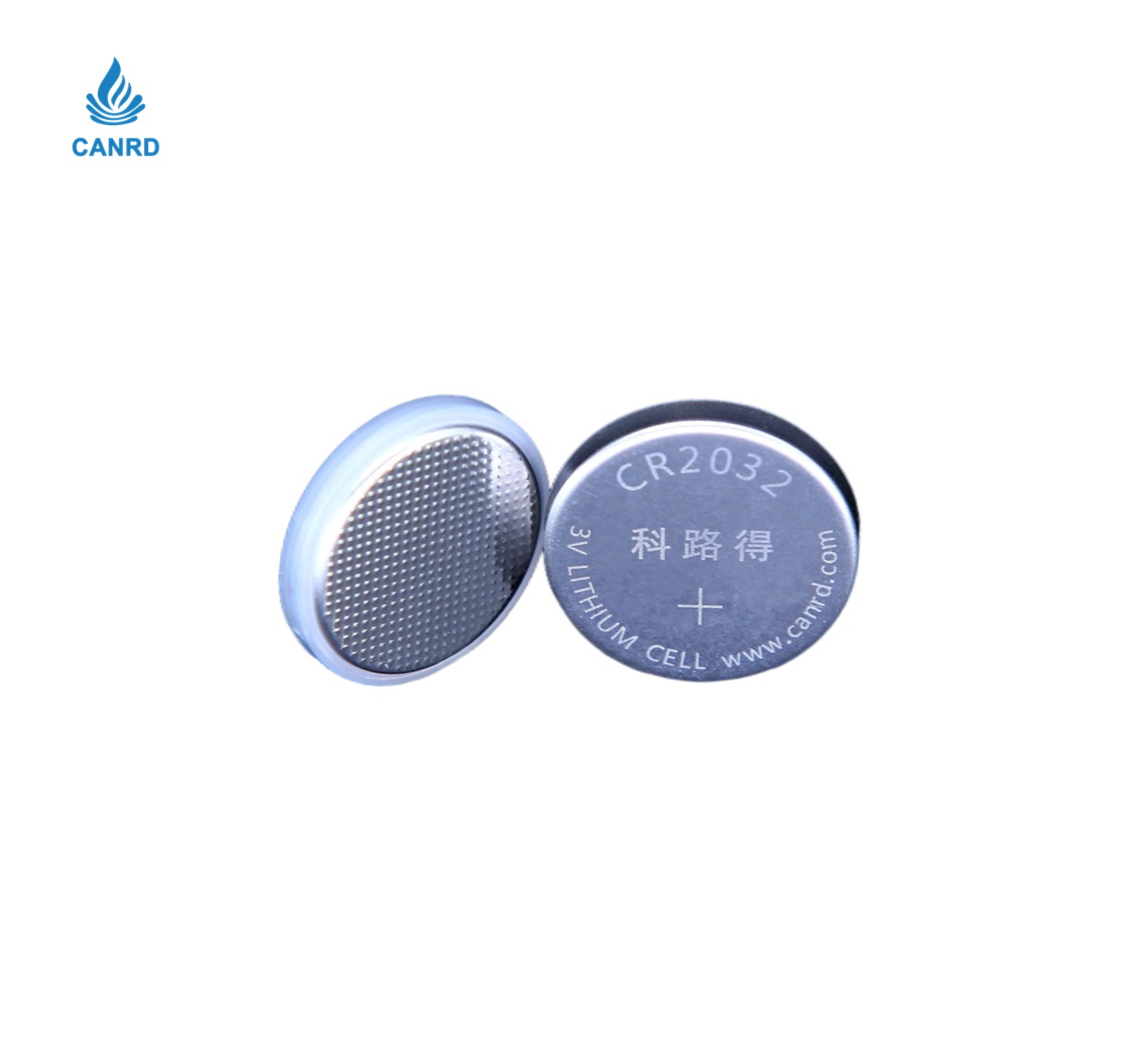
In terms of the selection of buckle battery shell materials, the impact of pure titanium and 304/316L stainless steel on battery electrical properties is mainly reflected in chemical stability, conductivity, interface reaction, etc. The specific differences are as follows:
1. Chemical stability and corrosion resistance
Pure titanium:
Advantages: Titanium has extremely strong passivation ability, a dense oxide film (TiO2) is formed on the surface, and it shows excellent corrosion resistance in organic solvents (such as carbonate electrolytes) and strong acid/alkaline environments, and almost no reaction occurs.
Impact: The integrity of the shell can be maintained for a long time and avoid problems such as increased battery internal resistance and capacity attenuation caused by electrolyte contamination or shell dissolution.
Limitations: Slight corrosion may occur in fluorine-containing electrolytes (such as LiPF6), but is much lower than stainless steel.
304/316L stainless steel:
Organic solvent: In conventional lithium electrolytes (such as LiPF6/EC-DMC), 316L stainless steel (including Mo) has good corrosion resistance, but 304 stainless steel may cause electrolyte decomposition or SEI film unstable after long-term use due to the dissolution of trace metal ions (Fe, Ni, Cr) after long-term use.
Acid/alkali electrolyte: In strong acids (such as H2SO4) or strong alkalis (such as KOH), stainless steel may undergo pitting or intergranular corrosion, especially 304 stainless steel.Corrosion products (such as Fe³⁺) can catalyze side reactions, resulting in self-discharge or capacity loss of the battery.
2. Conductivity
Pure titanium: poor conductivity (resistivity is about 420 nΩ·m), which may increase the contact resistance of the battery case, especially when charging and discharging at high rates, resulting in an additional voltage drop, reducing energy efficiency.
Stainless steel: better conductivity (304 about 720 nΩ·m, 316 about 740 nΩ·m), but still significantly lower than aluminum or copper.In practical applications, the current collector contact needs to be optimized through surface plating (such as nickel plating).
3. Interface reaction and electrochemical compatibility
Pure titanium:
The surface TiO2 film may inhibit side reactions with the electrolyte, but if the oxide layer is incomplete (such as mechanical damage), the exposed titanium may undergo an oxidation/reduction reaction at certain potentials.Lithium embedded titanium oxide may occur at low potential of lithium battery negative electrode (<1 V vs. Li/Li⁺), but the impact is small.
Stainless steel:
At low potentials, Fe and Cr in stainless steel may be reduced and dissolved, destroying the SEI film (such as in lithium batteries), resulting in a degradation of cycling performance.
In alkaline batteries (such as Ni-MH), stainless steel has better stability, but corrosive ions such as Cl⁻ need to be avoided.
4. Mechanical properties and sealing properties
Pure titanium: High strength and light weight, suitable for volume/weight sensitive applications (such as aerospace), but with high processing costs.
Stainless steel: easier to process and low cost, but after long-term corrosion, the electrolyte may leak due to stress cracking.
5. Actual electrical performance differences
Cycle life: The cycling stability of titanium-shell batteries is significantly better than stainless steel in harsh environments (high temperature, strong acid/alkali).
Self-discharge: The stainless steel shell may cause a higher self-discharge rate due to metal ions dissolution in corrosive electrolytes.
Rate performance: The higher resistance of the titanium shell may limit ultra-high magnification applications, but has limited impact on most conventional systems.
Material selection suggestions
Organic solvent systems (such as lithium-ion batteries):
316L stainless steel (economic balance) is preferred. If you pursue long life or high purity (such as solid-state batteries), you can choose titanium.
Acid/alkaline electrolyte (such as lead acid, zinc-nickel batteries):
Pure titanium is strongly recommended, especially in acidic environments; 316L stainless steel can be used for short-term use under alkaline conditions, but the corrosion rate needs to be evaluated.
High temperature or high potential system:
Titanium is more reliable (such as resistant to polysulfide corrosion in lithium-sulfur batteries).
Summarize
The core advantage of titanium material is chemical inertia, which is suitable for extreme environments; stainless steel has the advantage of cost and processability, which is suitable for mild conditions.The difference in electrical performance mainly comes from the interface stability of the material-electrolyte, and the applicability in the specific system needs to be verified through accelerated aging tests (such as EIS, cyclic voltammetry).
Related Articles
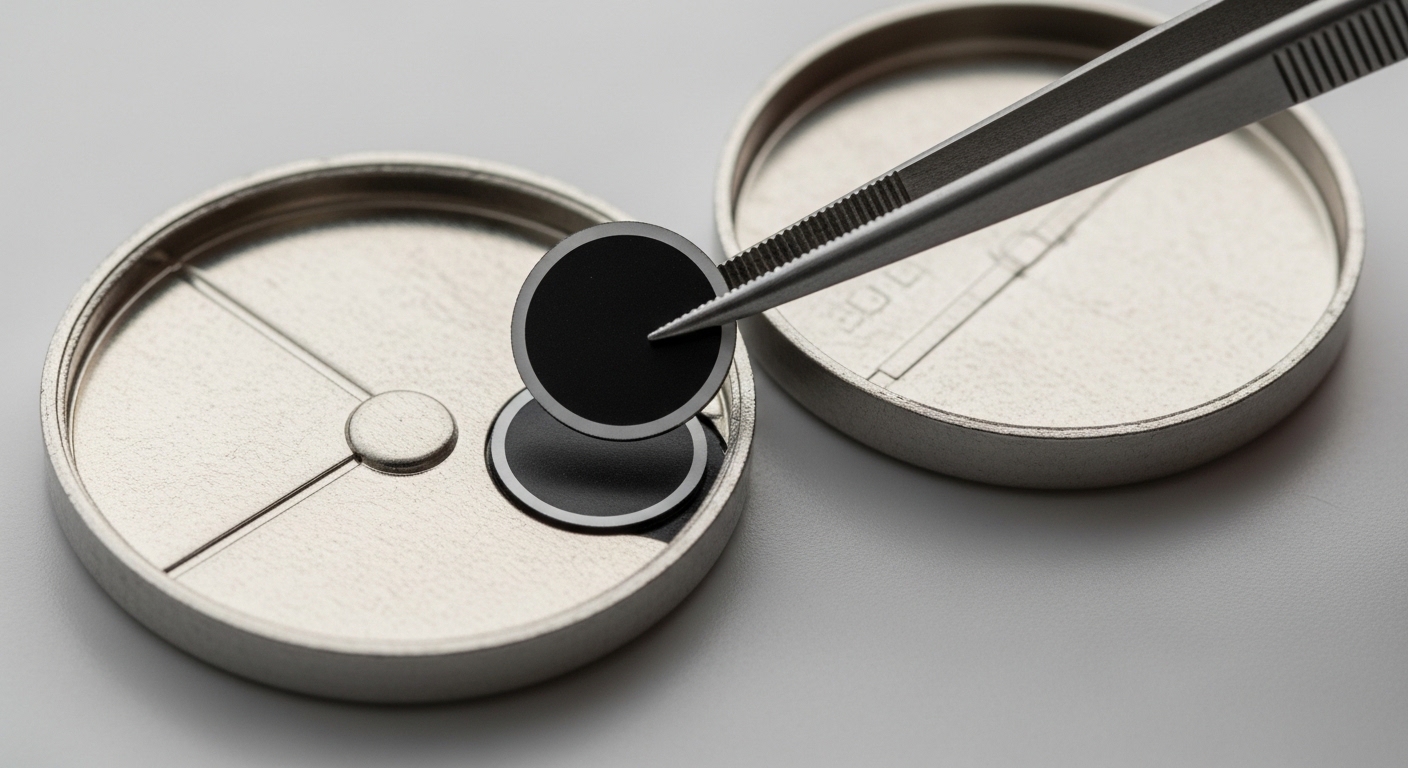
Coin Cell Assembly Guide Step-by-Step for CR2032 and CR2025 in Lab Settings
Coin cell assembly for CR2032 and CR2025 is a precise but highly standardized laboratory process.
Need R&D Support?
Browse key product categories and connect battery materials with Canrd's R&D services for testing, fabrication, and project support.
Experimental Materials
CategoryCathode, anode, electrolyte, separator, and other materials for battery research.
Shop cathode, anode & electrolyte materials →Lab Equipment
CategoryBattery lab equipment for pilot lines, fixtures, and testing workflows.
Browse battery lab equipment →Electrodes & Cells
CategoryCustom electrodes, dry cells, and battery cell components for R&D validation.
View custom battery electrodes & cells →Sodium Electrolyte
CategorySodium-ion electrolyte options for sodium battery research and validation.
Shop sodium battery electrolytes →R&D Services
ServiceFull-chain battery R&D services from material evaluation to cell fabrication and failure analysis.
Explore Canrd R&D services →Material Evaluation
ServiceCharacterization, electrochemical testing, and compatibility evaluation for battery materials.
Evaluate your battery materials →Electrode Fabrication
ServiceCustom electrode sheets and rolls based on your target chemistry and process needs.
Request electrode fabrication →Cell Fabrication
ServiceDry cells, assembled cells, and custom-format cell builds for R&D validation.
Build custom research cells →Contact
PageAsk Canrd to match products, materials, and services for your project.
Get product and R&D support →