

 contact@canrd.com
 +86 18928276992
 How to Improve Pouch Cell Heat Sealing: Temperature, Pressure and Dwell Time
Introduction
Pouch cell sealing is a critical step in lithium-ion battery manufacturing that directly affects cell reliability, safety and long-term performance.
Common failures such as electrolyte leakage, pouch swelling, weak seal strength, tab corrosion and laminate cracking are often related to sealing materials, PP fusion quality and heat-sealing parameters.
This guide explains how pouch cell sealing works, why sealing defects occur, and how engineers can optimize temperature, pressure, dwell time and inspection methods to improve sealing consistency and reduce production failures.
Quick Defect Diagnostic Flow
| Visible Defect Symptom | First Inspection Priority Areas |
|---|---|
| Immediate leakage after top/side primary sealing | Seal surface contamination, sealing jaw parallelism, heat-seal temperature, pressure and dwell time |
| Slow electrolyte leakage after aging or final sealing | Residual electrolyte on seal edges, incomplete PP fusion, damaged aluminum laminate film |
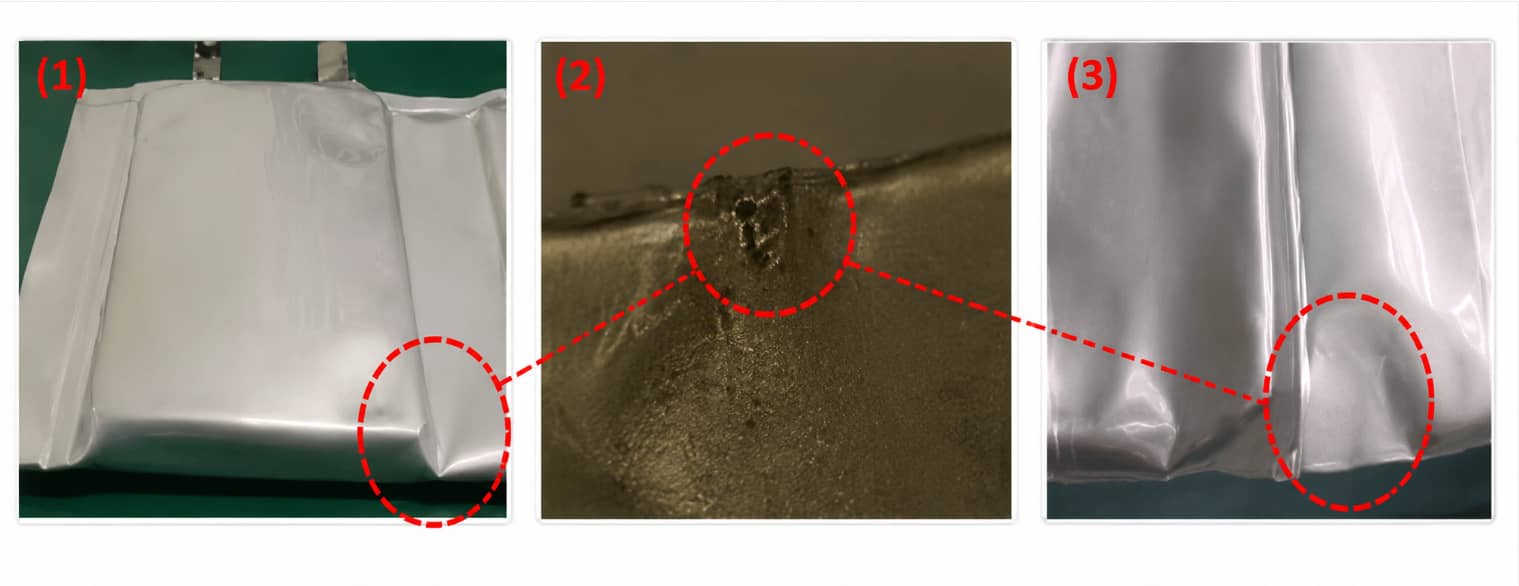
| Uniform cell swelling after formation cycles | Vacuum drying residual moisture, incomplete degassing, electrolyte impurity-induced side reactions |
| High self-discharge and corrosion near electrode tabs | CPP tab sealant offset, direct contact between aluminum tab and laminate aluminum layer, oversized unsealed zones |
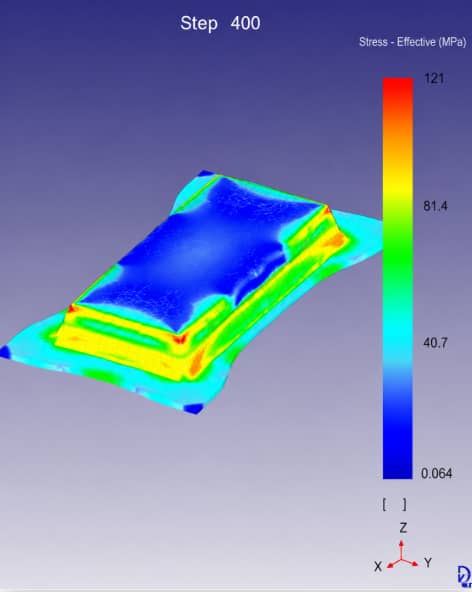
| Cracks or localized thinning at pouch pocket corners | Deep drawing mold corner radius, laminate forming ductility, excessive drawing depth |
| Seal edges separate easily during peel testing | Insufficient thermal input, contaminated sealing interface, worn or uneven sealing jaws |
Core Basics: How Pouch Cell Heat Sealing Works
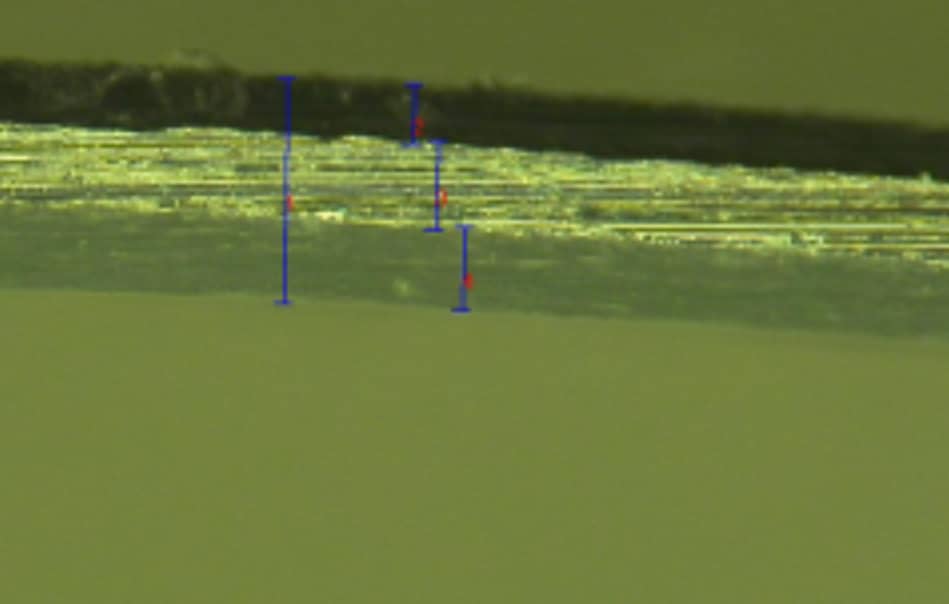
- 21 μm nylon outer layer: Blocks oxygen infiltration and provides scratch resistance
- 33 μm aluminum barrier layer: Isolates external moisture to avoid internal side reactions
- 32 μm PP inner sealant layer: Melts under heat and pressure to form airtight bonding
Simplified Pouch Cell Sealing Related Workflow
- Aluminum laminate deep drawing (pouch pocket forming)
- Jelly roll or electrode stack insertion into formed pockets
- Top and side primary heat sealing
- Three-in-one internal resistance & short circuit testing
- Pre-electrolyte vacuum drying
- Electrolyte precision injection
- Temporary vacuum sealing of gas bags
- Hot and cold cell shaping pressing
- Electrochemical formation activation
- Degassing and secondary final sealing
- Edge folding, visual sealing inspection
- Aging, OCV testing and capacity grading
Troubleshooting Top 5 High-Frequency Pouch Cell Sealing Defects
1. Pouch Cell Seal Leakage
Root Cause Classification
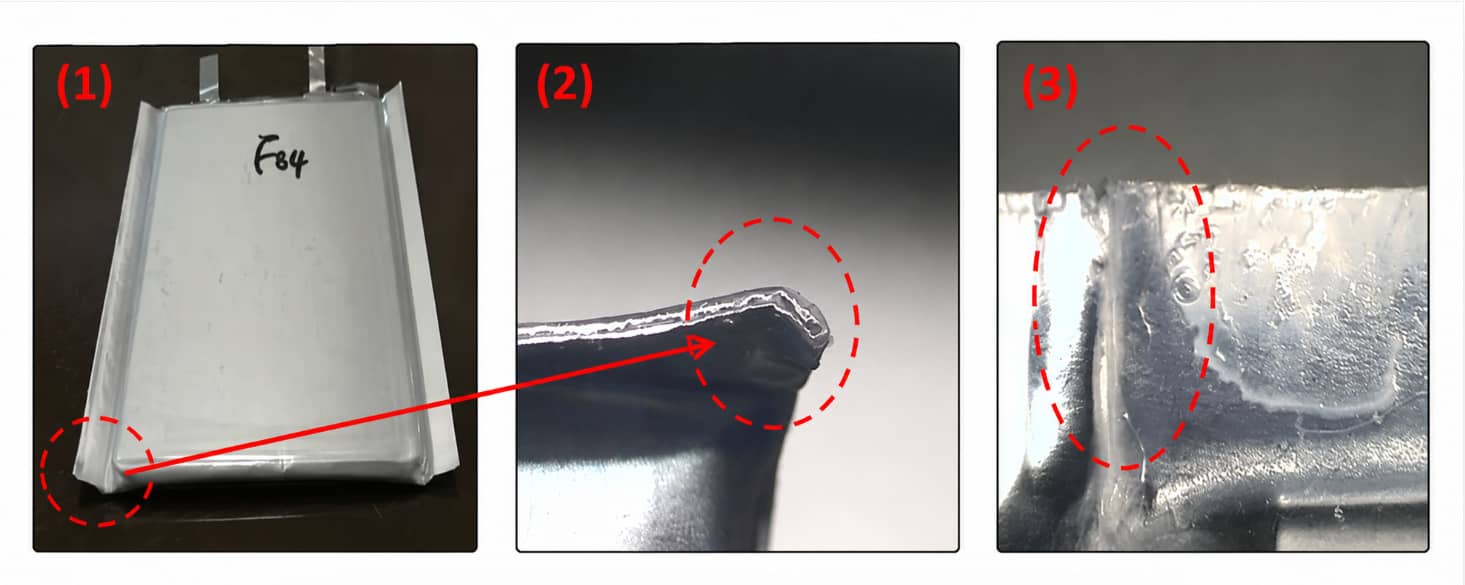
- Contaminated sealing contact surfaces Electrolyte splashes, electrode coating dust and airborne workshop particles can separate PP layers during thermal bonding, creating tiny permeable gaps.
- Unbalanced heat-sealing parameters Insufficient temperature, pressure or dwell time limits complete PP melting; excessive heat and pressure squeeze sealant layers too thin, generating fragile sealing edges prone to rupture.
- Aluminum laminate physical damage Over-stretched pocket corners and micro-cracks generated during deep drawing form hidden electrolyte leakage channels.
- Residual internal gas after formation Trapped gas inside finished cells continuously applies pressure to weak sealing joints and gradually creates leakage paths during storage.
Target Corrective Actions
- Install air blowing dust removal stations before all sealing procedures to reduce particulate contamination
- Implement hourly sealing jaw cleaning to remove carbonized electrolyte residue
- Adjust temperature, pressure and dwell time incrementally, and complete peel strength sampling after each parameter modification
- Optimize deep drawing mold corner radii to lower localized laminate stretching stress
2. Pouch Cell Swelling After Formation or Aging
Dual Root Cause Groups
- Pre-sealing process-induced gas generation
- Inadequate vacuum baking leaves residual moisture inside electrodes, which reacts with electrolyte to produce gaseous byproducts
- Electrolyte with excessive metal impurities decomposes rapidly during formation charging
- Improper formation current and temperature accelerate electrolyte degradation and gas output
- Sealing process insufficiencies
- Secondary sealing vacuum degree or holding time cannot fully extract gas stored in temporary gas bags
- Minor slow seal leakage allows atmospheric moisture and oxygen to penetrate cells and trigger secondary gas formation
Standard Inspection Sequence
- Verify vacuum oven tightness, baking temperature and holding duration first
- Test electrolyte water content before mass injection batches
- Extend vacuum holding time during degassing and final sealing
- Add 48-hour room-temperature aging sampling to screen latent swelling defects before capacity sorting
3 Low Pouch Seal Peel Strength
Common Contributing Factors
- Uneven temperature distribution across the full width of sealing jaws
- Residual electrolyte oil film covering the sealing contact zone
- Scratched, deformed sealing jaws with poor flatness consistency
- Aged aluminum laminate rolls with degraded PP layer thermal fusion performance
- Insufficient sealing pressure leading to discontinuous contact between laminate sheets
QC Validation Method
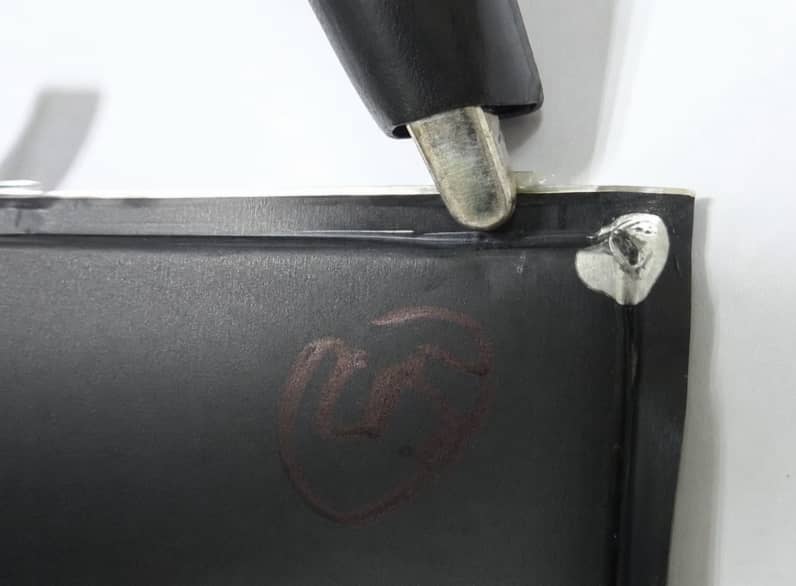
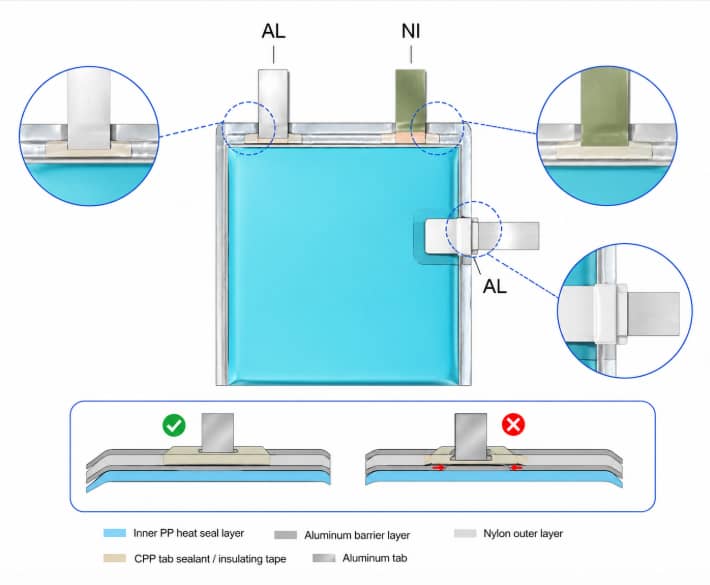
4. Tab-Area Leakage & Aluminum Tab Corrosion
Key Design & Process Control Points
- Offset or undersized CPP tab sealant fails to fully cover aluminum tab metal, creating direct contact paths with laminate aluminum foil
- Oversized internal unsealed zones on top seals guide electrolyte toward tab metal regions
- Deep scratches penetrating the laminate nylon and aluminum barrier layers allow moisture ingress and tab oxidation
Optimized Process Adjustments
5. Pouch Film Corner Cracking During Deep Drawing
Contributing Variables
- Small mold corner radii create extreme localized laminate stretching
- Excess deep drawing depth over-tensions the aluminum barrier layer
- Low ductility thermal-laminated film unsuitable for deep-draw 3C cell pocket production
- Misaligned laminate feeding generates uneven tension across raw material rolls
Process Optimization Controls
How Temperature, Pressure & Dwell Time Affect Seal Integrity
Parameter Deviation & Defect Correlation Table
| Parameter Deviation | Typical Visible Defect | Primary Inspection Check |
|---|---|---|
| Sealing temperature too low | Low peel strength, discontinuous PP fusion | Multi-point temperature calibration on sealing jaw surface |
| Sealing temperature too high | Over-thin seal edges, laminate perforation, discoloration | Cross-section thickness measurement of finished seal joints |
| Sealing pressure insufficient | Uneven fusion, broken seal lines | Air supply pressure inspection, upper-lower jaw parallelism test |
| Sealing pressure excessive | Complete extrusion of PP sealant layers out of seal zones | Microscopic cross-section observation of seal edges |
| Dwell time too short | Partial fusion, inconsistent batch peel strength | Sealing machine timing cycle verification |
| Dwell time over-extended | Thermally degraded brittle laminate and seal edges | Visual inspection for discolored sealing areas |
Project Specific Parameter Reference Box
- Primary top & side sealing: 170–180°C, 0.4 MPa pressure, 2.0s dwell time
- Degassing and secondary final sealing: 175–185°C, 0.45 MPa pressure, 2.5s dwell time
Standard QC Inspection Items for Sealing Quality
- Seal Appearance Visual Inspection Check top, side and final sealing edges for wrinkles, trapped foreign particles, discoloration, incomplete fusion lines and edge cracks
- Seal Cross-Section Thickness Measurement Use a micrometer to sample seal thickness; define qualified tolerance ranges per independent cell project requirements
- Seal Peel Strength Batch Sampling Complete weekly batch sampling; match acceptance criteria to customer QC test standards
- Pouch Pocket Forming Thickness Check Measure residual laminate thickness at pocket corners to screen over-stretched thin areas before sealing
- Post-Sealing Aging Reliability Test Conduct controlled temperature aging sampling to detect slow leakage and latent swelling defects that cannot be identified via instant visual inspection
- Tab Sealant Dimensional Inspection Use an optical projector to measure CPP tape margin, internal and external unsealed zone sizes of top seals
Frequently Asked Sealing Defect Questions
Q1: Can pouch film with minor scratches on the outer nylon layer continue production?
Q2: Why identical sealing parameters still create intermittent batch leakage defects?
Q3: What reliable method confirms complete degassing during secondary sealing?
Q4: What vacuum drying conditions eliminate moisture-induced cell swelling?
Q5: What core differences exist between primary side sealing and secondary final sealing requirements?
Conclusion
Reliable pouch cell sealing requires precise control of materials, process parameters and quality inspection.
By optimizing PP layer fusion, sealing temperature, pressure, dwell time and tab-area design, manufacturers can reduce leakage, swelling and corrosion risks while improving pouch cell consistency.
Since different cell designs require different sealing windows, engineers should validate parameters based on specific materials, structures and production targets rather than applying universal settings.
Related Products & Services
Use Canrd products and R&D services to turn battery knowledge into practical experiments.
Coin Cell Case
ProductCoin cell cases for validating materials and electrochemical concepts from the article.
Use coin cell cases in your next test →Sodium Electrolyte
CategoryElectrolytes for sodium-ion battery research, compatibility tests, and cell validation.
Shop sodium electrolyte for validation →Cell Fabrication
ServiceGet support building dry cells, assembled cells, or custom formats for R&D validation.
Request cell fabrication support →Experimental Materials
CategoryBrowse materials for follow-up experiments, benchmarking, and product development.
Browse experimental battery materials →