






Details
The electrode sheet test requires activation at 0.1C for 5 weeks
Half battery test:

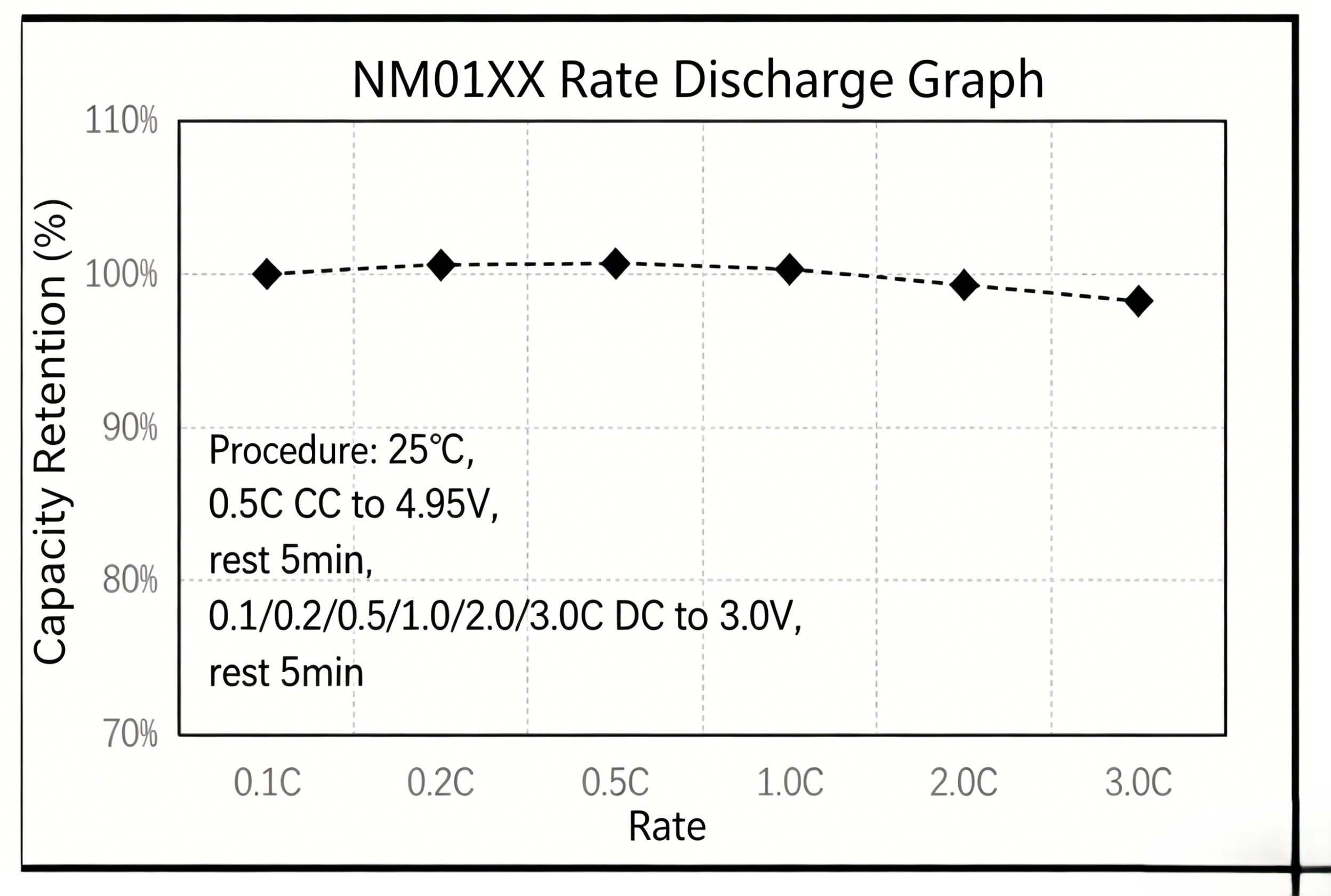
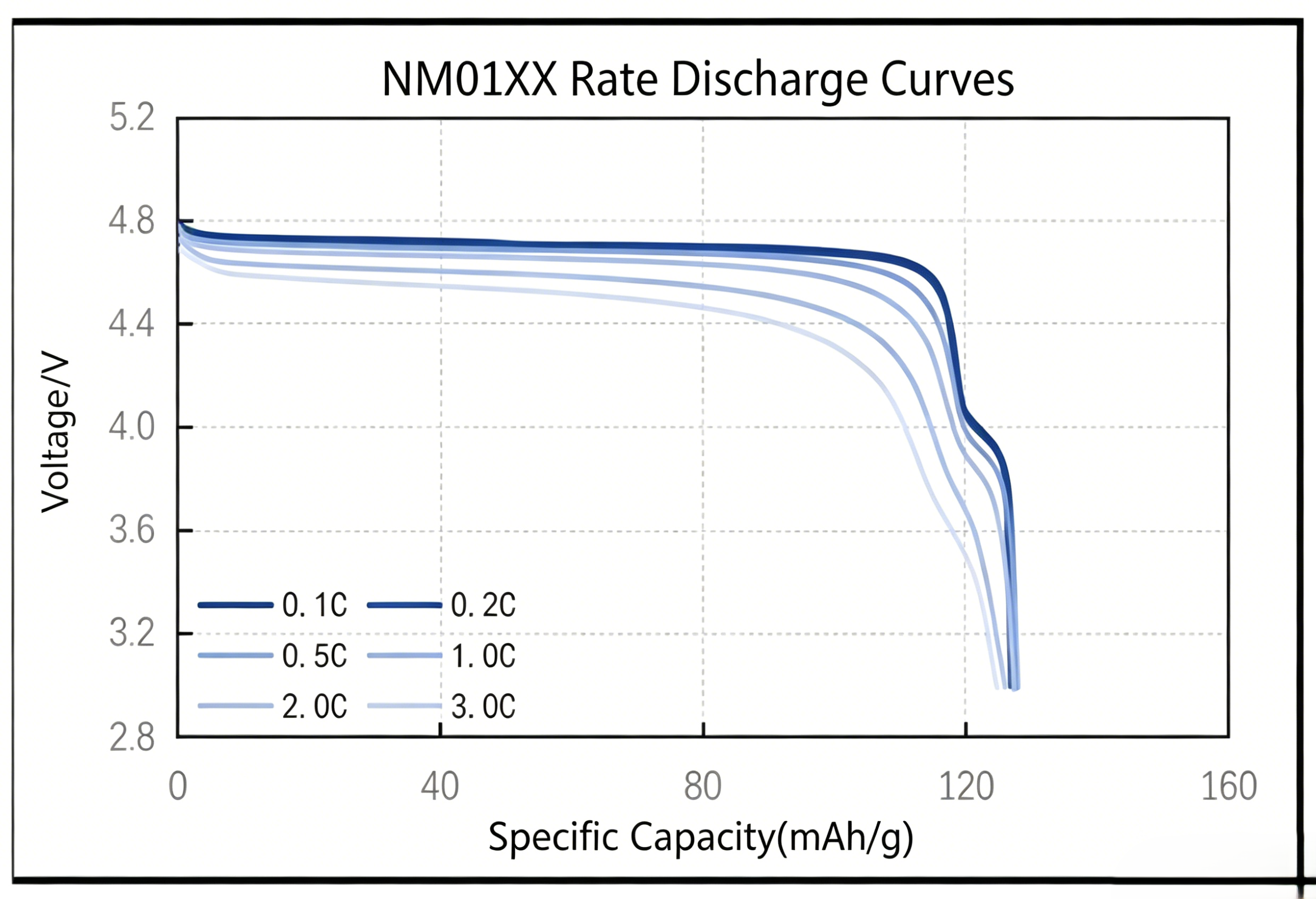
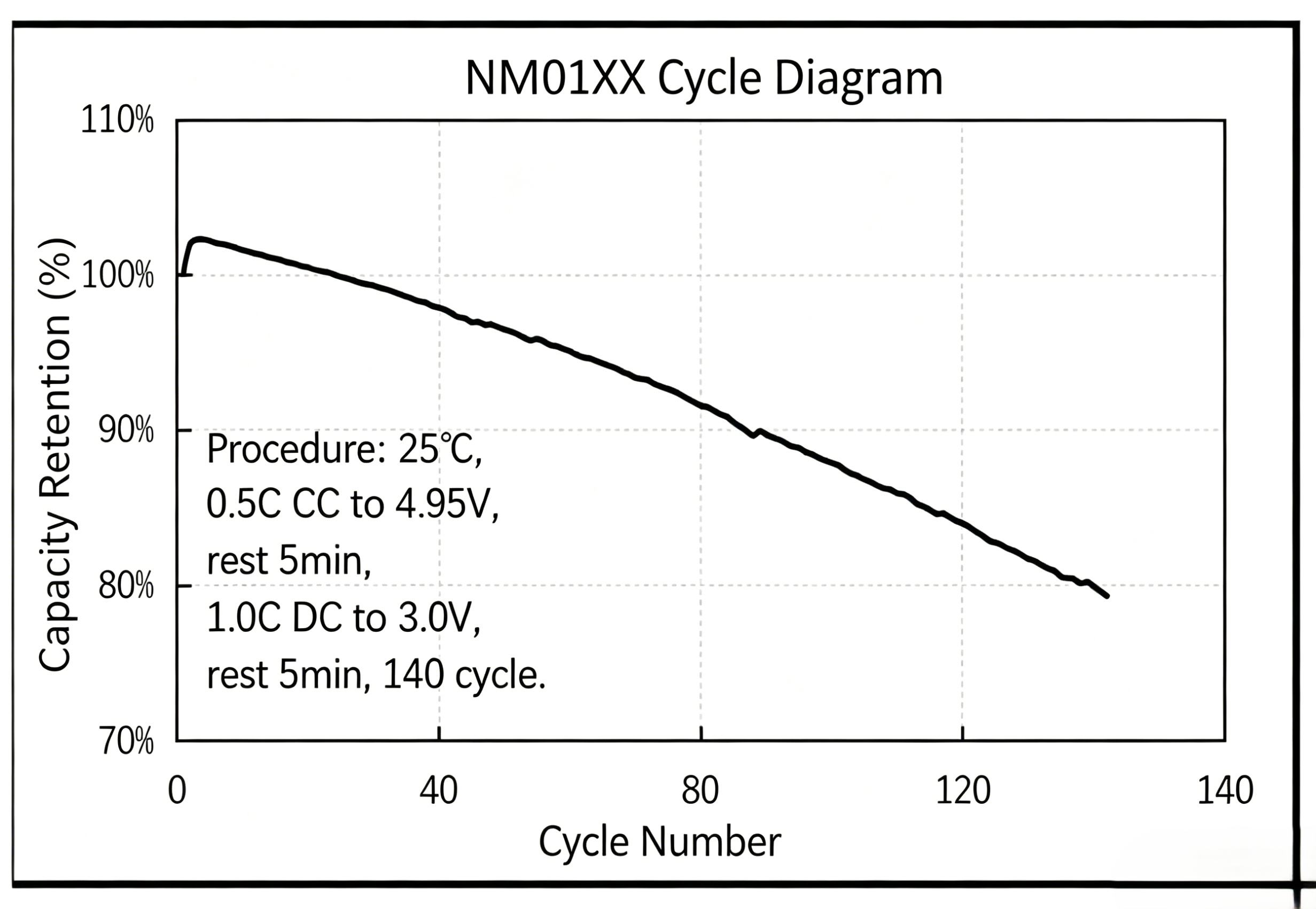
| Current gathering surface density(mg/cm2) | 3.30 |
| Electrode sheet dimensions | 10*10 |
| Current collector thickness(um) | 14(Carbon-coated aluminum foil) |
| Proportion of active substances | 96.0% |
| Compatible electrode sheet models for full batteries (N/P ratio) | nothing |
| Compaction density(g/cc) | 1.80-2.30(The compaction value of the unrolled electrode sheet is not provided. Calculate it by yourself) |
| Active material | High-Voltage Lithium Nickel Manganese Oxide - B |
| Types of current collectors |
Carbon-coated aluminum foil |
| Expiration date | It should be stored in vacuum packaging for half a year and used up within one month after opening |
| Recommended electrolyte | KLD-1230C |
| Name of electrode sheet | LNMO High-Voltage Lithium Nickel Manganese Oxide Electrode |
| Electrode plate number | NM01XX |
| Gram capacity of active materials(mAh/g) | 130(3.00-4.95V) |
| Test Condition Description |
"At room temperature of 25℃, stand for 4 hours, charge at 0.1C rate (constant current) to 4.95V, stand for 3 minutes, discharge at 0.1C rate (constant current) to 3.00V, stand for 3 minutes." |
| Test condition | 常温25℃,0.1/0.1C,3.00-4.95V |
| Areal Capacity(mAh/cm2) | 2.00 |
| Density of the coating layer(mg/cm2) | 7.50(The tolerance is ±2.0%) |
| Usage Guidelines | "1. If the electrode sheet is not rolled, it is generally necessary to roll it first before punching and baking (the compaction density can be referred to the minimum value in the "Compaction Density" column of this table); 2. Baking conditions: Bake at 85-105℃ for 4 hours (if vacuum baking, air change is required twice); 3. The surface density should be determined based on the actual weighing result of each small disc." |
1. Store under vacuum, or seal with two layers of ziplock bags inside a glove box. This is especially critical for high-nickel cathode materials and sodium-ion battery cathode materials; improper storage will cause an increase in battery internal resistance.
2. The electrodes are uncalendered. Please calender the electrodes in accordance with the recommended compaction density.
3. The coating areal density shall be determined based on actual weighing results, excluding the current collector.
4. Actual active material mass (mg) = (Weight of circular disc (mg) − Areal density of current collector (mg/cm²) × Area of circular disc (cm²)) × Active material content ratio
5. Theoretical active material mass (mg) = Coating areal density (mg/cm²) × Active material content ratio × Area of circular disc (cm²)
6. Theoretical areal capacity (mAh/cm²) = Coating areal density (mg/cm²) × Active material content ratio × Specific capacity (mAh/g) ÷ 1000
7. The specific capacity shall be calculated based on the actual measured mass of active material. Due to tolerance in coating areal density, actual weighing data shall prevail.
8. Creases: Single-sided electrodes tend to curl after calendering. Flattening for packaging may result in creases.
Need R&D Support?
Browse key product categories and connect battery materials with Canrud's R&D services for testing, fabrication, and project support.
Experimental Materials
CategoryCathode, anode, electrolyte, separator, and other materials for battery research.
Shop cathode, anode & electrolyte materials →Lab Equipment
CategoryBattery lab equipment for pilot lines, fixtures, and testing workflows.
Browse battery lab equipment →Electrodes & Cells
CategoryCustom electrodes, dry cells, and battery cell components for R&D validation.
View custom battery electrodes & cells →Sodium Electrolyte
CategorySodium-ion electrolyte options for sodium battery research and validation.
Shop sodium battery electrolytes →R&D Services
ServiceFull-chain battery R&D services from material evaluation to cell fabrication and failure analysis.
Explore Canrud R&D services →Material Evaluation
ServiceCharacterization, electrochemical testing, and compatibility evaluation for battery materials.
Evaluate your battery materials →Electrode Fabrication
ServiceCustom electrode sheets and rolls based on your target chemistry and process needs.
Request electrode fabrication →Cell Fabrication
ServiceDry cells, assembled cells, and custom-format cell builds for R&D validation.
Build custom research cells →Contact
PageAsk Canrud to match products, materials, and services for your project.
Get product and R&D support →