

 contact@canrd.com
 +86 18928276992


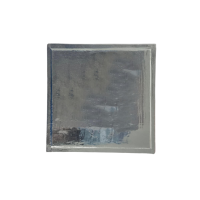
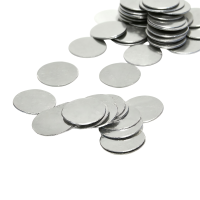
Details
1、Preparation cycle: 3-5 days
Note:
Small spots of varying degrees may appear on the surface of the lithium-indium alloy sheet. This is a normal phenomenon caused by the internal alloy structure and can be used normally.
✔ Precise and Controllable Composition: The atomic ratio (Li:In) is strictly controlled within a specified range, ensuring high batch consistency and reproducible experimental data.
✔ Ready to Use Immediately, Saving Time and Effort: Eliminates the tedious steps of cutting, stacking, aligning, and assembling indium and lithium foils, saving researchers the high cost of purchasing lithium and indium foils separately. Product controllability saves valuable research time and accelerates the R&D process.
✔ Reduced Interfacial Impedance: The lithium-indium alloy is specifically optimized for matching sulfide solid electrolytes (such as LGPS, LPSCl, etc.), forming a low-impedance, stable interface that effectively reduces battery polarization.
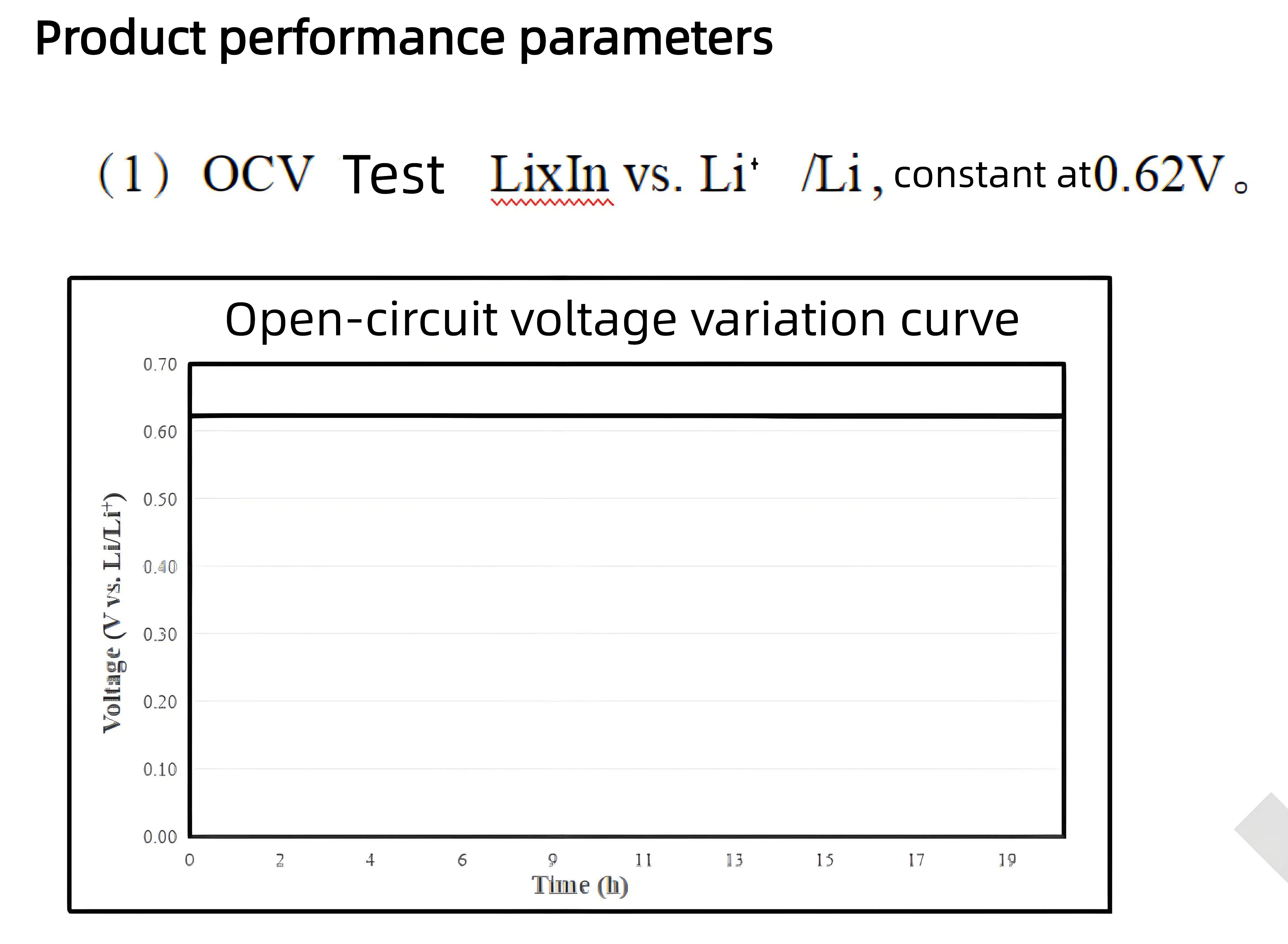
[Chemical Stability: Pure lithium is a very strong reducing agent and will undergo thermodynamically spontaneous and continuous interfacial side reactions with most sulfide electrolytes (such as Li₁₀GeP₂S₁₂), generating unstable and high-impedance interfacial layers (such as Li₂S, Li₃P).] Potential Advantage: The operating potential of lithium-indium alloys (such as LiIn) is approximately 0.62V (vs. Li⁺/Li), far higher than the 0V of pure lithium. This places it within the thermodynamic stability window of many sulfide electrolytes (stability window approximately 1.5-2.5V), significantly suppressing interfacial side reactions.
✔ Improved Cycle Stability: In sulfide all-solid-state batteries, the pure lithium anode undergoes significant volume changes during cycling (theoretically expanding indefinitely), accompanied by intense lithium dendrite growth and the formation of "dead lithium." This repeatedly disrupts the solid-solid interface with brittle sulfide electrolytes (such as LGPS, LPSC), leading to a continuous increase in interfacial impedance and rapid capacity decay. Compared to pure lithium anodes, lithium-indium alloy anodes can suppress lithium dendrite growth, improving the safety and cycle life of all-solid-state batteries.
2、
| Item | Specification |
|---|---|
| Atomic Ratio (Li:In) |
0.5–1.0 (Exact ratio is proprietary.) Custom LixIn compositions are available upon request (0.2~1.5). |
| Appearance | Composite silver-white metallic foil with a smooth and flat surface. |
| Standard Dimensions |
Round disc: Ø10 mm × 250 μm thickness Square sheet: 50 mm × 50 mm × 0.25 mm (Custom dimensions are available upon request.) |
| Theoretical Capacity (Approx.) | ~16 mAh |
| Plateau Voltage (vs. Li⁺/Li) | ~0.62 V |
| Applications |
All-solid-state lithium metal batteries; Solid Electrolyte Interphase (SEI) mechanism research; Performance evaluation of novel solid-state electrolyte materials |
| Packaging | Vacuum-sealed in aluminum-laminated pouch packaging. (Avoid severe vibration or impact during transportation and handling.) |
| Shelf Life | 2 months (vacuum sealed). Use as soon as possible after opening. Store under vacuum or in an argon atmosphere. Do not expose to nitrogen or organic solvents. |
3、
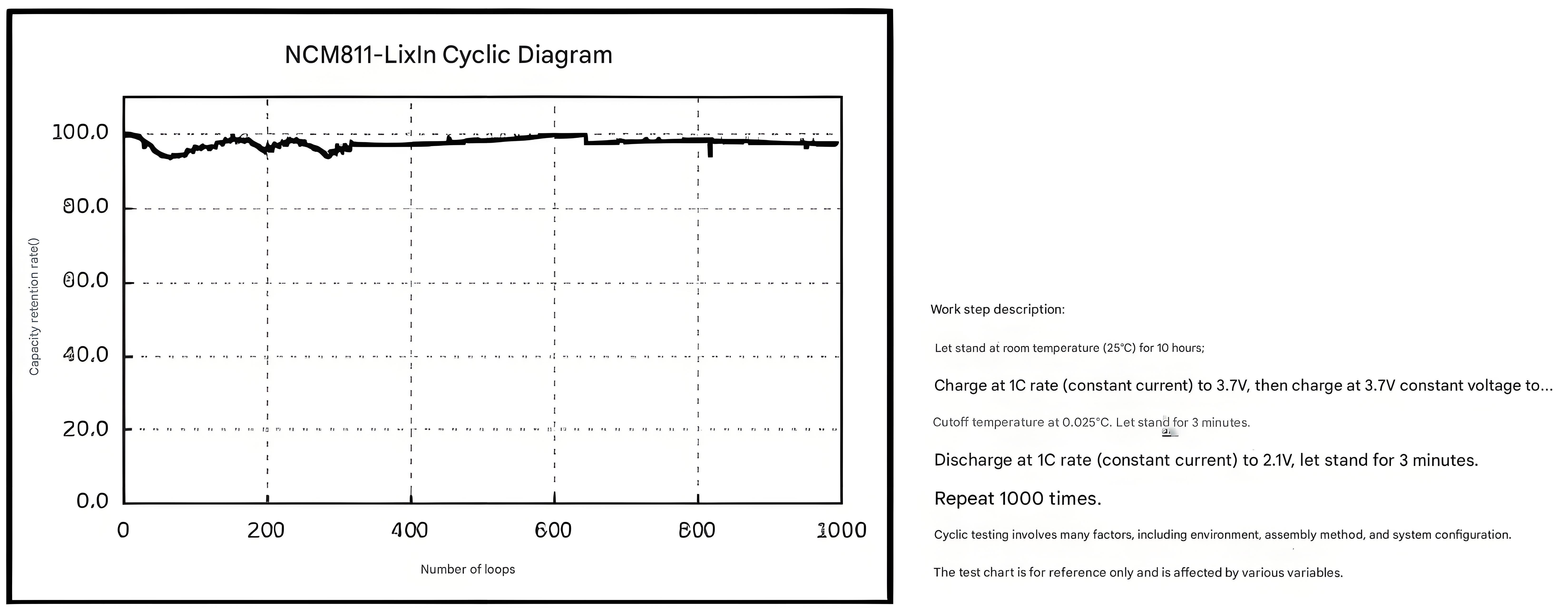
(2)NCM811|LPSC|LixIn, high capacity retention during 1C charge-discharge cycles, with a capacity retention of >95% after 248 cycles.
4、Receiving and Inspection
Receiving Inspection: Upon receiving the package, please first check the outer packaging for any obvious damage. The inner sealed bag or aluminum foil bag should be intact and leak-free.
Immediate Transfer: After opening the outer packaging, please transfer the unopened inner packaging of the product to your glove box as soon as possible. It is not recommended to store it in the air for extended periods, even if it is sealed.
5、Glove Box Operation Guidelines
Environmental Requirements: All operations must be performed in a high-purity inert atmosphere glove box where both water and oxygen content are below 0.1 ppm.
Opening and Retrieval:
(1) Open the outer aluminum-plastic bag outside the glove box and quickly transfer it inside. Carefully open the inner bag for use;
(2) Use clean, flat-tipped ceramic or plastic tweezers to handle the alloy sheet. Avoid using metal tweezers to grip it forcefully to prevent scratching the surface or introducing metal contamination;
(3) It is recommended to store the product in a sealed glass bottle inside the glove box. After each use, reseal it with paraffin film to avoid prolonged exposure to the atmosphere within the box and the effects of atmospheric fluctuations. Avoid violent shaking and collisions with the lithium-indium alloy sheet.
6、Battery Assembly Guide
For example, for NCM811|LPSC|LixIn all-solid-state batteries, the assembly sequence is generally: solid electrolyte layer → positive electrode layer → negative electrode alloy layer. Material selection and assembly pressure will affect the battery test results, so a constant and appropriate pressure must be applied. We recommend an alloy layer assembly pressure and test pressure of 200 MPa. Using a battery mold with constant pressure can maintain constant pressure during cycling.
This product is a ready-to-use alloy negative electrode, requiring no additional processing. The alloy sheet can be directly used for battery assembly. After battery assembly, it is recommended to let it stand for 10 hours to allow the mold pressure and alloy potential to stabilize.
7、Electrochemical Test Parameter Recommendations
(1) Voltage Window Setting:
Half-cell test: When using lithium metal as the counter electrode, a voltage window of 0.5 V - 1.0 V (vs. Li⁺/Li) is recommended. This window ensures stable cycling of the alloy near the LiIn phase, avoiding over-lithiation or delithiation. Full Cell Testing: When paired with cathodes such as NCM811, the operating voltage window of the full cell is approximately 2.1V - 3.7V (depending on the cathode material and electrolyte stability). The platform voltage of this product (vs. Li⁺/Li) is ~0.62V.
(2) Current Density Selection:
Initial Activation: It is recommended to use a small current of 0.1C or 0.1 mA/cm² for the first 2-3 weeks to form a stable electrode/electrolyte interface.
Long Cycle Testing: After activation, the current can be gradually increased to 0.2C - 1C for long-term cycle testing. (Cycle performance will decrease with increasing current density.)
(3) Performance Expectations:
Initial Coulombic Efficiency: In half-cells, the initial efficiency is usually high due to the reversibility of the alloy itself. In full cells, the overall initial efficiency is mainly limited by the initial efficiency of the cathode material (such as NCM811).
Cycle Life: Under optimized conditions, stable cycles of several hundred to several thousand are expected.
8、Safety and Disposal
Safety Warning: Although this product is more stable than pure lithium, it is still an active material. Exposure to air or water is strictly prohibited, as it will release heat and produce hydrogen gas, posing a flammability risk.
Disposal: For disposal, immerse the product in anhydrous ethanol or mineral oil in a fume hood to ensure complete and slow reaction. Dispose of the residue as chemical waste.
9、Other
Based on existing academic research, this lithium-indium alloy sheet is designed to utilize indium's lithiophilic properties, theoretically helping to guide uniform lithium deposition, inhibit lithium dendrite growth, and potentially improve interfacial contact with certain solid electrolytes. Actual effects vary depending on the specific battery system, process parameters, and usage conditions.
As a negative electrode material, the effectiveness of this product in inhibiting dendrite growth and reducing impedance strongly depends on the type of electrolyte, interfacial pressure, current density, positive electrode matching, and overall battery assembly process. We recommend users conduct thorough testing to optimize parameters.
The product specifications and related performance information provided by our company are based on existing academic literature and typical testing environments and are for reference and research purposes only. Due to the complexity of battery systems and the uncontrollable nature of specific user application conditions, our company makes no guarantee or commitment regarding the final performance of the battery in actual use, nor does it assume any direct or indirect liability arising therefrom. Users are responsible for fully evaluating and testing the safety of the manufactured batteries.
Need R&D Support?
Browse key product categories and connect battery materials with Canrd's R&D services for testing, fabrication, and project support.
Experimental Materials
CategoryCathode, anode, electrolyte, separator, and other materials for battery research.
Shop cathode, anode & electrolyte materials →Lab Equipment
CategoryBattery lab equipment for pilot lines, fixtures, and testing workflows.
Browse battery lab equipment →Electrodes & Cells
CategoryCustom electrodes, dry cells, and battery cell components for R&D validation.
View custom battery electrodes & cells →Sodium Electrolyte
CategorySodium-ion electrolyte options for sodium battery research and validation.
Shop sodium battery electrolytes →R&D Services
ServiceFull-chain battery R&D services from material evaluation to cell fabrication and failure analysis.
Explore Canrd R&D services →Material Evaluation
ServiceCharacterization, electrochemical testing, and compatibility evaluation for battery materials.
Evaluate your battery materials →Electrode Fabrication
ServiceCustom electrode sheets and rolls based on your target chemistry and process needs.
Request electrode fabrication →Cell Fabrication
ServiceDry cells, assembled cells, and custom-format cell builds for R&D validation.
Build custom research cells →Contact
PageAsk Canrd to match products, materials, and services for your project.
Get product and R&D support →