



Introduction of Key Technology of Cathode Materials --- Ternary Cathode
1.Material systems and basic theory
1.1 Chemical composition and crystal structure of trivalent materials
The crystal structure of the ternary cathode materials (linixCoyMnzO2 or linixCoyAlzO2) is a lamellar a-NaFeO2 type, with space group R-3m. Nickel cobalt manganese (aluminum) ions occupy the 3a position, lithium ions occupy the 3b position, and oxygen ions occupy the 6c position. Nickel content directly affects:
Specific capacity : Ni²+ / Ni⁴+ redox couple provides the main capacity ( about 15-20mAh / g per 10% increase in Ni content )
Structural stability : High Ni material ( Ni ≥ 80 % ) is prone to H2 → H3 phase transition , resulting in lattice distortion rate of more than 6 %
Thermal stability : Thermal decomposition temperature decreases by about 15 ℃ per 10 % increase in nickel content
1.2 Technology comparison of low- and medium-nickel and high-nickel systems
|
System type |
Typical Model |
Nickel content |
Specific capacity (mAh / g) |
Heat out of control temperature |
|
Medium and Low Nickel |
50-70% |
155-175 |
220-250°C |
|
|
165-185 |
||||
|
High Nickel |
≥ 80% |
195-220 |
180-210 ℃ |
|
|
NCA90 |
200-220 |
2.Deep analysis of precursor preparation processes
2.1 Cohesion reaction mechanism
Reactions that occur in a continuously stirred reactor (CSTR):
Ni²⁺ + Co²⁺ + Mn²⁺ + 2OH⁻ → (NiCoMn)(OH)₂↓
Four phases of control:
Nucleation stage (0-30min): pHThe value jumps to more than 10.5, forming 5-20nm crystal nuclei
Growth stage ( 1-10h ) : Ostwald ripening dominates , D50 increases to 3-5μm
Densification stage ( 10-20h ) : surface energy is controlled by ammonia concentration , densification density is 1.8-2.2g / cm3
Curing stage ( 2-4h ) : Eliminate internal stress , reduce BET surface area to 10-15m2 / g
2.2 Critical equipment and parameter matrix
1 Level 5 serial reactor system (specialty for high nickel):
|
Bus Station |
Temperature control |
PH range |
Ammonia concentration (g / L) |
Mixing power (kW / m3) |
|
1# |
55±0.5 ℃ |
11.8-12.2 |
2.0-2.5 |
3.5-4.0 |
|
2# |
58±0.3℃ |
11.5-11.8 |
1.8-2.2 |
4.0-4.5 |
|
3# |
60±0.2℃ |
11.2-11.5 |
1.5-1.8 |
4.5-5.0 |
|
4# |
62±0.2℃ |
10.8-11.2 |
1.0-1.5 |
5.0-5.5 |
|
5# |
65±0.1℃ |
10.5-10.8 |
0.5-1.0 |
5.5-6.0 |
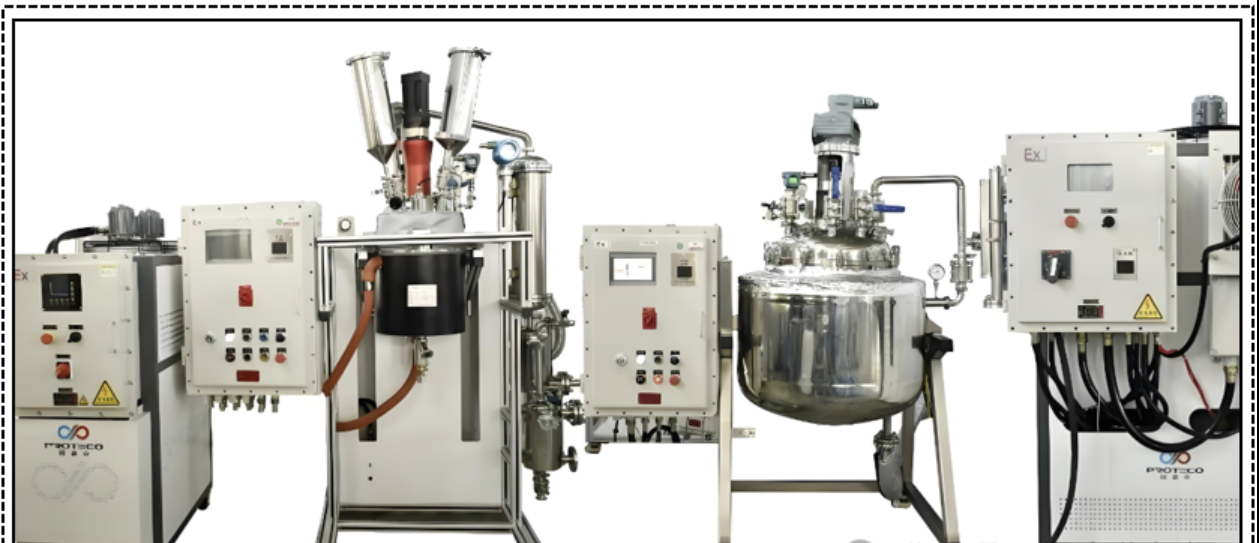
2 Parameters of medium and low nickel materials:
Single reactor reaction time : 8-12h
Particle distribution: D10=2.5 μm, D50=4.5 μm, D90=8.0 μm
Specific surface area : 12-18m2 / g
3.Core technologies of lithium blending and sintering processes
3.1 Lithium source selection and rationing calculation
The formula for the lithium overload coefficient:
Li / (Ni Co Mn) = 1.05-1.10 (low and medium nickel)
Li/(Ni Co Al) = 1.08-1.15 (high nickel)
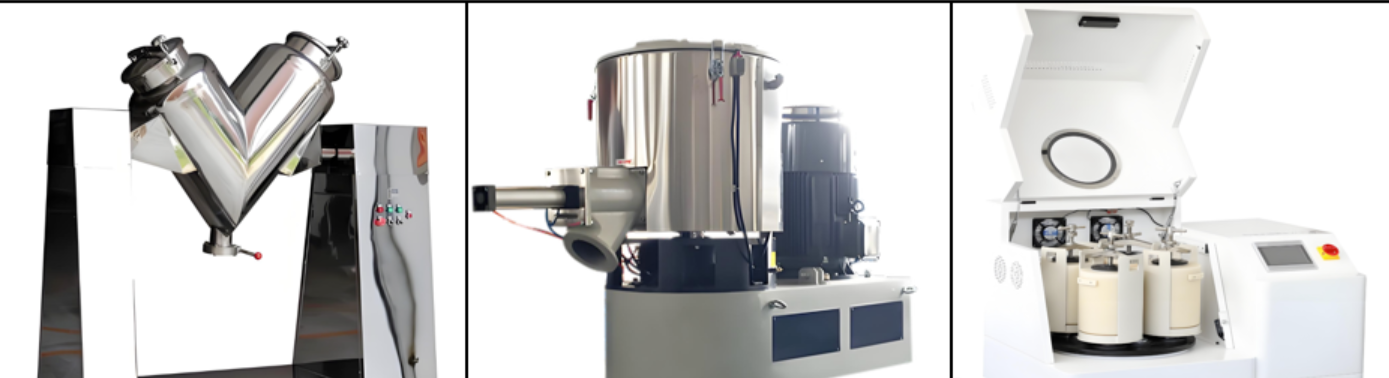
Mixed manufacturing process comparison:
|
parameter |
Dry method of mixing |
Wet mixing |
|
|
equipment |
V-mixer |
High Speed Hybrid |
Planetary ball milling machine |
|
speed |
15-25rpm |
200-500rpm |
200-300rpm |
|
time |
2-4h |
0.5-1h |
4-6h |
|
homogeneity |
RSD≥5% |
RSD≥5% |
RSD ≤ 2% |
|
System of application |
Medium and Low Nickel |
System-wide |
High Nickel |
3.2 Sintering Dynamics and Equipment Selection
Push Plate Kiln vs Roller Kiln vs Return Kiln:
|
Indicator |
Crane kiln (low and medium nickel) |
Crane kilns (whole system) |
Reverse kiln (high nickel) |
|
Temperature uniformity |
±5°C |
±1°C |
±1°C |
|
Climate control |
air |
Air or oxygen |
O2 concentration 5-15% |
|
Rate of heating |
3-5 °C/min |
3-5 °C/min |
1-2 °C/min |
|
production capacity |
200kg / batch |
300kg / batch |
500kg / day |
|
Lithium residual control |
1.2-1.8% |
1.0-2.0% |
0.8-1.2% |
Typical sintering curves:
NCM622: Room temperature → 400 ℃ (2 h) → 750 ℃ (12 h) → furnace cooling
Ncm811: Room temperature → 300 ℃ (2H, O2 5%) → 500 ℃ (3H, o210 %) → 750 ℃ (10h, o215 %) → rapid cooling
4.Post-treatment and surface modification techniques
4.1 Crushing grading process
Parameters for jet stream crushing machines:
Working pressure : 0.8-1.2MPa
Speed of classification wheel : 4000-8000rpm
D50 control accuracy: ± 0.3 μm
Production capacity : 100-300kg/h
Rating criteria:
|
Indicator |
Low and medium nickel requirements |
High nickel requirements |
|
D10 |
2. 0-3.0 μm |
3. 0-4.0 μm |
|
D50 |
4. 0-5.0 μm |
5. 0-6.5 μm |
|
D90 |
10 micrometers |
12 micrometers |
|
Length coefficient |
<1.2 |
<1.0 |
4.2 Surface cladding techniques
Wet cladding process:
Coating agent : AlPO₄ , Li₂ TiO₃ , LiAlO₂
Reaction conditions : solid-liquid ratio 1 : 3 , 80 ℃ , pH = 9-10 , stirring for 2 h
Coating thickness : 2-5nm
Coating amount : 0.5-2.0wt %
Atomic layer deposition (ALD) technology:
Deposited material : Al₂O₃ , TiO₂
Deposition rate : 0.1nm / cycle
Vacuum of equipment: 10⁻³ Pa
Film uniformity : > 95 %
5.Key performance indicators and test methods
5.1 Electrochemical properties
|
Test projects |
Methodological standards |
Typical values of medium and low nickel |
High nickel target value |
|
First efficiency |
GB/T 30835 |
85-88% |
88-92% |
|
1C cycle life |
25°C, 2.8–4.3V |
1500 weeks ≥ 80% |
1000 weeks ≥ 90% |
|
High temperature performance |
Storage at 45 ° C for 7 days |
Capacity maintained at ≥ 95% |
≥92% |
|
DCIR elongation |
1C cycle 500 weeks |
<25% |
<15% |
5.2 Physical properties
|
parameter |
Test equipment |
Control standards |
|
Vibration density |
Hall Flow Rate Meter |
≥2.2 g/cm³ |
|
Compared to surface area |
BET nitrogen sorbent |
0.3-0.8 m²/g |
|
Magnetic foreign objects |
≤ 100ppb |
|
|
Water content |
Calffaut Water Meter |
≤500ppm |
6.Core influencing factors and control strategies
6.1 Quality control of raw materials
|
Elements of impurities |
Allowable upper limit (ppm) |
Effect mechanisms |
|
Na |
<50 |
Blocking the diffusion of lithium ions |
|
Ca |
<20 |
Generating a LiCaPO4 Blocking Channel |
|
Fe |
<10 |
Catalyst for Electrolyte Decomposition |
|
S |
<100 |
Formation of Li2SO4 increases interface impedance |
6.2 Tolerance analysis of process parameters
|
working procedure |
Key parameters |
Allowable range of volatility |
Impact on performance |
|
Together, we settled |
PH value |
±0.05 |
★★★★★ |
|
Ammonia Concentration |
±0.1g/L |
★★★★☆ |
|
|
Sinter |
Maximum temperature |
± 3 ℃ |
★★★★★ |
|
Oxygen Concentration |
±1vol% |
★★★★☆ |
|
|
smash |
Level wheel speed |
±50rpm |
★★★Rainbowly |
7.Frontier technologies and development trends
7.1 Breakthroughs in monocrystalline technology
Synthesis process : Melt salt method ( LiNO₃-LiOH co-melting system )
Single crystal size: 3–5 μm
Improved cycle performance : 1C / 2000 cycles > 88 % capacity retention
7.2 Concentration gradient materials
Composition of nuclear layer : Ni80Co10Mn10
Shell composition : Ni50Co20Mn30
Thickness of transition layer : 200-500nm
Improved thermal stability : DSC peak temperature increased by 30 ℃
7.3 Solid-state battery adaptation technology
Interface modification: LiNbO₃ / LiTaO₃ coating
Sintering temperature optimization : 850-950 ℃
Ion conductivity: > 10⁻⁴ S/cm (Matching with sulfide electrolytes)
8.CONCLUSIONS
The industrial production of trivalent cathode materials has formed a complete technical system from raw material refinement (metal purity ≥ 99.95%), precursor synthesis (particle size CV value < 10%), to sintering process (oxygen pressure closed-loop control).
For high-nickel materials, it is necessary to establish a process-wide inert gas protection system (dew point ≤ -40 ° C, oxygen content ≤ 10 ppm), and to introduce online laser particle analysis (sampling every 30 seconds) and real-time XRD monitoring (fluctuation of lattice parameters a and c values ≤ 0.005Å per batch detection).
With the maturity of technologies such as multi-element mixing (Mg / Ti / Zr co-mixing) and microstructure regulation (secondary spherical porosity 15-20%), triad materials are continuously evolving towards higher energy density (≥ 300 Wh / kg) and longer cycle life (≥ 1500 weeks).
--End--
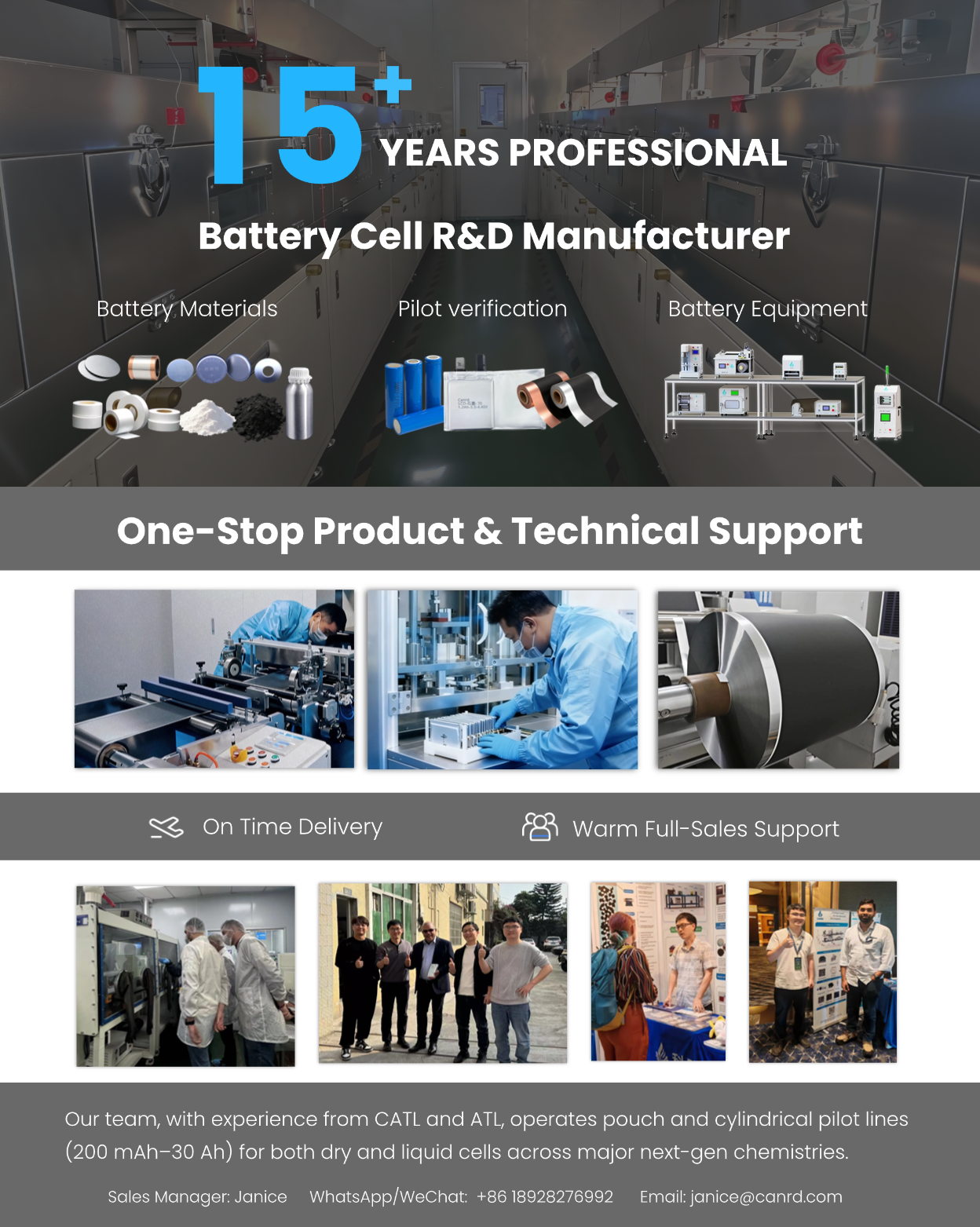
Canrd Brief Introduce:
Canrd use high battery R&D technology(core members are from CATL) and strong Chinese supply chain to help many foreign companies with fast R&D.
We provide lab materials, electrodes, custom dry cells, material evaluation, perfomance and test, coin/pouch/cylindrical cell equipment line, and other R&D services.
📱 WhatsApp/WeChat: 86 189 2827 6992
📧 Email: janice@canrd.com
🛒 Product Website: : www.canrud.com
Related Products & Services
Use Canrud products and R&D services to turn battery knowledge into practical experiments.
Coin Cell Case
ProductCoin cell cases for validating materials and electrochemical concepts from the article.
Use coin cell cases in your next test →Sodium Electrolyte
CategoryElectrolytes for sodium-ion battery research, compatibility tests, and cell validation.
Shop sodium electrolyte for validation →Cell Fabrication
ServiceGet support building dry cells, assembled cells, or custom formats for R&D validation.
Request cell fabrication support →Experimental Materials
CategoryBrowse materials for follow-up experiments, benchmarking, and product development.
Browse experimental battery materials →