






Conductive Carbon Black Super P Li | Lithium Battery Conductive Additive
Details
Conductive Carbon Black Super P Li for Lithium Batteries
Conductive Carbon Black Super P Li is a premium conductive agent widely used in lithium-ion battery cathode and anode formulations. As a highly dispersible battery conductive carbon, Super P Li forms an efficient conductive network within the electrode, significantly enhancing electron transport and overall battery performance.
This material is commonly applied in power batteries, energy storage batteries, and consumer lithium batteries, where high conductivity and long cycle life are essential. Due to its ultra-fine particle structure and high purity, Super P Li ensures stable electrochemical performance even under high-rate charging and discharging conditions.
Applications of Super P Li Conductive Carbon
- Lithium-ion battery cathode materials
- Energy storage system batteries
- EV and power battery manufacturing
- Consumer electronics lithium batteries
- Research and development of battery materials
Why Choose Super P Li Conductive Carbon Black
Super P Li is recognized across the battery industry for its consistent quality, excellent conductivity, and reliable performance. It improves electrode adhesion, reduces polarization, and supports stable battery operation throughout extended charge–discharge cycles.
By incorporating Super P Li into battery formulations, manufacturers can achieve higher energy efficiency, longer cycle life, and improved safety performance, making it an essential material in advanced lithium battery production.
Product Advantages:
1. High product purity and low impurity content;
2. Extremely high conductivity, requiring only a small amount of product.
Currently, conventional conductive agent SP still dominates the domestic lithium-ion battery conductive agent market. Carbon black has better ion and electron conductivity due to its larger specific surface area, which facilitates the adsorption of electrolyte and improves ion conductivity. Additionally, carbon black agglomerates to form a branching structure, which can form a chain-like conductive structure with active materials and help improve the electronic conductivity of the materials.
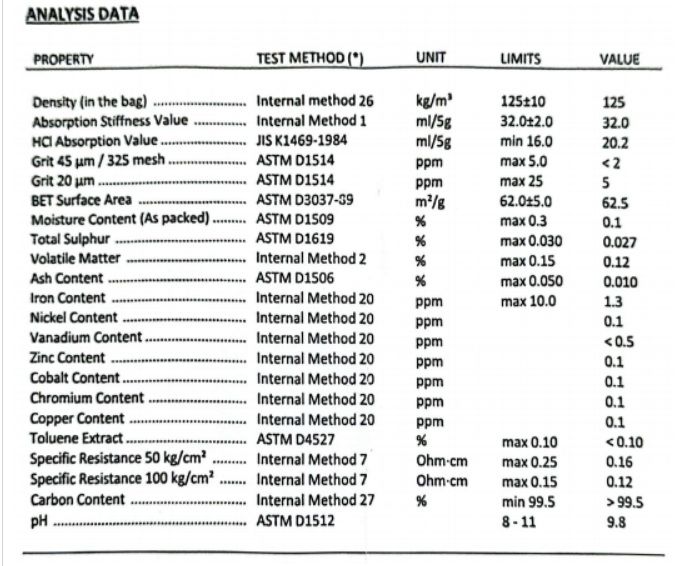
Powder conductivity (10~15S/CM)
Particle size: 40~50nm
SEM Image:
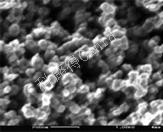

SP (Super P Li) is a conductive carbon black prepared by a modified furnace black method (referred to as the "MMM" method), which aggregates primary particles with a diameter of about 40nm into primary aggregates of 150-200nm, and then undergoes subsequent processing such as soft agglomeration and artificial compression. Currently, conventional conductive agent SP still dominates the domestic lithium-ion battery conductive agent market.
Carbon black has better ion and electron conductivity due to its larger specific surface area, which facilitates the adsorption of electrolyte and improves ion conductivity.
Additionally, carbon black agglomerates to form a branching structure, which can form a chain-like conductive structure with active materials and help improve the electronic conductivity of the materials.
Introduction
Introduction Carbon black is synonymous with carbon black. Carbon black itself is a semiconductor material. Conductive carbon black has low resistivity, enabling rubber or plastics to possess certain conductivity properties. It is used in various conductive or antistatic products, such as antistatic or conductive rubber and plastic products, cable materials; it can also be used as a raw material for dry cell batteries.
Conductive carbon black can be classified according to its conductivity and manufacturing method: conductive channel black (CC), conductive furnace black (CF), superconducting furnace black (SCF), and extra-conducting furnace black (XCF), etc. Acetylene black (ACEF) is also a carbon black with excellent conductivity.
Conductive Carbon Black
Conductive carbon black is a type of carbon black with low or high resistivity that imparts conductivity or antistatic properties to products. Its characteristics include small particle size, large and rough specific surface area, high structure, and clean surface (few compounds). As early as the 1990s, my country developed and produced V-series conductive carbon black products using the oil furnace method. In recent years, based on improved processes, SL-series conductive carbon black products with larger surface area, higher porosity, and better conductivity have been developed. Currently, the most important application is in new energy vehicles. Conductive carbon black can impart a certain degree of conductivity or antistatic properties to polymer materials, serving as a permanent functional filler. It is also widely used in electromagnetic wave shielding materials, high and medium voltage power cable shielding materials, antistatic flooring, oil pipelines, fuel tanks and rubber boots, antistatic and flame-retardant conveyor belts, ventilation ducts and PVC pipes for coal mines, antistatic electronic component packaging materials and explosive packaging materials, conductive inks and coatings, and in fields requiring static electricity elimination, such as aircraft tires.
Structural Type
Branched, BET < 200 m²/g
Characteristics:
- Secondary particles composed of solid, highly graphitized primary carbon microspheres, with a dendritic structure.
- Electrolyte absorption capacity is related to the complexity of the dendritic structure; the more complex, the better the electrolyte absorption.
- Low efficiency in forming a network, requiring a higher dosage, typically loading > 1.5%.
- Easy to disperse in slurry, low cost, widely used in positive and negative electrodes in the lithium battery industry.
Form:
Carbon black generally refers to elemental carbon particles. It typically forms due to incomplete combustion of organic matter, where hydrogen and oxygen are converted to water, while carbon remains incompletely combusted and detaches from the molecule, forming carbon black.
Morphology: Carbon black is composed of carbon but is usually classified as an inorganic pigment. It is a black powdery substance produced by the incomplete combustion or thermal decomposition of hydrocarbons in the gas phase. Due to different production processes and conditions, various products with different properties can be obtained.
- Microstructure of Carbon Black
Carbon black particles have a microcrystalline structure. In carbon black, the carbon atoms are arranged similarly to graphite, forming hexagonal planes. Typically, 3-5 such layers form a microcrystal. Because the arrangement of carbon atoms within each graphite layer of a carbon black microcrystal is ordered, while the arrangement between adjacent layers is disordered, it is also called a quasi-graphite crystal.
- Particle Size of Carbon Black
The particle size of pigment carbon black can be as low as 5 nm. Generally speaking, carbon black particles do not exist in isolation, but rather multiple particles interpenetrate through carbon crystal layers, forming a chain-like structure. Different production processes can yield carbon black particles with a very wide range of particle sizes. Lamp black production processes produce relatively coarse products, while gas black production processes produce finer products.
Furnace black production processes can obtain carbon black with almost all particle size ranges. Carbon black of the same variety does not have completely identical particle sizes, exhibiting a particle size distribution range. Generally, varieties with finer particles have a narrower particle size distribution.
Main Properties
Chemical Properties: The chemical properties of carbon black vary depending on its production process. The true surface area of most carbon blacks is larger than the geometric surface area calculated from particle size. This is due to the numerous micropores on the surface of carbon black, especially those with a particle size less than 25 nm.
Analysis reveals the presence of acidic groups such as phenolic, quinone, and carboxyl groups on the carbon black surface. The concentration of these acidic groups is particularly high on the surfaces of gas black and furnace black. Pyranone structures can be detected in furnace black, which determine its basic properties. Volatile matter content can determine the concentration of surface functional groups and also the polarity of the carbon black. Furthermore, due to its large surface area, carbon black easily adsorbs moisture from the environment, so special attention must be paid to moisture absorption during transportation, storage, and use.
Most studies focus on the geometry of conductive particle contact. This theory posits that a higher carbon black content results in a greater density of dispersed carbon black particles or aggregates, smaller average distances between particles, and a higher probability of contact, leading to more conductive pathways formed by the carbon black particles or aggregates. In blends of carbon black and polymers of varying polarities, a higher polarity results in a higher critical volume fraction of carbon black, implying decreased conductivity. This is because carbon black surfaces contain strong polar groups; a higher matrix polarity enhances the effect, increasing strength but hindering the aggregation of conductive particles, thus reducing conductivity. However, in blends of multi-component matrix resins and carbon black, the different polarities of the matrices can cause segregation of the carbon black. In this case, conductivity depends on the concentration and distribution of carbon black particles in the segregated phase, as well as the proportion of polymers in the segregated phase.
Blackness refers to the intensity of the black color exhibited by carbon black. When carbon black is used for coloring, blackness is primarily based on light absorption. For a specific concentration of carbon black, the finer the carbon black particles, the higher the degree of light absorption. Besides light absorption within the carbon black itself, blackness is also affected by light scattering, which has a brightening effect due to the geometric structure of the particle surface. This reduces blackness. As particle size decreases, the degree of light scattering decreases. Only for very fine carbon black can increasing the carbon black concentration improve blackness. For coarse carbon black, the dominant factor of light scattering increases with the number of carbon particles, resulting in a corresponding decrease in blackness.
Tinting Strength: Tinting strength can be understood as the effect of counteracting the whitening ability of white pigments. Tinting strength also increases with decreasing particle size and structure of the primary particles.
Hue: The degree of light scattering by "carbon black particles" decreases with decreasing particle size. This affects not only the brightening effect but also the hue, for the following reasons: When light can pass through a black-based coloring layer, short-wavelength blue light is scattered more strongly than long-wavelength red light. The finer the carbon black, the more significant this effect. Red light components, due to less scattering loss, penetrate deeper into the coloring layer. Blue light is strongly scattered overall, and also strongly scattered in the opposite direction, i.e., behind it, thus reflecting back from the colored layer. When observing the reflection process, the coloring with fine carbon black produces a blue hue, giving the impression of a deeper blackness. If the carbon black is coarse, it will appear brownish. When observing the transmission process, the hue relationship of the same colored layer (a not completely transparent film) is exactly the opposite. As the particle size decreases, the more strongly scattered blue light penetrates the colored layer to a lesser depth; that is, less blue light passes through the colored layer to the other side and emerges from the other side. Therefore, because the side being observed lacks blue light, the colored layer appears brownish when observed during transmission. When using titanium dioxide to create a gray hue, the situation is similar to observing the coloring of the primary color during transmission. Light is scattered back and forth within the white pigment in the plastic sheet containing black pigment. Smaller carbon black particles scatter more blue light within the visible spectrum, allowing more of the remaining red light to pass through, resulting in a gray with a yellowish tint. Conversely, using coarse-grained carbon black, especially coarser lampblack, will produce a gray with a bluish tint.
Dispersibility: The finer the pigment black, the more contact points between the carbon black aggregates, resulting in stronger cohesive forces. When pigment black is incorporated into the material, initiating the initial uniform distribution of carbon black, a greater work is required to separate the carbon black particles, ultimately achieving the highest blackness and coloring. Compared to high-structure carbon black, low-structure carbon black is more likely to achieve higher concentrations, but therefore requires greater dispersing force during dispersion. The dispersibility of carbon black is affected by its structural degree; since high-structure carbon black has excellent dispersibility, its coloring strength is naturally stronger.
When using powdered carbon black, dispersion and troublesome dust problems arise; therefore, masterbatches or slurries can be used.
Pre-formulated carbon black is more expensive than using pigment black alone, but considering the advantages of cleaner processes, higher efficiency, and lower technological investment, carbon black formulations are worthwhile.
Light Stability: Light causes plastics to age, especially ultraviolet rays from sunlight, which accelerate aging. Using organic UV absorbers and antioxidants can extend their lifespan. However, pigment black is still considered the best UV stabilizer.
As a UV absorber, pigment black is mainly used to extend the outdoor lifespan of plastic products.
A concentration of 0.5% small-particle-size carbon black (20 nm) has roughly the same photoprotective effect as 2% relatively coarse-particle-size carbon black (95 nm).
Production Process: The raw materials for producing pigment carbon black are petroleum products and pitch coal tar products. It is produced through the incomplete combustion or pyrolysis of hydrocarbons at high temperatures.
1) Lampblack Production Process
The earliest carbon black production method in history was the lampblack production process. In this process, raw materials are burned on a flat iron combustion pan with a diameter of up to 1.5 m. The combustion gases containing carbon black are collected by an exhaust hood lined with bricks, and then pass through a bent pipe (1/4 bend) and a fire pipe to the deposition device. To control the characteristics of the produced carbon black, it is necessary to ensure that the raw materials undergo incomplete combustion mainly near the gap between the combustion pan and the exhaust hood. Further into the pipe, combustion occurs under oxygen-deficient conditions, resulting in thermal decomposition and the formation of larger carbon black particles. Due to these factors, a wide range of particle size distribution is achieved, characterized primarily by coarse particles. Because only a small portion of the particles formed in the gap between the combustion pan and the exhaust hood comes into contact with oxygen in the air, these carbon black particles have only a small amount of surface oxides, a neutral pH value, and very low volatile matter content.
2) Production Process of Gas Black
The name "gas black" originates from its production process: The raw material hydrocarbons are heated and first vaporized. Then, a self-igniting gas (providing energy) is carried to a burner, where carbon black is generated in the numerous fan-shaped flames emitted by these bat-shaped burners. Because each flame is small and burns in air, the formation of carbon black differs significantly from that of lampblack (which involves incomplete combustion). The carbon black particles are very fine, with an average particle size between 10 and 30 nm depending on the type; the average particle size of gas black is 13 nm. A slowly rotating, water-filled drum sits above the combustion flame. Carbon black is deposited on the drum and then scraped away. While the temperature remains high, newly formed carbon black comes into contact with oxygen in the air, resulting in partial oxidation and the formation of numerous acidic groups. Consequently, the pH value of gas black falls within the acidic range. Approximately 6% volatile matter is obtained, representing the surface oxide content.
3) Gas Black Production Process
This production process uses natural gas as raw material. The gas combustion process is similar to that of gas black production, where natural gas burns, producing numerous fan-shaped flames. The resulting product is similar to gas black, but the difference lies in the use of a flat, water-cooled U-shaped trough as the deposition tank for the carbon black. This method was discontinued many years ago due to ecological and economic reasons. Gas black production, however, does not impact the ecological environment, and this gas-based carbon black process is still in use.
4) Furnace Black Production Process
Gas black is produced in the open atmosphere, while furnace black production takes place in a closed furnace under oxygen-deficient conditions. Instead of numerous small flames, a large flame is used, with oils as raw materials and combustible gases added to reach the required furnace temperature. Changing the furnace black production conditions can yield the desired pigment black. For example, under different conditions, carbon black can achieve a wide range of average particle sizes, from 80 nm to as small as 15 nm, and even down to particles as small as gas black. However, for the same particle size, gas black and furnace black still differ, primarily due to differences in surface chemistry. Furnace black products are relatively coarse, with an average particle size of 40 nm. Furthermore, when using the furnace black production process, small amounts of alkaline compounds or other additives can be added to alter the aggregation degree and type of aggregates, thereby obtaining high-structure or low-structure carbon black.
Because furnace black is produced under conditions of almost atmospheric pressure and insufficient air, it mostly lacks acidic surface oxides; however, the aforementioned alkaline pyranone structure has been found. The alkaline pH of furnace black is due to the addition of alkaline earth to the quenching cold water during the termination of carbon black formation, as well as the addition of alkaline salts to reduce structure. Additionally, if this furnace black is not subjected to further oxidation post-treatment, its volatile matter content is low.
Introduction
Carbon Black Same as Carbon Black . Carbon black itself is a semiconductor material