



How to improve the sealing performance and reliability of the lithium battery packaging process?
The packaging process of lithium batteries directly determines the battery's lifespan and safety. Whether it is a phone swelling, an electric vehicle catching fire, or a leakage in an energy storage station, these issues are often closely related to the failure of the packaging seal. Especially in the field of power batteries, packaging defects can lead to electrolyte leakage, oxygen or moisture intrusion, which may, in mild cases, cause capacity degradation, or in severe cases, trigger thermal runaway. This article analyzes how to overcome this 'critical threshold' from three dimensions: materials, processes, and testing.
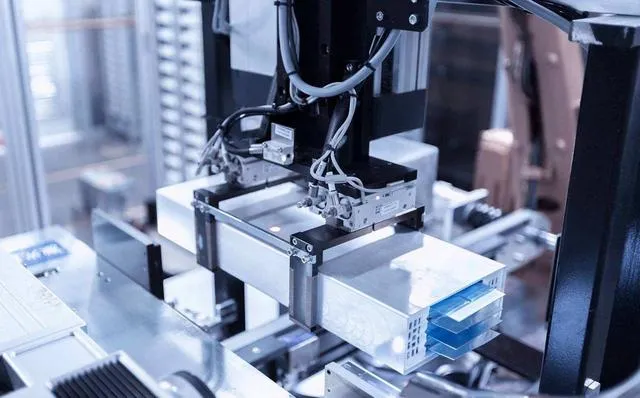
1.Material Selection: The "First Line of Defense" for Packaging Reliability
Packaging Materials:The "Golden Ratio" of Aluminum-Plastic Film.
Soft-pack lithium batteries require the aluminum-plastic film to meet three key characteristics: "corrosion resistance high strength heat-sealable."
Outer Nylon Layer: Typically 15-25μm thick, offering resistance to mechanical impact and chemical corrosion.
Middle Aluminum Layer: Purity ≥ 99.5%, thickness 40-60μm, preventing oxygen and moisture penetration (oxygen permeability < 0.01 cc/m²·day).
Inner CPP Layer: Melting point around 160-180°C, with heat-seal strength > 30N/15mm.
Case Study: CATL optimized the grain size of the aluminum layer (refined to 5-10μm), increasing the aluminum-plastic film's fold resistance to over 20,000 cycles.
Metal Shell: The "Micron-Level Game" in Weld Design
The metal shell (e.g., aluminum alloy, nickel-plated steel) of square/cylindrical batteries needs to resolve two major contradictions:
Strength VS Sealing: The welding depth of laser welding must be controlled at 60%-80% of the shell thickness (too deep may burn through, too shallow may lack strength).
Expansion vs. Stress: The burst pressure of the top cover's explosion-proof valve must precisely match the internal pressure of the battery (usually designed as 1.5-2.5 MPa).
2.Process Optimization: From "Experience-Driven" to "Parameter-Closed Loop"
Heat-Sealing Process: The "Triangular Relationship" of Temperature-Pressure-Time
The quality of heat sealing in soft-pack batteries depends on three factors:
Temperature: CPP layer melting point ± 5°C (e.g., 170°C ± 2°C), with excessive temperature causing material carbonization, and too low causing poor adhesion.
Pressure: 0.4-0.8 MPa, as uneven pressure can cause bubbles or wrinkles.
Time: 1-3 seconds, as too short a time may cause delamination, and too long may lead to material degradation.
Industry Pain Point: BYD adopted a "segmented heat sealing" method, changing the traditional single-step heat sealing to a 3-stage gradient pressurization, increasing the packaging pass rate from 92% to 98.5%.
Glue Sealing: From "Filling Gaps" to "Molecular-Level Penetration"
The gap between the battery cell and shell is filled with adhesives:
Silicone: Wide temperature range (-50°C ~ 200°C), but low hardness (Shore A 20-40), prone to aging.
Epoxy Resin: High strength (shear strength > 10 MPa), but brittle, requiring the addition of flexible tougheners.
Polyurethane: Comprehensive performance, but requires strict control of curing humidity (RH 40%-60%).
Drying Room Control: "ppm-Level Water Strangulation"
The packaging workshop needs to maintain the dew point temperature ≤ -40°C (corresponding to water content ≈ 10 ppm). Key processes include:
Dual-Stage Dehumidification: Combined use of rotary and refrigerated dehumidification.
Dynamic Monitoring: Infrared moisture sensors provide real-time feedback on the water content adsorbed on the aluminum-plastic film surface.
3.Testing Technologies: From "Post-Remediation" to "Process Interception"
Sealing Detection: The "Molecular-Level Investigation" of Helium Leak Testing
Principle: Helium is injected into the battery, and a mass spectrometer detects the leakage rate (standard: ≤ 1 × 10⁻⁷ Pa·m³/s).
Advantage: Sensitivity is 100,000 times higher than the traditional bubble method, able to detect micro-holes at the 0.1μm level.
Tesla's Production Line: Fully automated helium leak detection equipment reduces the detection time per battery to 12 seconds.
Non-Destructive Imaging: The "Internal and External Mastery" of X-Ray and Ultrasound
X-Ray: Detects weld porosity and cracks (resolution ≤ 10μm).
Ultrasound C-Scanning: Locates adhesive layer delamination areas (accuracy ± 0.1mm).
Accelerated Aging Testing: "Pressure Experiments" in Extreme Environments
Temperature Shock: -40°C ~ 85°C for 100 cycles, observing shell deformation and adhesive cracking.
Vibration Testing: Simulating vehicle-mounted environments with random vibrations from 20Hz to 2000Hz for 48 hours to test structural fatigue.
4.Future Trends: The Revolution of Intelligent Manufacturing and New Materials
AI Process Optimization:
Machine learning analyzes heat-sealing parameters (e.g., temperature fluctuations, pressure distribution) to dynamically adjust the process window.
Digital twins simulate the long-term effects of electrolyte corrosion on sealing materials.
Packaging Revolution for Solid-State Batteries:
No liquid injection process is required, but the interface stress between solid electrolyte and electrodes must be addressed.
Packaging material temperature resistance must be increased to over 300°C (e.g., polyimide composite films).
Self-Healing Materials:
Microencapsulated Epoxy Resin: Automatically releases repair agents when broken under pressure.
Shape Memory Polymers: Restore their original structure when heated, closing micro-cracks.
Conclusion
The reliability of lithium battery packaging processes is a "trio" of materials science, precision manufacturing, and testing technology. From the molecular structure of aluminum-plastic films to the atomic-level detection with helium leak detectors, from humidity control in workshops to AI algorithm parameter optimization, every detail is critical to the battery's "lifeline." In the future, with the widespread adoption of solid-state batteries and intelligent manufacturing, "zero-defect packaging" will no longer be out of reach.
📱 WhatsApp/WeChat: 86 189 2827 6992
📧 Email: janice@canrd.com
🛒 Product Website: www.canrud.com
Related Products & Services
Use Canrd products and R&D services to turn battery knowledge into practical experiments.
Coin Cell Case
ProductCoin cell cases for validating materials and electrochemical concepts from the article.
Use coin cell cases in your next test →Sodium Electrolyte
CategoryElectrolytes for sodium-ion battery research, compatibility tests, and cell validation.
Shop sodium electrolyte for validation →Cell Fabrication
ServiceGet support building dry cells, assembled cells, or custom formats for R&D validation.
Request cell fabrication support →Experimental Materials
CategoryBrowse materials for follow-up experiments, benchmarking, and product development.
Browse experimental battery materials →