

 contact@canrd.com
 +86 18928276992
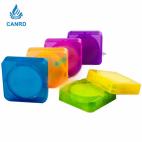


Details
Material and application of φ13mm microporous membrane:
Imported Nylon66
Characteristics: Imported membrane from the UK, originated from a British membrane company in 1948. It has better performance than domestic Nylon6. It has good hydrophilicity, high strength, high flow rate, high porosity, and is suitable for most organic solvents and aqueous solutions. It has high flux, high quality resistance, high temperature resistance, acid resistance, and organic solvent resistance. The membrane surface has high quality and wide drug compatibility. It is widely used and has low dissolution rate and stable chemical properties.
Application: Liquid clarification, sterilization filtration, and particle removal
Can be sterilized by high pressure, ethylene oxide, etc.
Introduction of membrane products:
In membrane separation technology applications, microporous membranes are the most widely used type of membrane, with simple and fast operation. They have large gas flux, high particle retention rate, good temperature resistance, resistance to strong acids, strong bases, organic solvents, and oxidants, aging resistance, non-stickiness, non-flammability, non-toxicity, and good biocompatibility. The materials are divided into two categories: organic and inorganic. Due to the separation characteristics of microporous membranes, the main application of microporous membranes is to trap particles, bacteria, and other pollutants from gas and liquid phases to achieve purification, separation, and concentration purposes. For microfiltration, the retention characteristics of the membrane are characterized by the pore size of the membrane, usually ranging from 0.1 to 1μm, so microfiltration membranes can separate large-diameter bacteria, suspended solids, etc. It can be used for clarification of general liquid materials, security filtration, and air sterilization. Widely used in scientific research, medical and health care, biochemistry, food, energy, microelectronic industry, nanotechnology, environmental protection, and other departments.
Application of microporous membranes:
This product is mainly used for filtration of mobile phase and samples in chromatographic analysis. It has a good effect on protecting chromatographic columns, infusion pump tube systems, and injection valves from contamination. Widely used in weight analysis, trace analysis, colloid separation, and sterile tests. During use, select the appropriate membrane according to the filtered sample.
よくある質問
検索または一般的な質問を閲覧して、素早く回答を見つける

R&Dサポートが必要ですか?
主要な製品カテゴリを確認し、バッテリー材料をCanrdのR&Dサービスにつなげます。
実験材料
カテゴリバッテリー研究向けの正極、負極、電解液、セパレーターなど。
正極・負極・電解液材料を見る →実験装置
カテゴリパイロットライン、治具、試験ワークフロー向けのバッテリー実験装置。
バッテリー実験装置を見る →電極とセル
カテゴリR&D検証向けのカスタム電極、乾燥セル、セル部材。
カスタムバッテリー電極とセルを見る →ナトリウム電解液
カテゴリナトリウム電池研究と検証向けのナトリウムイオン電解液。
ナトリウム電池電解液を見る →R&Dサービス
サービス材料評価からセル作製、故障解析までの一貫したバッテリーR&Dサービス。
Canrd R&Dサービスを見る →材料評価
サービスバッテリー材料の特性評価、電気化学試験、適合性評価。
バッテリー材料を評価する →電極作製
サービス対象化学系とプロセスに合わせたカスタム電極シートやロール。
電極作製を依頼する →セル作製
サービスR&D検証向けの乾燥セル、組立セル、カスタムセル形式。
カスタム研究セルを作製する →お問い合わせ
ページCanrdが製品、材料、サービスをプロジェクトに合わせて提案します。
製品とR&Dサポートを受ける →
