

 contact@canrd.com
 +86 18928276992
Electrode Calendering: Single-Pass vs. Double-Pass—Which to Choose?
Lithium-ion battery electrode calendering is a critical post-coating manufacturing step that strongly influences electrode microstructure, material integrity, and final cell electrochemical performance. This practical guide breaks down single-pass calendering and double-pass calendering, compares their pros and cons, explains key performance tradeoffs, and gives engineers a repeatable framework to select the optimal compaction route for R&D and mass production.
1. What Is Battery Electrode Calendering?
Electrode calendering compresses dried coated electrodes between two rollers, modifying coating thickness, bulk density and pore structure before slitting and cell assembly. Core calendering objectives:
- Hit target coating thickness and compaction density
- Build controlled electrode porosity for electrolyte transport
- Improve particle contact and form stable conductive networks
- Achieve adequate coating adhesion and mechanical integrity for downstream handling
Calendering outcomes depend not only on the number of roller passes, but also roll diameter, roller temperature, line speed, and applied compression force.
Core Tradeoff: Electronic Contact vs. Ionic Transport
Compaction improves solid particle contact and electronic conductivity, but reduces pore volume available to hold electrolyte. This creates a critical balance: A thinner electrode shortens cross-coating geometric ion transport distance, yet over-compaction can block pore connectivity and hinder ionic transport through electrolyte.
Reducing electrode thickness does NOT automatically shorten solid-state lithium diffusion distance inside active material particles. Solid diffusion within particles and ion movement through electrolyte-filled pores are separate mechanisms.
For background on density selection, see CANRD’s Battery Electrode Calendering Guide: How to Choose the Right Compaction Density.
2. Single-Pass Calendering
Single-pass calendering achieves the final target electrode thickness and density in one single nip passage through the calender rolls. Process parameters are tuned according to incoming coating loading, target thickness, roll geometry, temperature and line speed.
Advantages
- Fewer processing and rewinding steps
- Simplified production workflow
- Higher production throughput when specifications can be stably met
- Lower risk of surface contamination from extra handling
Limitations
- Large one-step thickness reduction creates high instantaneous mechanical stress. This may trigger particle cracking, coating wrinkling, or current collector elongation.
- These defects are not unavoidable; a well-tuned single-pass recipe can produce high-quality electrodes.
3. Double-Pass Calendering
Double-pass calendering splits the total compression into two independent stages. The electrode is first rolled to an intermediate thickness, then fed through the calender a second time to reach the final target dimension. Roll gap, temperature and line speed can be adjusted separately for each pass.
Advantages
- Staged compression distributes thickness reduction across passes; its effect on peak load and damage must be measured.
- Provides an additional adjustment stage that may improve thickness control.
- A formulation-specific study of dry-processed NMC622 cathodes found that gradual-gap calendering with moderate per-pass compression could mitigate fracture and pore collapse. This supports staged processing as a useful option for that system, rather than proving a universal advantage for all electrodes.
Limitations
- Longer processing cycle and extra web handling operations (if re-feeding is required)
- Higher chance of surface scratches or contamination during re-feeding
- More complex recipe management and batch traceability requirements
- May require characterization of intermediate springback after the first pass
Additional passes may improve thickness consistency under selected conditions, but the benefit must be demonstrated using a defined sampling plan, measurement method, and relaxation time. Thickness measurements alone do not establish improved pore uniformity, particle integrity, or cell performance.
4. Side-by-Side Practical Comparison
| Comparison Point | Single-Pass Calendering | Double-Pass Calendering |
|---|---|---|
| Compaction Route | Final target achieved in one roller pass | Two-stage compression via intermediate thickness |
| Thickness Reduction | Full thickness reduction applied in one nip | Total reduction split into two smaller steps |
| Throughput and Equipment Demand | Fewer compaction stages when specifications are met | Depends on whether passes use re-feeding or an in-line multi-stage arrangement |
| Thickness Control | Depends on coating uniformity and machine capability | Provides an additional adjustment stage; improvement requires validation |
| Active Particle Integrity | Risk of particle damage under heavy one-step compression | Staging may help some materials; protection is not guaranteed |
| Pore Structure | Controlled by single-pass compression conditions | Determined by full compression history across two passes |
| Springback | Measured after unloading from one pass | Characterize intermediate relaxation after pass one plus final relaxation after pass two |
| Cell Validation | Requires full electrochemical testing | Requires matched cell testing under identical conditions |
Key takeaway: The number of calendering passes is a process variable, not a direct marker of electrode quality. When comparing routes, distinguish the effect of the compression history from differences caused by final density or porosity. Different final density can still be evaluated for overall process performance, but it interferes with causal conclusions about the effect of pass count itself.
5. How Calendering Impacts Electrode & Battery Performance
Active Particle Integrity
Heavy mechanical compression can crack secondary active particles. Particle damage can contribute to capacity loss and accelerated degradation.
Thickness readings alone cannot prove particle integrity. Use cross-section microscopy or X-ray tomography to inspect particle fracture. Experimental observations confirm calendering can induce particle cracking; the links between cracks, internal particle structure, and electrochemical performance still require material-specific analysis.
Electrode Adhesion & Mechanical Strength
Calendering can raise peel strength between coating and foil substrate, but results are formulation-dependent. Process qualification must use identical peel test methods and sample conditioning for fair comparison.
Electrolyte Wetting
Wetting performance relies on pore size, pore connectivity and surface chemistry. Moderate compaction may improve wetting in some formulations. Public graphite electrode research shows mild calendering improved wetting within its tested system, while further compaction reduced electrolyte infiltration rate. Higher compaction density does not equal better wetting.
Internal Resistance & Rate Capability
Two important transport contributions should be distinguished:
- Dry electronic resistance from solid particle contact
- Ionic transport resistance within electrolyte-filled pores
These contributions do not represent all components of full-cell resistance or impedance. Full-cell DCIR and EIS also include contributions from electrolyte, separator, SEI, charge transfer, contact resistance, and measurement timescale. Improved solid contact may lower electronic resistance, while lost pore space increases ionic resistance. Full cell testing is required to confirm net performance.
Cycle Life
A mechanically intact electrode still needs cell validation. Cycle comparison must control electrode loading, electrolyte amount, formation protocol, temperature and cycling parameters. Double-pass calendering only improves cycle life when controlled experiments confirm the benefit for your material.
6. Critical Metrics to Measure: Density, Porosity & Springback
Coating Bulk Density
For single-sided coating:
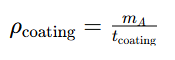
m_A = dry coating mass per unit area (exclude current collector)
t_coating = coating thickness (exclude foil)
Estimated Porosity
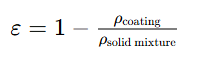
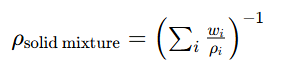
Where w_i= mass fraction of each dry solid component, rho_i = density of each component. This mass-thickness estimation cannot detect through-thickness pore gradients or pore connectivity.
Important notes: Do not substitute active material density for the full solid mixture density. For double-sided electrodes, use combined coating mass and combined coating thickness, or characterize each side separately.
Springback
Springback is thickness rebound after the electrode exits the loaded roller nip. Always measure relaxed thickness at fixed timing and stable environmental conditions.
Do NOT follow blanket rules: cathodes = single pass, anodes = double pass. Evaluate the route based on your material’s compressibility, springback, coating structure and target specifications.
7. How to Fairly Compare Single-Pass and Double-Pass Calendering
Run controlled trials instead of comparing unrelated production batches:
- Set identical baseline: Use electrodes from the same coating batch, record formulation, foil thickness, coating mass-loading measurement and drying history.
- Align final targets: Match relaxed coating thickness or compaction density within tolerance. Different final density interferes with causal conclusions on the effect of pass count.
- Log full process recipe: Record roll gap, line load, roller temperature, web tension and line speed. For double pass, document intermediate thickness and time delay between passes.
- Characterize electrode quality: Thickness mapping, coating mass-loading measurement, peel test, cross-section inspection, pore and wetting tests, electrode resistance measurement.
- Validate full cells: Compare rate capability, DC resistance and cycle life under matched conditions. Also evaluate production metrics: throughput, scrap rate and total manufacturing cost.
8. Equipment Selection for Battery R&D Calendering
Select calendering equipment based on your electrode size, material properties and experiment design. Key factors: working width, roll diameter, gap control, heating function, force capacity, web tension control.
CANRD provides tabletop heated roller presses such as the CAN-CAL50-0100EB for lab-scale electrode calendering. Machine specs alone do not guarantee uniform electrodes; web handling and tension control also affect final quality. For continuous studies, web handling and tension control also become part of the comparison.
Conclusion
Single-pass calendering delivers high production efficiency when one compression step meets all electrode requirements. Double-pass calendering offers an additional means of controlling the compaction history. It may help protect fragile active materials from particle fracture for demanding high-compaction jobs, but benefits must be validated experimentally for each electrode formulation.
The right selection is not universal. Engineers must base decisions on measured electrode microstructure, controlled cell testing, production throughput and overall manufacturing cost. Optimize your full calendering process around target density, accessible pore network, mechanical robustness and repeatability.
For Canrd custom electrode prototyping, prepare your electrode chemistry, formulation, coating mass loading, collector thickness, target density and sample format. These parameters help align material screening, electrode fabrication, equipment selection and cell validation.
FAQ
Q1: Is double-pass calendering always better than single-pass calendering?
A: No. Double-pass is a staged compaction method. Performance gains must be verified for your specific material and process conditions.
Q2: Can single-pass calendering break active particles?
A: Improper heavy compression causes particle damage. Multiple passes can also create particle damage. Always inspect electrode cross-sections to evaluate your full calendering recipe.
Q3: Does calendering reduce lithium-ion diffusion distance inside active particles?
A: Calendering reduces coating thickness but does not inherently shorten solid-state lithium diffusion distances within intact active-material particles.
Q4: Can thickness mapping prove uniform pore distribution?
A: No. Thickness mapping only checks dimensional consistency. Pore distribution and connectivity require specialized structural characterization.
Q5: What is the recommended comparison approach for single vs double pass?
A: Use identical incoming coated electrode batch, matched final relaxed density, consistent testing protocols and controlled full-cell cycling conditions.

