

 contact@canrd.com
 +86 18928276992
Details
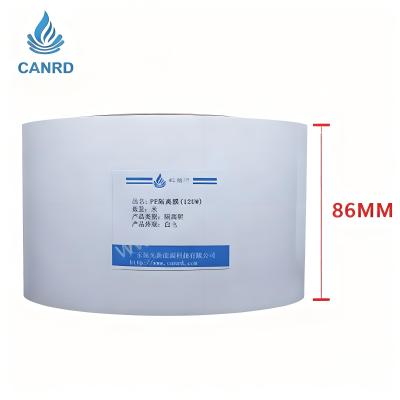
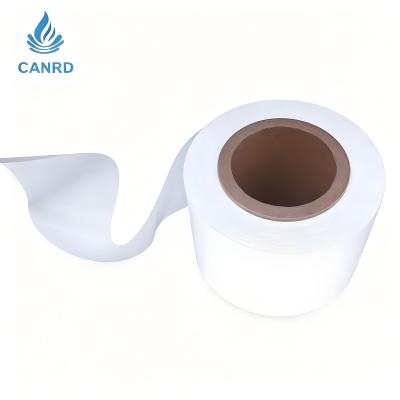
PE Separation Membrane
| Tensile strength MD (Kgf/cm2) | 1588 |
| Puncture strength (g) | 502 |
| Air permeability (Sec/100ml) | 152 |
| Product width (mm) | 86 |
| Elongation at break TD (%) | 0.2 |
| Porosity (%) | 41 |
| Product thickness (μm) | 12 |
| Tensile strength TD (Kgf/cm2) | 1329 |
| Elongation at break MD (%) | 0.8 |
| Area density (g/m2) | 6.7 |
Overview:
The separator is an important component of lithium-ion batteries. It is a microporous film used to separate the positive and negative electrodes, made of polymer functional materials with a nanoscale microporous structure. Its main function is to prevent short circuits by keeping the electrodes from contacting while allowing electrolyte ions to pass through. Its performance determines the battery's interface structure, internal resistance, and directly affects the battery's capacity, cycle life, and safety performance.
Basic Introduction:
The cost of the lithium battery separator accounts for about one-third of the total battery cost. The separator is a core material ensuring the safe and stable operation of lithium-ion batteries. Currently, domestic manufacturers rely heavily on imports from Japan, the United States, South Korea, and other countries. The localization of this high-tech, high-profit-margin separator material will be a major breakthrough area for reducing lithium battery costs. The main challenges lie in composite materials, thickness, strength, pore size, etc. Currently, most commercial lithium-ion battery separators are microporous films made of polyolefin materials, primarily polyethylene and polypropylene with high molecular weight. The products include polyethylene (PE) single-layer films, polypropylene (PP) single-layer films, and multilayer microporous films made of PP/PE/PP composites. Polyolefin materials have the advantages of high strength, good acid and alkali corrosion resistance, waterproofing, chemical reagent resistance, good biocompatibility, and non-toxicity. Their industrial preparation is relatively mature.Lithium-ion battery separators still under research or not widely used include PET/cellulose nonwoven fabric, polyvinylidene fluoride (PVDF) porous films, polyimide (PI) electrospun porous films, and various modified PE, PVDF, PP, and PI films.
Types and Models:
The main separator materials currently used are PP, PE, and PP/PE/PP three-layer separators, with porosity generally ranging from 28% to 40%.
Coated separators (12um + aluminum oxide/PVDF coating); Coated separators (9um + aluminum oxide/PVDF coating); Coated separators (7um + aluminum oxide/PVDF coating); Ceramic-coated separators (12um + aluminum oxide coating); Ceramic-coated separators (9um + aluminum oxide coating); Ceramic-coated separators (7um + aluminum oxide coating); Separators (12um); Separators (9um); Separators (7um)
Applications:
During the battery assembly and charge-discharge cycles, the separator material itself needs to have a certain mechanical strength. The mechanical strength of the separator can be measured by tensile strength and puncture strength. Additionally, tension consistency is an important evaluation parameter. Since separators below 9um need to be coated with a ceramic layer for use, the tension consistency in the TD direction must meet certain requirements to conform to the coating process. The physical structure of the separator significantly affects the mechanical safety performance of the cell. In energy cell evaluations, it shows that higher porosity worsens the impact passage rate, while separators with smaller pore sizes can improve impact performance, though not achieving 100% passage. For nail tests, the results indicate that separators with poor thermal stability have a lower passage rate, and thinner separators also have a lower passage rate.The analysis suggests that when internal short circuits (localized high-rate discharges) occur, separators with lower porosity and smaller pore sizes can help limit the local high-rate current, thereby preventing further spread of the failure point and increasing the test pass rate. As the separator serves as the safety barrier between the positive and negative electrodes, its thermal stability, mechanical strength, and thickness also play crucial roles.
Assembly Methods/Process Flow:
The materials used for lithium-ion battery separators are mainly porous polyolefins, and the preparation methods are primarily wet and dry processes. The wet process is also known as phase separation or thermal-induced phase separation (TIPS); the dry process, known as stretching-induced pore formation, is also called melt stretching (MSCS). Both methods aim to enhance the separator's porosity, strength, and other properties. The classification and processes, as well as the characteristics, are summarized in the table below. Additionally, PET/cellulose nonwoven fabric uses nonwoven fabric technology, polyvinylidene fluoride (PVDF) porous films also use the phase separation method, and polyimide (PI) and polyamide (PAI) use electrospinning and casting phase separation processes.
Technical Requirements for Lithium-Ion Battery Separators:
The performance of lithium-ion battery separators determines the interface structure, internal resistance, and directly affects the battery's capacity, cycle life, and safety. Therefore, the technical requirements for lithium-ion battery separators are:
- 1) Insulation performance, as it must be an insulator for electronic conduction
- 2) Minimal rejection of the electrolyte, with good wetting properties for the electrolyte
- 3) High ionic conductivity, meaning it should provide minimal resistance to ion movement
- 4) Effectively prevent particles, colloids, or other soluble materials from migrating between the positive and negative electrodes
- 5) High mechanical strength to prevent tearing or deformation during processing
- 6) Dimensional stability, with minimal size change below the melting point temperature to prevent electrode short circuits
- 7) Chemical stability and electrochemical inertness, stable against the electrolyte, potential impurities, electrode reactants, and their products, without dissolving or degrading
- 8) High uniformity in thickness and pore size
Overview:
The separator is an important component of lithium-ion batteries. It is a microporous film used to separate the positive and negative electrodes, made of polymer functional materials with a nanoscale microporous structure. Its main function is to prevent short circuits by keeping the electrodes from contacting while allowing electrolyte ions to pass through. Its performance determines the battery's interface structure, internal resistance, and directly affects the battery's capacity, cycle life, and safety performance.
Basic Introduction:
The cost of the lithium battery separator accounts for about one-third of the total battery cost. The separator is a core material ensuring the safe and stable operation of lithium-ion batteries. Currently, domestic manufacturers rely heavily on imports from Japan, the United States, South Korea, and other countries. The localization of this high-tech, high-profit-margin separator material will be a major breakthrough area for reducing lithium battery costs. The main challenges lie in composite materials, thickness, strength, pore size, etc. Currently, most commercial lithium-ion battery separators are microporous films made of polyolefin materials, primarily polyethylene and polypropylene with high molecular weight. The products include polyethylene (PE) single-layer films, polypropylene (PP) single-layer films, and multilayer microporous films made of PP/PE/PP composites. Polyolefin materials have the advantages of high strength, good acid and alkali corrosion resistance, waterproofing, chemical reagent resistance, good biocompatibility, and non-toxicity. Their industrial preparation is relatively mature.Lithium-ion battery separators still under research or not widely used include PET/cellulose nonwoven fabric, polyvinylidene fluoride (PVDF) porous films, polyimide (PI) electrospun porous films, and various modified PE, PVDF, PP, and PI films.
Types and Models:
The main separator materials currently used are PP, PE, and PP/PE/PP three-layer separators, with porosity generally ranging from 28% to 40%.
Coated separators (12um + aluminum oxide/PVDF coating); Coated separators (9um + aluminum oxide/PVDF coating); Coated separators (7um + aluminum oxide/PVDF coating); Ceramic-coated separators (12um + aluminum oxide coating); Ceramic-coated separators (9um + aluminum oxide coating); Ceramic-coated separators (7um + aluminum oxide coating); Separators (12um); Separators (9um); Separators (7um)
Applications:
During the battery assembly and charge-discharge cycles, the separator material itself needs to have a certain mechanical strength. The mechanical strength of the separator can be measured by tensile strength and puncture strength. Additionally, tension consistency is an important evaluation parameter. Since separators below 9um need to be coated with a ceramic layer for use, the tension consistency in the TD direction must meet certain requirements to conform to the coating process. The physical structure of the separator significantly affects the mechanical safety performance of the cell. In energy cell evaluations, it shows that higher porosity worsens the impact passage rate, while separators with smaller pore sizes can improve impact performance, though not achieving 100% passage. For nail tests, the results indicate that separators with poor thermal stability have a lower passage rate, and thinner separators also have a lower passage rate.The analysis suggests that when internal short circuits (localized high-rate discharges) occur, separators with lower porosity and smaller pore sizes can help limit the local high-rate current, thereby preventing further spread of the failure point and increasing the test pass rate. As the separator serves as the safety barrier between the positive and negative electrodes, its thermal stability, mechanical strength, and thickness also play crucial roles.
Assembly Methods/Process Flow:
The materials used for lithium-ion battery separators are mainly porous polyolefins, and the preparation methods are primarily wet and dry processes. The wet process is also known as phase separation or thermal-induced phase separation (TIPS); the dry process, known as stretching-induced pore formation, is also called melt stretching (MSCS). Both methods aim to enhance the separator's porosity, strength, and other properties. The classification and processes, as well as the characteristics, are summarized in the table below. Additionally, PET/cellulose nonwoven fabric uses nonwoven fabric technology, polyvinylidene fluoride (PVDF) porous films also use the phase separation method, and polyimide (PI) and polyamide (PAI) use electrospinning and casting phase separation processes.
Technical Requirements for Lithium-Ion Battery Separators:
The performance of lithium-ion battery separators determines the interface structure, internal resistance, and directly affects the battery's capacity, cycle life, and safety. Therefore, the technical requirements for lithium-ion battery separators are:
- 1) Insulation performance, as it must be an insulator for electronic conduction
- 2) Minimal rejection of the electrolyte, with good wetting properties for the electrolyte
- 3) High ionic conductivity, meaning it should provide minimal resistance to ion movement
- 4) Effectively prevent particles, colloids, or other soluble materials from migrating between the positive and negative electrodes
- 5) High mechanical strength to prevent tearing or deformation during processing
- 6) Dimensional stability, with minimal size change below the melting point temperature to prevent electrode short circuits
- 7) Chemical stability and electrochemical inertness, stable against the electrolyte, potential impurities, electrode reactants, and their products, without dissolving or degrading
- 8) High uniformity in thickness and pore size
Related Articles

Introduction to diaphragm manufacturing process
Dry/wet processes for lithium-battery separators with coating and trends.
Overview:
The separator is an important component of lithium-ion batteries. It is a microporous film used to separate the positive and negative electrodes, made of polymer functional materials with a nanoscale microporous structure. Its main function is to prevent short circuits by keeping the electrodes from contacting while allowing electrolyte ions to pass through. Its performance determines the battery's interface structure, internal resistance, and directly affects the battery's capacity, cycle life, and safety performance.
Basic Introduction:
The cost of the lithium battery separator accounts for about one-third of the total battery cost. The separator is a core material ensuring the safe and stable operation of lithium-ion batteries. Currently, domestic manufacturers rely heavily on imports from Japan, the United States, South Korea, and other countries. The localization of this high-tech, high-profit-margin separator material will be a major breakthrough area for reducing lithium battery costs. The main challenges lie in composite materials, thickness, strength, pore size, etc. Currently, most commercial lithium-ion battery separators are microporous films made of polyolefin materials, primarily polyethylene and polypropylene with high molecular weight. The products include polyethylene (PE) single-layer films, polypropylene (PP) single-layer films, and multilayer microporous films made of PP/PE/PP composites. Polyolefin materials have the advantages of high strength, good acid and alkali corrosion resistance, waterproofing, chemical reagent resistance, good biocompatibility, and non-toxicity. Their industrial preparation is relatively mature.Lithium-ion battery separators still under research or not widely used include PET/cellulose nonwoven fabric, polyvinylidene fluoride (PVDF) porous films, polyimide (PI) electrospun porous films, and various modified PE, PVDF, PP, and PI films.
Types and Models:
The main separator materials currently used are PP, PE, and PP/PE/PP three-layer separators, with porosity generally ranging from 28% to 40%.
Coated separators (12um + aluminum oxide/PVDF coating); Coated separators (9um + aluminum oxide/PVDF coating); Coated separators (7um + aluminum oxide/PVDF coating); Ceramic-coated separators (12um + aluminum oxide coating); Ceramic-coated separators (9um + aluminum oxide coating); Ceramic-coated separators (7um + aluminum oxide coating); Separators (12um); Separators (9um); Separators (7um)
Applications:
During the battery assembly and charge-discharge cycles, the separator material itself needs to have a certain mechanical strength. The mechanical strength of the separator can be measured by tensile strength and puncture strength. Additionally, tension consistency is an important evaluation parameter. Since separators below 9um need to be coated with a ceramic layer for use, the tension consistency in the TD direction must meet certain requirements to conform to the coating process. The physical structure of the separator significantly affects the mechanical safety performance of the cell. In energy cell evaluations, it shows that higher porosity worsens the impact passage rate, while separators with smaller pore sizes can improve impact performance, though not achieving 100% passage. For nail tests, the results indicate that separators with poor thermal stability have a lower passage rate, and thinner separators also have a lower passage rate.The analysis suggests that when internal short circuits (localized high-rate discharges) occur, separators with lower porosity and smaller pore sizes can help limit the local high-rate current, thereby preventing further spread of the failure point and increasing the test pass rate. As the separator serves as the safety barrier between the positive and negative electrodes, its thermal stability, mechanical strength, and thickness also play crucial roles.
Assembly Methods/Process Flow:
The materials used for lithium-ion battery separators are mainly porous polyolefins, and the preparation methods are primarily wet and dry processes. The wet process is also known as phase separation or thermal-induced phase separation (TIPS); the dry process, known as stretching-induced pore formation, is also called melt stretching (MSCS). Both methods aim to enhance the separator's porosity, strength, and other properties. The classification and processes, as well as the characteristics, are summarized in the table below. Additionally, PET/cellulose nonwoven fabric uses nonwoven fabric technology, polyvinylidene fluoride (PVDF) porous films also use the phase separation method, and polyimide (PI) and polyamide (PAI) use electrospinning and casting phase separation processes.
Technical Requirements for Lithium-Ion Battery Separators:
The performance of lithium-ion battery separators determines the interface structure, internal resistance, and directly affects the battery's capacity, cycle life, and safety. Therefore, the technical requirements for lithium-ion battery separators are:
- 1) Insulation performance, as it must be an insulator for electronic conduction
- 2) Minimal rejection of the electrolyte, with good wetting properties for the electrolyte
- 3) High ionic conductivity, meaning it should provide minimal resistance to ion movement
- 4) Effectively prevent particles, colloids, or other soluble materials from migrating between the positive and negative electrodes
- 5) High mechanical strength to prevent tearing or deformation during processing
- 6) Dimensional stability, with minimal size change below the melting point temperature to prevent electrode short circuits
- 7) Chemical stability and electrochemical inertness, stable against the electrolyte, potential impurities, electrode reactants, and their products, without dissolving or degrading
- 8) High uniformity in thickness and pore size
Need R&D Support?
Browse key product categories and connect battery materials with Canrd's R&D services for testing, fabrication, and project support.
Experimental Materials
CategoryCathode, anode, electrolyte, separator, and other materials for battery research.
Shop cathode, anode & electrolyte materials →Lab Equipment
CategoryBattery lab equipment for pilot lines, fixtures, and testing workflows.
Browse battery lab equipment →Electrodes & Cells
CategoryCustom electrodes, dry cells, and battery cell components for R&D validation.
View custom battery electrodes & cells →Sodium Electrolyte
CategorySodium-ion electrolyte options for sodium battery research and validation.
Shop sodium battery electrolytes →R&D Services
ServiceFull-chain battery R&D services from material evaluation to cell fabrication and failure analysis.
Explore Canrd R&D services →Material Evaluation
ServiceCharacterization, electrochemical testing, and compatibility evaluation for battery materials.
Evaluate your battery materials →Electrode Fabrication
ServiceCustom electrode sheets and rolls based on your target chemistry and process needs.
Request electrode fabrication →Cell Fabrication
ServiceDry cells, assembled cells, and custom-format cell builds for R&D validation.
Build custom research cells →Contact
PageAsk Canrd to match products, materials, and services for your project.
Get product and R&D support →