

 contact@canrd.com
 +86 18928276992


Details
Product Advantages
| Test Items | Test Results | Method |
|---|---|---|
| Appearance | Off-white powder, uniform and free of foreign matter | Visual inspection |
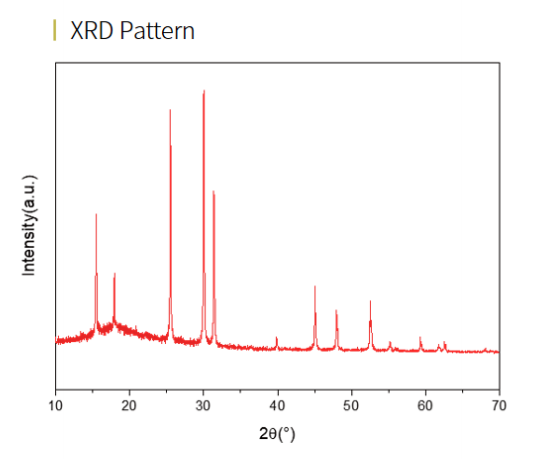
| Crystal Phase | Pyrite phase | X-ray diffraction (XRD) |
| Particle Size – D10 (μm) | 0.18 | Particle size analyzer |
| Particle Size – D50 (μm) | 0.32 | Particle size analyzer |
| Particle Size – D90 (μm) | 1.26 | Particle size analyzer |
| Particle Size – D99 (μm) | 3.01 | Particle size analyzer |
| Ionic Conductivity (mS/cm) | 4.80 | The powder was pressed into a pellet at 350 MPa and tested at 28°C by electrochemical impedance spectroscopy (EIS). |
| Electronic Conductivity (nS/cm) | 8.42 | The powder was pressed into a pellet at 350 MPa and tested at 28°C by DC polarization. |
Test Conditions
| No. | Test Item | Test Conditions |
|---|---|---|
| (1) | XRD Test | The sample was prepared in a glovebox under an inert atmosphere, avoiding exposure to air and polar solvents. The sample surface was covered with a polyisobutylene rubber film to prevent moisture ingress. |
| (2) | Ionic Conductivity Test | A 100 mg powder sample was placed in a 10 mm-diameter die and pressed into a pellet at 350 MPa. The pressure was maintained at 350 MPa during EIS testing. Frequency range: 1 MHz–1 Hz; AC amplitude: 10 mV. |
| (3) | Electronic Conductivity Test | A 100 mg powder sample was placed in a 10 mm-diameter die and pressed into a pellet at 350 MPa. The pressure was maintained at 350 MPa during the DC polarization test. Applied voltage: 0.5 V; test duration: 3,600 s. |
Notes
| No. | Item | Description |
|---|---|---|
| (1) | Odor | Pungent odor; non-combustible when heated at 650–700°C. |
| (2) | Reactivity | Reacts with water to release hydrogen sulfide gas. Soluble in acids, alkalis and certain organic solvents. |
| (3) | Toxicity | Harmful if swallowed. Direct skin contact may cause dermatitis. Inhalation may cause respiratory irritation. |
| (4) | Stability | Stable under normal temperature and pressure in an inert atmosphere. Exposure to air may cause degradation. The material should be handled in an environment with a dew point of −50°C or below. Fire may release hazardous vapors or gases. |
Ionic Conductivity Test for Sulfide Electrolyte Powder
- The measured ionic conductivity value of sulfide solid electrolyte powder rises along with the increase of tableting pressure. The ionic conductivity tends to stabilize above 400 MPa. Excessively high pressure may cause internal cracking and delamination of the pellet, leading to inaccurate test results. Therefore, tableting pressure of 200–400 MPa is generally adopted.
- Stainless steel rods are used as blocking electrodes for cold-pressed green pellets. Applying a pressure of more than 30 MPa on both sides can achieve favorable contact between electrodes and electrolyte.
- Test Procedures:
① Tableting: Weigh 200 mg electrolyte powder and load it into a mold with an inner diameter of 10 mm, then compress the powder under 350 MPa.② Thickness Measurement: Measure the thickness of the electrolyte pellet inside the mold with a depth vernier caliper.③ Assembly: Apply 350 MPa pressure to fasten the assembled cell, then maintain pressure with a steel fixture before testing.④ EIS Measurement: Connect the cell to an electrochemical workstation, set test parameters and initiate the test. The AC impedance test covers a frequency range of 1 MHz to 1 Hz with a voltage amplitude of 10 mV.⑤ Ionic Conductivity Calculation: Sulfide materials feature soft texture and tight inter-particle contact, so the AC impedance curve appears as an approximately 45° upward-sloping straight line without distinct grain boundary capacitance signals. The intersection point of the curve with the real axis Z' is taken as the total impedance for ionic conductivity calculation.
Important Notes & Operation Recommendations
- Operating Environment: All operations must be carried out in a glove box filled with high-purity argon (O₂ & H₂O < 0.1 ppm). Any exposure to ambient air will trigger material decomposition, performance degradation and generation of toxic hydrogen sulfide (H₂S).
- Personal Protective Equipment (PPE): Chemical-resistant gloves (e.g., nitrile gloves) are recommended even for operations inside the glove box. If the material needs to be handled outside the glove box, a respirator, safety goggles and anti-static lab coat are mandatory.
Hazard Statements
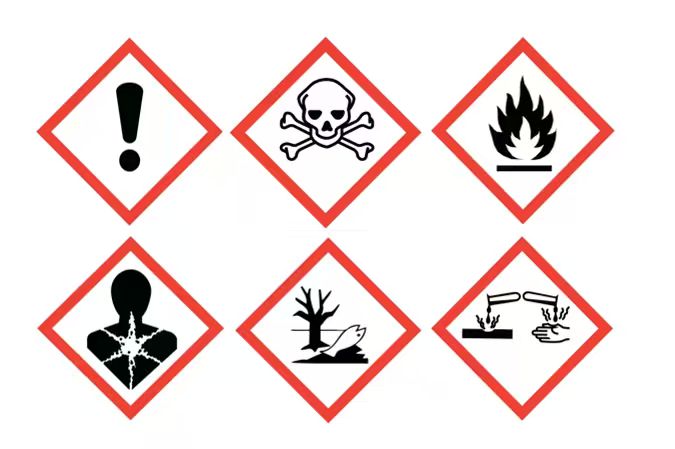
- Contact with water releases colorless, highly toxic hydrogen sulfide gas. It smells like rotten eggs at low concentrations but becomes odorless at high concentrations, and may ignite spontaneously.
- Fatal if swallowed, in skin contact or inhaled.
- Causes severe skin burns and serious eye damage.
- Extremely toxic to aquatic organisms.
Precautionary Statements
- Avoid any contact with water.
- Handle inside an inert-atmosphere glove box to prevent moisture exposure.
- Wear protective gloves, protective clothing, eye protection and face shield.
- Wash skin thoroughly after handling.
- Do not eat, drink or smoke while using this product.
- Avoid inhaling dust, fumes, gas, mist, vapor and spray.
- Prevent release into the environment.
Packaging, Transportation and Storage
Safe Storage
- Inside the glove box, this product is vacuum-sealed in fluorinated bottles with magnetic caps, then double-sealed with aluminum plastic bags. Unopened products can be stored under normal ambient conditions.
- If the package needs to be opened for use, unpacking and subsequent storage must be performed in an inert gas (e.g., argon) glove box with water and oxygen levels below 0.1 ppm.
First-Aid Measures
- If swallowed: Immediately call a poison control center or doctor. Rinse mouth. Do NOT induce vomiting.
- If on skin (or hair): Take off all contaminated clothing immediately. Rinse skin thoroughly with plenty of water or take a shower. Seek medical advice/attention at once.
- If inhaled: Remove the victim to fresh air and keep at rest in a position comfortable for breathing. Seek medical advice/attention at once.
- If in eyes: Rinse cautiously with water for several minutes. Remove contact lenses if present and easy to do so. Continue rinsing. Seek medical advice/attention at once.
- Fire-fighting instructions: Use Class D fire extinguishers (for metal fires) or dry sand. Do NOT use water, foam or carbon dioxide for fire suppression.
Waste Disposal
- All waste materials shall be treated as hazardous chemical waste. Contact qualified professional institutions for recycling; do not discard arbitrarily.
- Small contaminated articles can be wiped and cleaned with alkaline solution inside a fume hood.
Need R&D Support?
Browse key product categories and connect battery materials with Canrd's R&D services for testing, fabrication, and project support.
Experimental Materials
CategoryCathode, anode, electrolyte, separator, and other materials for battery research.
Shop cathode, anode & electrolyte materials →Lab Equipment
CategoryBattery lab equipment for pilot lines, fixtures, and testing workflows.
Browse battery lab equipment →Electrodes & Cells
CategoryCustom electrodes, dry cells, and battery cell components for R&D validation.
View custom battery electrodes & cells →Sodium Electrolyte
CategorySodium-ion electrolyte options for sodium battery research and validation.
Shop sodium battery electrolytes →R&D Services
ServiceFull-chain battery R&D services from material evaluation to cell fabrication and failure analysis.
Explore Canrd R&D services →Material Evaluation
ServiceCharacterization, electrochemical testing, and compatibility evaluation for battery materials.
Evaluate your battery materials →Electrode Fabrication
ServiceCustom electrode sheets and rolls based on your target chemistry and process needs.
Request electrode fabrication →Cell Fabrication
ServiceDry cells, assembled cells, and custom-format cell builds for R&D validation.
Build custom research cells →Contact
PageAsk Canrd to match products, materials, and services for your project.
Get product and R&D support →