



Lithium-ion Full Cell Manufacturing Process Training--Soft-Pack Battery Cell Encapsulation
1.Baking
1.1.The main purpose of baking is to remove moisture from the bare cell
•H2O can cause the decomposition of LiPF6, leading to an increase in HF levels:
H2O can react with organic solvents in the electrolyte to produce alcohol and CO2, for example:
During the formation process, H2O can decompose, producing H2, consuming lithium ions,
reducing the initial efficiency and capacity of the battery, and damaging the battery interface.

1.2.For some special materials, such as lithium iron phosphate and lithium titanate with large
specific surface areas, the general control standard is overall < 400ppm due to their strong water absorption properties.
Moisture control targets for lithium battery baking (taking lithium cobalt oxide as an example):


1.3.Three key factors for controlling baking: temperature, vacuum level, and time
Increasing the temperature is a viable method, but due to the poor heat resistance of the
separator in the cell, the general baking temperature for the cell is below 85°C. In order to improve efficiency and shorten the baking time, increasing the vacuum level has become a practical solution.

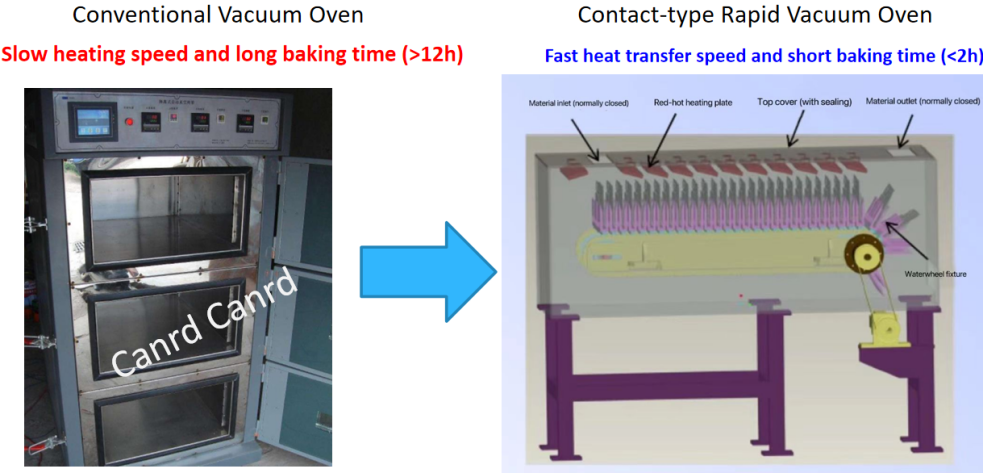
1.4.Three modes of heat transfer: conduction, radiation, and convection
In a vacuum state, a conventional oven can only rely on thermal radiation for heat transfer,
while a contact-type oven can achieve rapid heat transfer through both thermal conduction and radiation
2.Water Content Testing
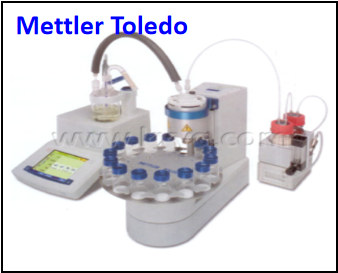
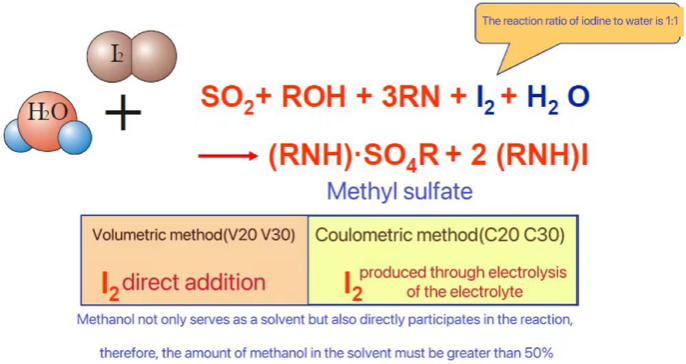
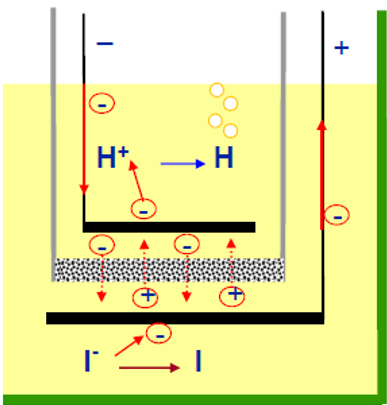
The Karl Fischer method is a recognized water content testing method widely used in the lithium battery industry.
Methods for Testing Water Content




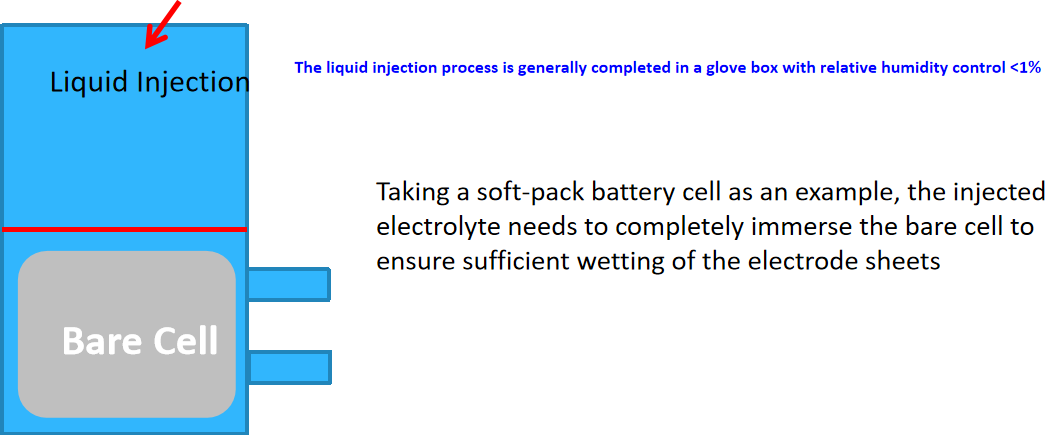
3.Liquid Injection
1)Quality Requirements for Canrd Electrolyte
The moisture content in the bare cell, excluding materials such as the positive electrode, negative electrode, and separator, needs to be controlled through baking. The moisture content in the electrolyte also needs to be strictly controlled (moisture ≤ 20ppm)

2)Selection of Liquid Injection Volume
(1) Firstly, based on the true density of the material, porosity, and compaction density of the electrode sheet, the theoretical demand for electrolyte (i.e., the minimum amount of electrolyte required) can be estimated.
(2) On this basis, considering the size of the battery, application requirements (such as rate-type, energy-type, etc.), and incorporating a certain amount of excess, determined the injection volume Common injection coefficients: lithium cobaltate system ~2.0g/Ah, ternary system 3.0g/Ah.
4.Standing
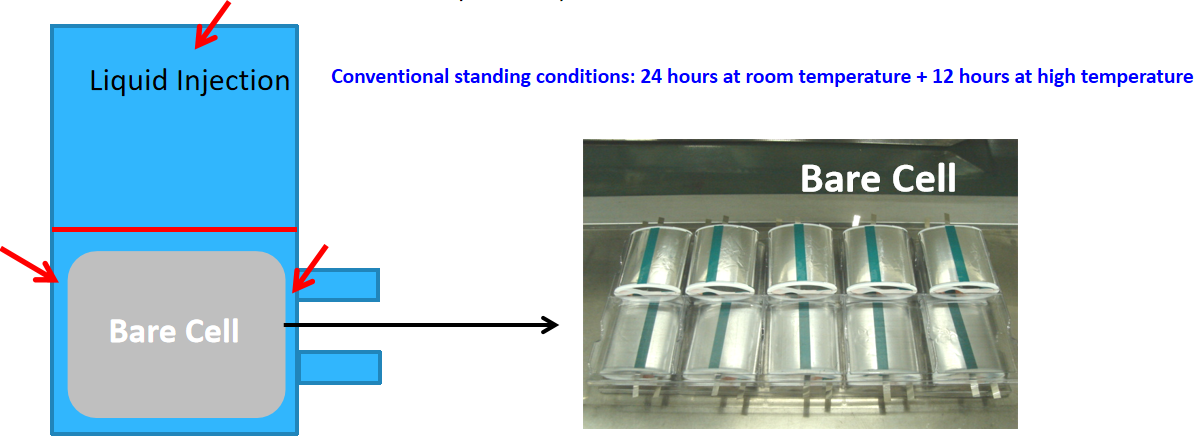
Purpose of Standing
(1)he main purpose of standing is to allow the electrolyte to fully infiltrate into the interior of the electrode sheets and the pores of the separator.
(2)To accelerate infiltration, the standing process is conducted under vacuum conditions, which speeds up the infiltration of the electrolyte.
(3)Since the electrolyte can only infiltrate from the head and tail of the wound cell, a certain temperature and time are required to ensure the infiltration effect (if the cell is thick and long, the infiltration conditions need to be optimized).
5.Moisture Effects
Effects of Moisture on Battery Performance
LiF and Li2CO3 are the main components of the SEI. Therefore, an appropriate amount of water
(below 150ppm) helps to form a stable, uniform, and dense SEI film dominated by Li2CO3. Once the SEI film completely covers the negative electrode, the irreversible reactions stop immediately.
After the formation of SEI, if water is still present in the battery (water content above 150ppm),
the H2O will continue to consume active Li and cause the decomposition of LiPF6, leading to battery bloating, increased internal resistance, and dissolution of the SEI, which deteriorates the battery performance.
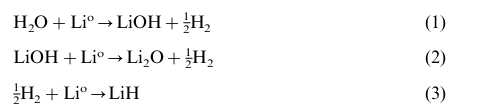
1)The presence of H2O in a battery during the initial charging process leads to the following reaction at the negative electrode:
This process consumes active Li, reducing the battery's cycle efficiency. Additionally, the generated H2 can increase the internal pressure of the battery, affecting the consistency of the first charging current distribution. The LiOH and Li2O produced by the aforementioned reaction eventually react with HF to form LiF, which deposits on the surface of the negative electrode.
2)During the initial charging process, the solvent can also be reduced at the negative electrode, consuming active Li:

3)The alkyl lithium carbonate produced by the single-electron reduction process can further react with trace amounts of water in the electrolyte:

4)After generation CO2, further reactions occur on the surface of the negative electrode:

6.HF Effects
Effects of HF on Battery Performance:
1)HF in the electrolyte undergoes the following reactions:

2)The LiF produced by this reaction, while thermally stable, exhibits poor lithium conductivity, leading to increased impedance at the electrode/electrolyte interface and subsequently higher internal resistance within the battery

3)HF dissolves the SEI film by reacting with Li2CO3 present in the SEI, generating LiF. This not only compromises the stability and density of the SEI but also increases the interfacial impedance of the electrode. Additionally, the H2O and alcohols produced by this reaction can, in turn, promote the hydrolysis of LiPF6 to produce more HF. This process continues in a cycle, leading to a gradual decrease in battery capacity, a decline in cycle efficiency, and ultimately severe degradation of performance.
Moreover, HF in the electrolyte can react with oxide cathode materials, causing the dissolution of metal ions from the cathode. For instance, LiMn2O4 is particularly susceptible to Mn ion dissolution in electrolytes containing LiPF6, resulting in degraded performance:

7.Canrd Brief Introduce
Canrd use high battery R&D technology(core members are from CATL) and strong Chinese supply chain to help many foreign companies with fast R&D. We provide lab materials, electrodes, custom dry cells, material evaluation, perfomance and test, coin/pouch/cylindrical cell equipment line, and other R&D services.
📱 WhatsApp/WeChat: 86 189 2827 6992
📧 Email: janice@canrd.com
🛒 Product Website: www.canrud.com

Related Products & Services
Use Canrud products and R&D services to turn battery knowledge into practical experiments.
Coin Cell Case
ProductCoin cell cases for validating materials and electrochemical concepts from the article.
Use coin cell cases in your next test →Sodium Electrolyte
CategoryElectrolytes for sodium-ion battery research, compatibility tests, and cell validation.
Shop sodium electrolyte for validation →Cell Fabrication
ServiceGet support building dry cells, assembled cells, or custom formats for R&D validation.
Request cell fabrication support →Experimental Materials
CategoryBrowse materials for follow-up experiments, benchmarking, and product development.
Browse experimental battery materials →